
IBM Files Patent for Virtual Meetings That Rearrange Themselves Around Your Real Room
Most virtual meeting rooms are built the same way for everyone. IBM's patent application describes one that rebuilds itself around the real room you're sitting in.
What IBM's room-fitting meeting layouts do
Every time you join a virtual meeting, the software acts as if everyone is standing in the same big empty room. A whiteboard might sit just out of reach, or a presenter's avatar might land where half the audience can't see it.
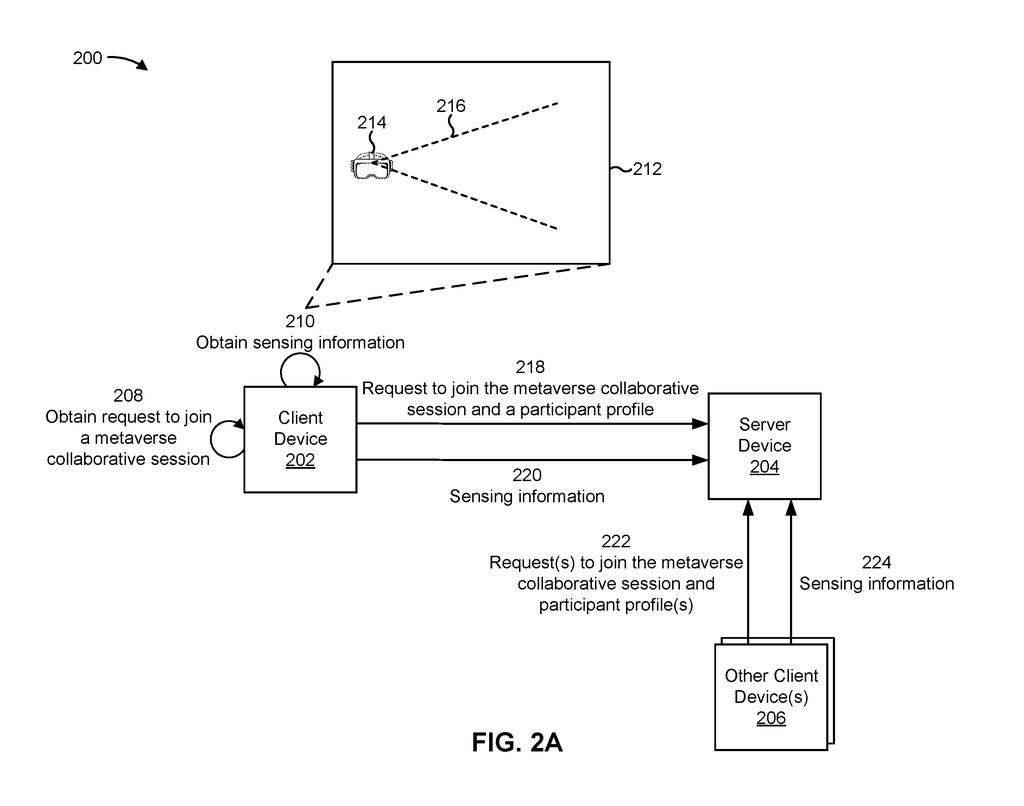
IBM's patent application describes a system that builds the virtual room around you. Your headset or smartwatch scans the real space around you and finds the desk, the wall and the open floor. The system also checks your role, such as presenter or listener, and whether you're sitting or standing.
From there, an AI model arranges the virtual objects so the things you need sit within arm's reach. A colleague in a roomy conference room gets a different layout that lets them walk around. If your heart rate climbs, the system can even dim the lighting or shift the colors to calm things down.
obtaining sensing information indicating real-time information associated with a physical space of a user; obtaining a participant profile of the user, wherein the participant profile indicates at least one of a role, a responsibility, or a mobility type of the user for a metaverse collaboration session; …
Translation: The system checks your actual surroundings and your job details before the meeting starts.
How the AI arranges objects around your room
The system starts with two inputs. The first is sensing information: a headset's cameras and depth sensors (which measure the distance to walls and furniture) map your real room and work out your available movement space, meaning the open floor and arm's reach you actually have. A smartwatch or similar wearable can add body readings such as heart rate. The second is a participant profile, which says whether you're a presenter, moderator or listener, and whether you're seated, standing or moving around.
Both inputs go into a generative model (an AI that creates new content based on patterns it learned from examples). The filing says this could be a GAN, where one network proposes a layout and a second network critiques it. The model is trained on past layouts, how people used them, and past participant profiles. It can also pick a starting template based on the session type, such as a board meeting or a brainstorm.
The model then does several things:
- Sorts objects by how you use them (hand-touch, gesture, voice, or view-only) and places the ones you must handle within reach.
- Sets your avatar's viewpoint, position and movement limits based on your role and mobility.
- Keeps shared items, like a whiteboard, in a synchronized spot for everyone.
- Rearranges things as your sensors report changes, and learns your preferences for later sessions.
What this means for remote meetings in VR
If virtual meetings ever become a normal part of your workday, a layout that respects your actual room could decide whether you keep using them. A cramped home office, a coffee shop table and a big conference room all create different problems, and a single standard virtual room solves none of them. IBM's approach also adjusts for physical comfort, like screen height and posture, which matters if you wear a headset for an hour.
The catch is the data. Heart rate, body measurements and room scans are personal, and the filing relies on them. The examiner's first review rejected the claims as filed, which is routine at this stage and usually followed by amendments, so the final scope may look different.
IBM's sixth filing we've tracked since July in the AR glasses race builds on self-reshaping captions and automatic defect labeling to push its headset applications further.
If this works as described, you would notice it through things that stop going wrong. The virtual whiteboard sits where your arms can reach it, and you stop swinging at a real bookshelf you can't see through a headset.
The body-sensing part would feel the most personal. A room that dims its lighting because your heart rate climbed can be helpful, and it also means your headset is reading your body during a work call. The filing does not spell out who gets to see that data.
Metaverse meetings are still a niche habit, so most people won't feel any of this soon. The idea itself is sensible, and its value depends on whether headsets become an ordinary part of the workday.
Get our take in your Top Stories
Liked this breakdown? Add Patentlyze as a preferred source on Google, and our plain-English take shows up more often in your Top Stories the next time IBM patent news breaks.
There are more where this came from
We read every patent application Big Tech publishes and send you the ones worth knowing. Plain English, free, every week.
The drawings
6 drawing sheets from US 2026/0320944 A1 · click any drawing to enlarge


Want this weekly breakdown for a company we don't cover? Patentlyze Pro →
Be the first to weigh in