
IBM Patents a Headset That Flags and Labels Factory Defects Automatically
Factory quality inspectors spend as much time writing up what they found as they do actually finding it. IBM's new patent describes a system where an AR headset does the documentation automatically, in real time.
How IBM's XR quality-inspection tagging actually works
Every time a factory inspector walks a production line, they spot a flaw, make a mental note, and then spend time later typing it all up. That documentation step is where information gets lost, misremembered, or delayed.
IBM's patent describes a system where a worker wearing an extended reality (XR) headset, think smart glasses or a device like a HoloLens, records video and audio during an inspection. The system listens for spoken or on-screen captions that flag a defect, then automatically clips and labels the exact moment in the footage where that defect appeared. Instead of a generic video file, you get a neatly organized record: each problem has its own tagged segment, ready to review.
The result lands in a database where anyone on the team can pull up a specific defect without scrubbing through hours of footage. It's essentially automatic highlight reels for quality control, built from the inspector's own words and vision.
obtaining annotated data from an extended reality (XR) device, the annotated data comprising video data and audio data, wherein the annotated data is associated with a quality inspection operation; …
Translation: The system collects video and audio recordings from a smart headset worn during factory checks.
How the system links captions to video and audio intervals
The system starts with an XR device worn by a quality inspector on a production floor. That device captures two streams at once: video of whatever the inspector is looking at, and audio of what they're saying or hearing. Together, these are called annotated data in the patent's language.
Next, the system scans that combined stream for annotation captions, text or speech indicators that signal a defect has been found. Think of it like closed captions on a TV broadcast, but instead of dialogue, the system is looking for phrases like "surface crack" or "misaligned seam."
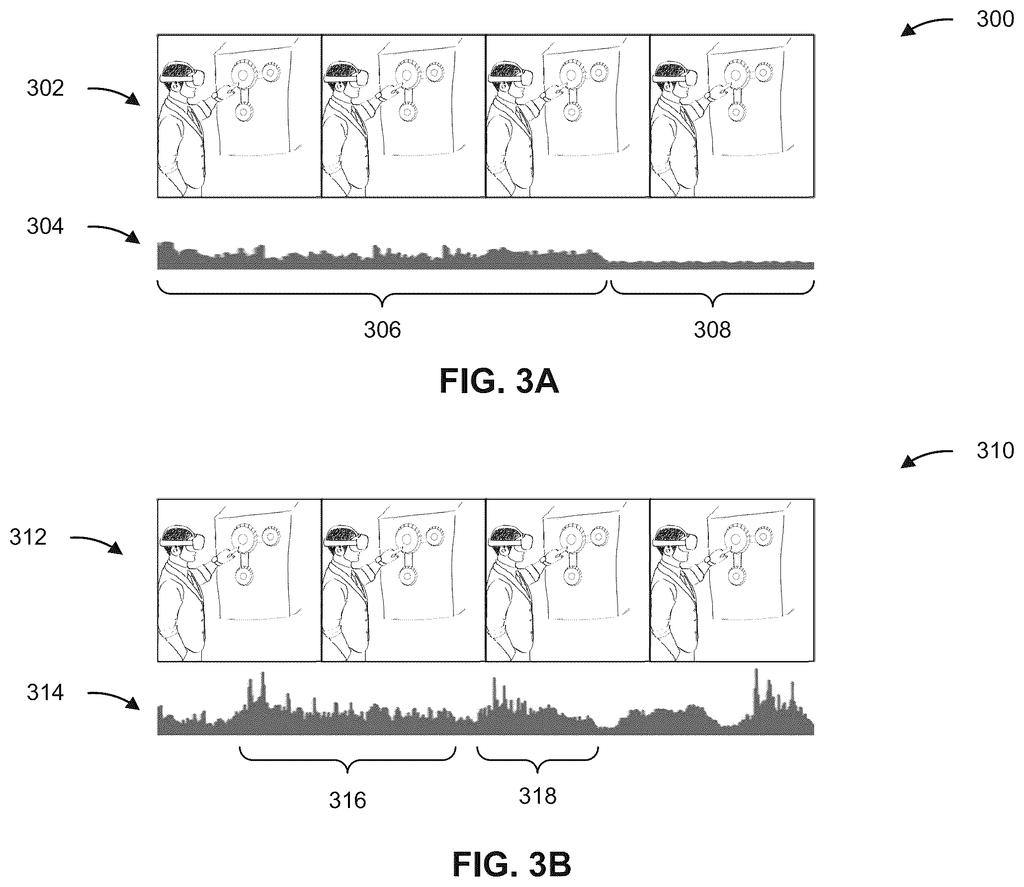
Once a caption is detected, the system calculates an annotation interval: the specific slice of time in the video or audio where that defect appears. It then tags that interval with the corresponding caption, producing what the patent calls tagged data, a structured, labeled clip rather than a raw recording.
Finally, those tagged clips are sent to a data store, a database or cloud repository, where a separate computing device can display them in an organized format. A supervisor can then review just the flagged moments, sorted by defect type, without watching the full inspection recording.
At least one annotation caption indicative of a defect is detected based on the annotated data. At least one annotation interval is determined based on the at least one annotation caption, …
Translation: It automatically finds the exact moments in the footage where a problem or flaw is mentioned.
What this means for factory floor inspection workflows
Quality control documentation is one of those problems that sounds mundane but carries real cost in manufacturing. When inspectors manually transcribe findings after the fact, errors creep in, timing gets fuzzy, and defects that should trigger recalls or line stops can slip through the cracks. A system that locks a defect flag to the precise video and audio moment it was spotted gives managers a much cleaner audit trail.
The XR angle matters here too. IBM isn't describing a fixed camera bolted to a wall; the system travels with the inspector's gaze, capturing exactly what the human expert was looking at. That makes the tagged clips more useful as training data for future automated inspection systems. IBM's work in AR-assisted industrial processes sits alongside a broader stream of new Big Tech patents pushing XR hardware beyond consumer entertainment and into factory and enterprise settings.
IBM's fourth filing we've tracked since July in the AR glasses race, after gaze-based object sharing and identity-verifying smart glasses, applies the same thinking to a new problem.
Manual defect logging in manufacturing is slow, error-prone, and routinely done from memory after the fact, which corrupts the records that safety and liability review depend on. IBM's approach of anchoring defect labels directly to timestamped video and audio intervals addresses that gap at its structural root, not at the surface. Industrial inspection contexts where mis-documented defects carry regulatory consequences give this a real cost problem to match, and the filing's focused scope suggests it was built with that weight in mind.
There are more where this came from
We read every patent application Big Tech publishes and send you the ones worth knowing. Plain English, free, every week.
The drawings
10 drawing sheets from US 2026/0245301 A1 · click any drawing to enlarge


Want this weekly breakdown for a company we don't cover? Patentlyze Pro →
Be the first to weigh in