
Sony Patents a System That Scans Your Room to Shape What You See
Most mixed reality headsets drop virtual objects into your room without much thought about what's actually there. Sony's latest patent filing describes a system that actively reads your physical surroundings and adjusts what you see accordingly.
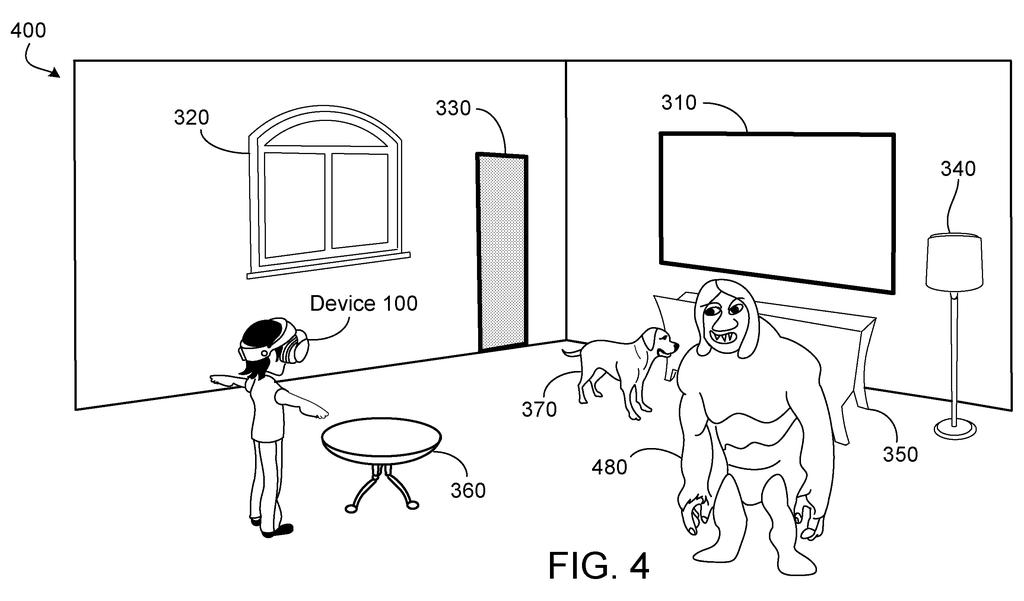
What Sony's room-aware mixed reality actually does
Imagine you put on a mixed reality headset and, instead of floating menus clashing with your living room lamp or virtual characters clipping through your couch, everything in the scene actually accounts for where you are and what's around you. That's the core idea here.
Sony is describing a system where your device first collects data about your physical space, then uses that information to change how virtual elements appear. If your room is small, cluttered, or has unusual lighting, the virtual layer adjusts to fit, rather than ignoring reality entirely.
The result is a mixed reality experience that feels less like a digital overlay stapled onto the real world and more like the two are genuinely aware of each other. Whether that means resizing a virtual screen, repositioning a character, or changing how light falls on a virtual object, the system is designed to make your specific environment the starting point.
obtaining, via a computing device, user environment data relating to the physical environment of at least one user electronic device …
Translation: The system scans the real room where your device is located.
How the system scans and adapts to your environment
The patent describes a three-step pipeline running on a computing device (which could be a console, a PC, or a cloud server, not necessarily the headset itself).
- Environment data collection: The system gathers "user environment data" from at least one user device, which likely means sensor feeds, camera images, or depth maps of the physical space around the user.
- Attribute identification: That raw data is processed to pull out specific attributes of the space, things like room dimensions, object positions, or ambient light levels. Think of this as the system building a simplified model of your room.
- Adaptive rendering: An extended reality scene is then rendered with at least one element adjusted based on those identified attributes. The virtual content changes to fit your real-world context.
The claim covers "extended reality," which is an umbrella term for the full spectrum from pure virtual reality to augmented and mixed reality. The abstract specifically mentions "mixed reality," where real and virtual elements coexist in the same view.
The system is also written to support multiple user devices simultaneously, which hints at shared or multiplayer extended reality sessions where different players in different rooms could each get a version of the environment adapted to their own physical space.
… rendering a mixed reality environment, wherein at least one element of the mixed reality environment is adjusted based on the at least one attribute …
Translation: It builds a digital world that changes based on what the scanner found.
What this means for PlayStation VR and beyond
For you as a user, the immediate payoff is fewer jarring moments where the virtual world obviously ignores your real one. A virtual game board that fits your actual table, a character that doesn't walk through your furniture, a UI panel that doesn't overlap your TV: these are small things, but they're the difference between an experience that feels immersive and one that feels like a tech demo.
Sony's long bet on extended reality has centered on PlayStation VR hardware, and a system like this could help the company make mixed-reality experiences feel less generic and more personal. The multi-device framing is also interesting: it opens the door to shared mixed reality spaces where each person's version of the scene is tuned to their own room, which is a real unsolved problem for social XR.
Sony's 28th filing we've tracked since July in the AR glasses race adds to a run that includes retina display beaming and on-demand virtual objects.
The core idea here is straightforward: look at what's around the user, then use that information to make the virtual content fit better. That's a sensible goal, and it addresses one of the most persistent complaints about early mixed reality headsets.
What the patent doesn't tell us is how sophisticated the attribute detection actually is, or how aggressively the rendering adapts. Adjusting a virtual object's position is very different from dynamically remodeling a scene around an oddly shaped room. The claim language is broad enough to cover either.
For now, this reads like Sony staking out conceptual territory around environment-aware rendering rather than describing a finished, shipping feature. If the detection and adaptation turn out to be meaningfully deep, users will notice it immediately. If it's shallow, it will feel like a minor quality-of-life tweak buried in a firmware update.
There are more where this came from
We read every patent application Big Tech publishes and send you the ones worth knowing. Plain English, free, every week.
The drawings
13 drawing sheets from US 2026/0289921 A1 · click any drawing to enlarge


Want this weekly breakdown for a company we don't cover? Patentlyze Pro →
Be the first to weigh in