
Samsung Patent Uses AI-Powered Deep Learning to Clean Up Wireless Signals
Every wireless signal you receive is a little bit broken by the time it arrives. Samsung is filing a patent for a chip-level AI that fixes those distortions on the fly, without sending anything to the cloud.
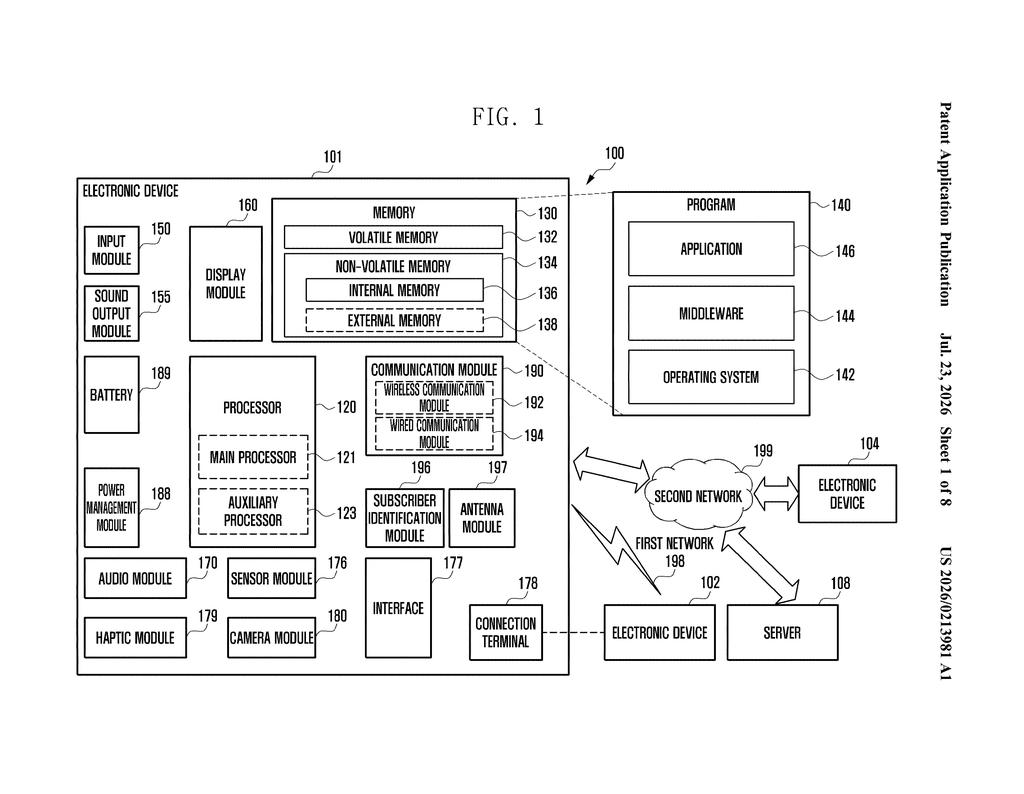
How Samsung's AI cleans up a garbled wireless signal
Imagine talking on the phone while walking under a highway overpass. The signal bouncing off concrete walls arrives at your phone jumbled and overlapping with itself, and your device has to sort out which copy of the signal is the real one. That cleanup process, called channel estimation and equalization, has traditionally relied on fixed mathematical formulas.
What Samsung's patent describes is replacing those fixed formulas with a deep learning model stored directly on the device. The AI learns what the signal should look like by comparing what it received with a known reference signal, then adjusts its own internal settings to correct the distortion more accurately than the old approach.
The whole process runs on the device itself, so there's no round-trip to a server. That matters for speed and for situations where you need reliable reception with minimal delay, like a voice call or a live video stream.
Inside the deep learning channel estimator and equalizer
The patent describes a channel estimation and equalization module built around a deep learning model. In plain terms: when your phone receives a wireless signal, that signal has been warped by the physical environment it passed through (walls, reflections, interference). Sorting out that warp is called channel estimation; correcting the received data to match the original is called equalization.
Traditionally these two steps use separate, hand-tuned algorithms. Samsung's design folds both into a single neural network that runs on-device. The system works by taking two inputs:
- The received signal (the distorted version your antenna picked up)
- A reference signal (a known pattern transmitted alongside real data, used as a calibration anchor)
The neural network extracts features from both, estimates how much the channel warped the signal (the channel estimation loss), then simultaneously figures out how to reverse that warp (the channel equalization loss). Both loss values feed back into the model's weights, meaning the model is continuously tuning itself to the current radio environment.
The claim specifies that the model is stored locally on the device, which means the inference (the actual decision-making) happens at the antenna, not on a remote server.
What this means for wireless reception in Samsung devices
If this approach works as described, it could improve wireless reception in environments where current radios struggle: dense urban areas, buildings with lots of reflective surfaces, or heavily congested spectrum. Samsung makes both the chips and the handsets, so a technique like this could show up in Galaxy phone modems or in its network equipment division.
For you as a user, the practical upside would be fewer dropped packets and cleaner audio or video in weak-signal conditions, without any visible change to how your phone looks or works. The competitive angle is that AI-driven signal processing is an area where several chipmakers are racing, so this filing stakes out Samsung's own approach to the problem.
This is a real engineering bet, not a surface-level filing. Combining channel estimation and equalization into one jointly-trained neural network is a direction the academic wireless research community has been building toward for years, and Samsung putting it into a device-level patent suggests the company thinks it's close to production-ready. Whether it outperforms traditional methods in the real-world conditions that matter most (not just benchmarks) is the question that will determine whether this ever ships.
There are more where this came from
We read every patent application Big Tech publishes and send you the ones worth knowing. Plain English, free, every week.
The drawings
8 drawing sheets from US 2026/0213981 A1 · click any drawing to enlarge


Want this weekly breakdown for a company we don't cover? Patentlyze Pro →