
Adobe Patents a System That Uses Influencer Posts to Predict Product Demand
Adobe wants to watch what influencers post across social platforms, match those posts to product catalogs, and automatically route ads to audiences before demand peaks — all without a human media buyer in the loop.
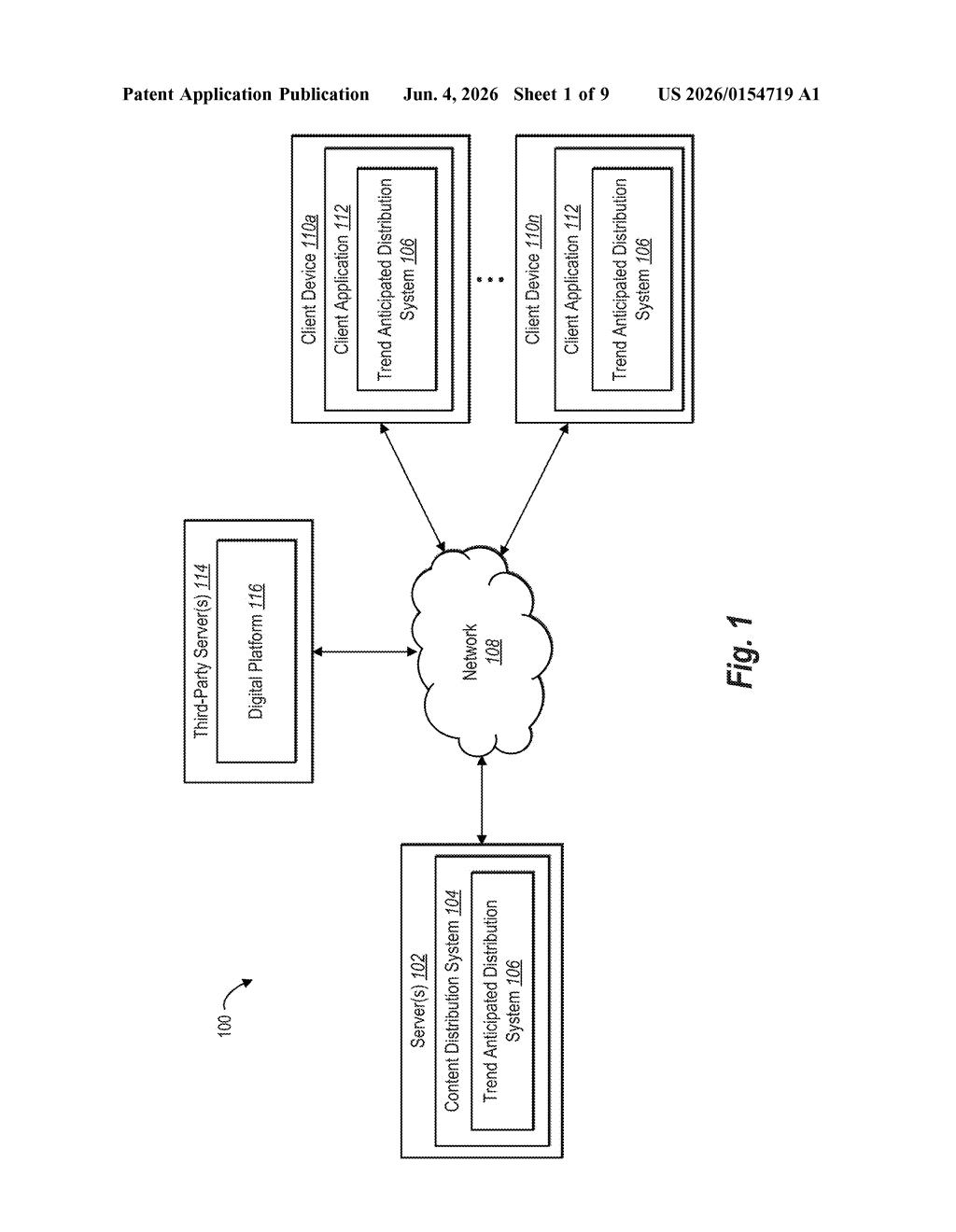
How Adobe's influencer-tracking ad engine actually works
Imagine a brand manager who never sleeps, constantly scrolling through Instagram, TikTok, and Pinterest, noting which influencers are talking about which products — and then deciding, in real time, where to run ads. That's roughly what Adobe is trying to automate here.
The patent describes a system that analyzes posts from "trend-setting participants" (read: influencers) across multiple platforms, compares the topics and style of those posts to a catalog of products, and generates a score for how likely each product is to spike in demand. Those scores then drive automatic content distribution — meaning ads or sponsored content get pushed to users on whichever platform is showing the strongest signal.
For brands and agencies using Adobe's marketing tools, this would mean your ad spend chases demand signals before a trend fully breaks — rather than after your social team notices it manually.
How affinity metrics connect influencer posts to product catalogs
The system works in three stages: affinity scoring, demand prediction, and content distribution.
Affinity metrics are computed by comparing attributes of an influencer's posts (think: keywords, hashtags, visual categories, engagement patterns) against attributes of items in a product catalog. The closer the match, the higher the affinity score between that influencer and that product — essentially a measure of how naturally aligned a creator already is with a given item.
Predicted demand metrics are derived from those affinity scores. The logic is that if trend-setters with high affinity for a product are actively posting about related content, demand from their followers is likely to follow. The patent doesn't specify the exact modeling approach, but the pipeline implies some form of aggregated scoring across multiple platforms simultaneously.
Content distribution is then automated based on those demand predictions. Rather than a human deciding which platform gets which ad, the system routes digital content to client devices via whichever platforms show the strongest predicted demand — closing the loop between trend detection and ad delivery.
- Ingests influencer post attributes across multiple social platforms
- Cross-references posts against a digital product catalog
- Generates per-platform demand predictions
- Automatically distributes relevant content to target devices
What this means for automated ad targeting on social platforms
For marketers, the pitch here is speed. Trend cycles on platforms like TikTok can peak and fade in days. A system that can detect early influencer affinity signals and automatically distribute ads before mainstream demand peaks would be a genuine edge over manual campaign management — and it fits neatly into Adobe's existing Experience Cloud stack, which already handles campaign analytics and content delivery.
The broader implication is that influencer data becomes structural input to ad-buying decisions, not just a qualitative gut-check. If Adobe builds this out, brands could essentially treat influencer post activity as a real-time demand signal — similar to how search query volume is used today, but applied to social content. That's a meaningful shift in how performance marketing gets planned.
This is a solid, commercially motivated patent — it solves a real problem that Adobe's marketing cloud customers actually have. The core idea of using influencer-post affinity as a demand-prediction signal is clever and plausible, but the patent is light on methodology, which makes it hard to know whether this is a genuine technical advance or a broad claim staked around an obvious workflow. The interesting question is whether Adobe can make the affinity scoring accurate enough to beat a good human media planner.
There are more where this came from
We read every patent application Big Tech publishes and send you the ones worth knowing. Plain English, free, every week.
Want this weekly breakdown for a company we don't cover? Patentlyze Pro →