
Adobe Patents a Dual-Attention System for Precise Negative Prompting in AI Images
Getting an AI image generator to include exactly what you want is hard enough — getting it to reliably exclude something specific is even harder. Adobe's new patent tackles the exclusion problem directly by running two separate attention streams in parallel.
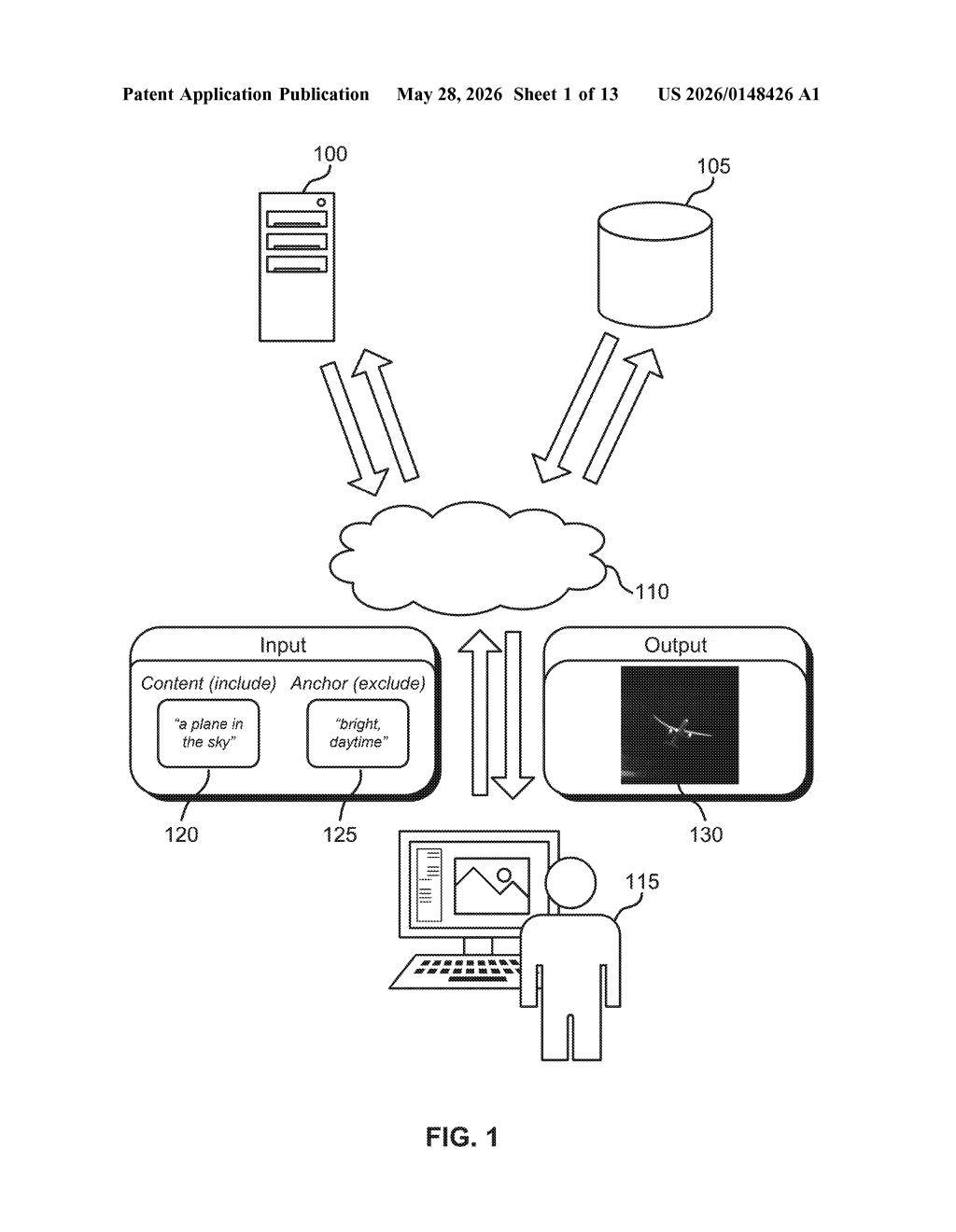
What Adobe's include/exclude image prompting actually does
Imagine you want an AI to generate a photo of a clear blue sky, but every time you try, it sneaks a plane in there. You could write a more elaborate prompt, but that's a game of whack-a-mole. Adobe's patent describes a cleaner solution: give the model two separate instructions — one for what you want, and one for what you don't want — and let it handle the tension internally.
Instead of cramming everything into a single text prompt, the system routes your "include" prompt and your "exclude" prompt through two different attention blocks inside the image generation model. Think of attention blocks as the parts of the AI that decide what to focus on when drawing each pixel. The outputs of both blocks are then combined so the model understands both goals simultaneously.
The practical upshot: you get a generated image that depicts your desired subject while genuinely omitting the unwanted element — not just downplaying it, but structurally excluding it from how the image is built.
How the two attention blocks compose the final image
The patent describes a method for negative prompting via attention composition inside a diffusion-style image generation model. Most current approaches to negative prompting work by subtracting a concept at the guidance level (classifier-free guidance), which is a blunt instrument — it nudges the whole image away from a concept rather than surgically removing it.
This system instead uses two distinct attention pathways:
- A target prompt (the "content include" prompt) feeds into a first attention block, producing a first attention output that represents the desired subject.
- An anchor prompt (the "content exclude" prompt) feeds into a second attention block, producing a second attention output that encodes the unwanted element.
- The model then combines both attention outputs when synthesizing the final image, so it simultaneously knows what to render and what to avoid at the attention level — not just at the noise prediction level.
The example from the patent filing is illustrative: a target prompt might be a scene description, while the anchor prompt might be "a plane in the sky." The resulting image depicts the scene but structurally omits the plane. By operating at the attention composition layer (where the model decides spatial relevance of tokens), the exclusion is baked into the generation process rather than applied as a post-hoc correction.
What this means for AI image editing in Creative Cloud
For anyone using Adobe's Firefly or similar generative tools, this could mean a much more reliable way to get exactly the image you need without endless prompt iteration. Right now, negative prompts in most tools are hit-or-miss — they reduce the probability of something appearing, but they don't guarantee it. A dual-attention approach could make exclusion a first-class feature rather than a workaround.
From a product standpoint, this fits neatly into Adobe's push to make generative AI practical for professional workflows. Designers and photo editors need predictable, controllable output — not creative surprises. A patent that strengthens the precision of exclusion-based prompting is exactly the kind of infrastructure work that makes Firefly more useful to paying Creative Cloud subscribers.
This is a genuinely useful technical idea, not just a filing for filing's sake. The gap between 'I typed a negative prompt' and 'the thing I didn't want is actually gone' is a real pain point for anyone using generative image tools professionally. Whether Adobe's attention-composition approach outperforms existing classifier-free guidance tricks in practice remains to be seen, but the direction is sound and the problem is real.
There are more where this came from
We read every patent application Big Tech publishes and send you the ones worth knowing. Plain English, free, every week.
Want this weekly breakdown for a company we don't cover? Patentlyze Pro →