
Meta's New Patent Hides Charging and Display Sensors Inside AR Glasses' Nose Bridge
Meta is trying to squeeze two completely different jobs — battery charging and display alignment sensing — into a single flexible circuit tucked into the nose-bridge of an AR headset. It's a small design decision with real consequences for how thin and integrated next-gen AR glasses could get.
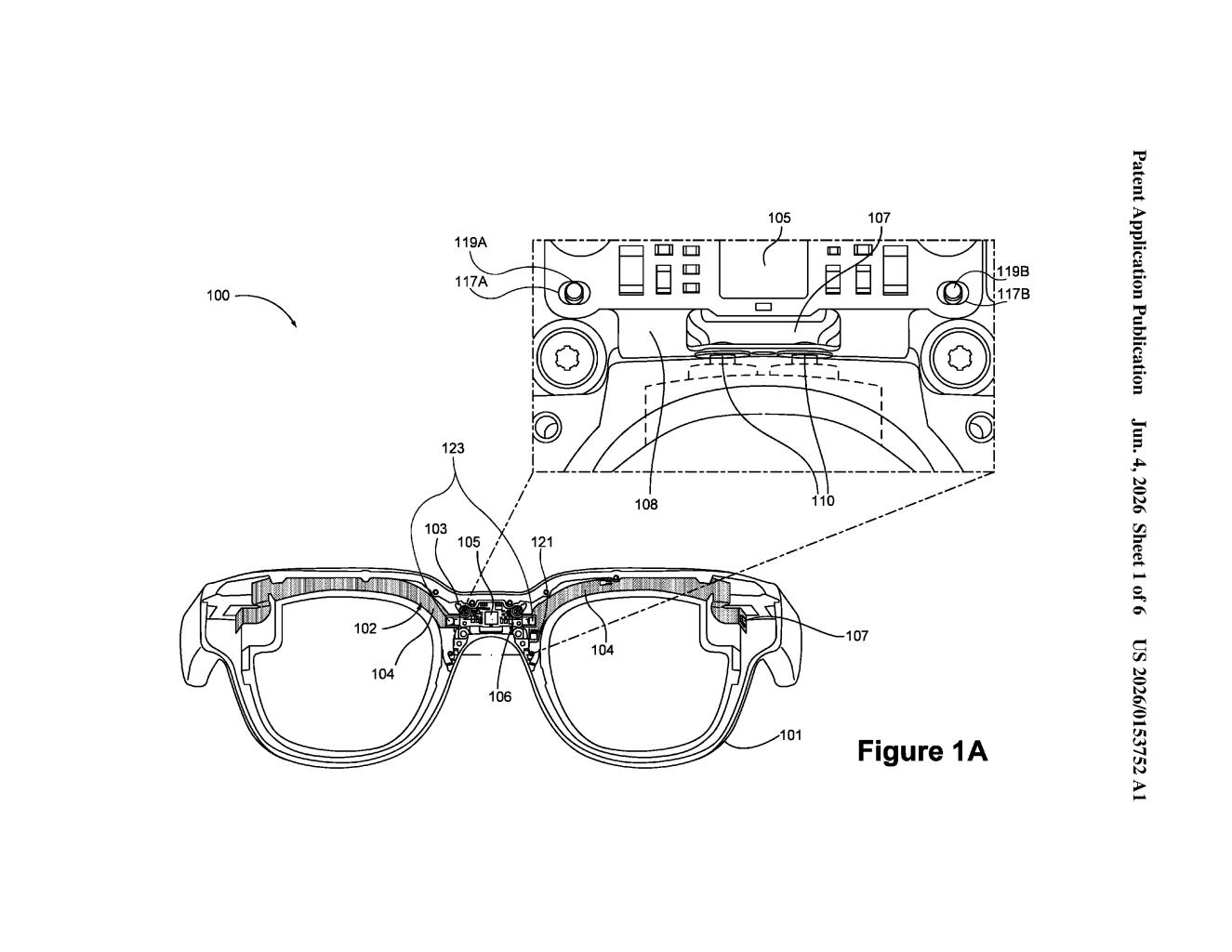
What Meta's nose-bridge flex circuit actually does
Imagine wearing AR glasses and setting them down on a charging dock. The part that rests on your nose — the nose bridge — is where Meta wants to hide a lot of the headset's plumbing, according to this patent.
Specifically, Meta is describing a flexible circuit (think of it like a paper-thin ribbon of electronics that can bend to fit tight spaces) that sits right at that nose-bridge region and does two things at once: it connects to a tiny image sensor that helps the headset check whether the two displays are lined up correctly for your eyes, and it handles charging the battery through contacts at the same spot.
The big idea is that instead of routing separate components to different parts of the frame, you fold both functions into one compact piece. That's the kind of space-saving trick that makes wearables thinner and simpler to assemble.
How one flex circuit handles two jobs at once
The patent describes a flex circuit — a flexible printed circuit board (PCB) that can be shaped to fit snugly inside the nose-bridge area of AR glasses. Flex circuits are common in tight consumer electronics like smartphones and earbuds because they can curve around internal structures that rigid boards can't.
This particular flex circuit carries two distinct functional blocks:
- Image sensor connection: The circuit connects to a sensor that captures data about disparity — the slight difference in what the left and right displays are showing relative to each other. Keeping that disparity calibrated is essential for comfortable, accurate AR overlays that don't give you a headache.
- Battery charging circuitry: The same flex circuit routes charging power through terminals positioned at the nose bridge, meaning the charging contact point on the headset lives right there — possibly enabling a docking or pogo-pin style charging cradle that grips the nose bridge when you set the glasses down.
The shape of the circuit is specifically designed to fit the nose-bridge geometry, suggesting this isn't a generic component but one engineered for a specific form factor — likely something closer to glasses than a bulky headset.
What this means for future Meta AR glasses design
AR glasses live or die on form factor. The thinner and lighter they are, the more people will actually wear them. Every time an engineer can collapse two separate components into one, that's material and space saved — which translates directly to a lighter frame on your face.
The nose-bridge charging contact is also a notable design choice. It hints at a charging cradle or case that grips the glasses at the natural resting point rather than requiring a port or wireless pad. That kind of seamless charging UX is something Meta has been clearly working toward as it pushes AR glasses into everyday use — and this patent suggests the hardware team is thinking carefully about how real people handle and store their glasses.
This is quiet, unglamorous engineering work — the kind that determines whether a product actually ships as a sleek pair of glasses or a chunky prototype. The dual-use flex circuit concept is smart manufacturing thinking, and the nose-bridge charging contact suggests Meta has a specific cradle or case design in mind. Worth tracking as a signal of how far along Meta's glasses-form-factor AR work really is.
There are more where this came from
We read every patent application Big Tech publishes and send you the ones worth knowing. Plain English, free, every week.
Want this weekly breakdown for a company we don't cover? Patentlyze Pro →