
Meta Patents a Dichroic Mirror System for Cleaner AR Headset Displays
Getting multiple colors of light into a paper-thin AR lens without them interfering with each other is one of the hardest unsolved problems in wearable displays. Meta's latest patent attacks it with a well-known optical trick, applied in a new configuration.
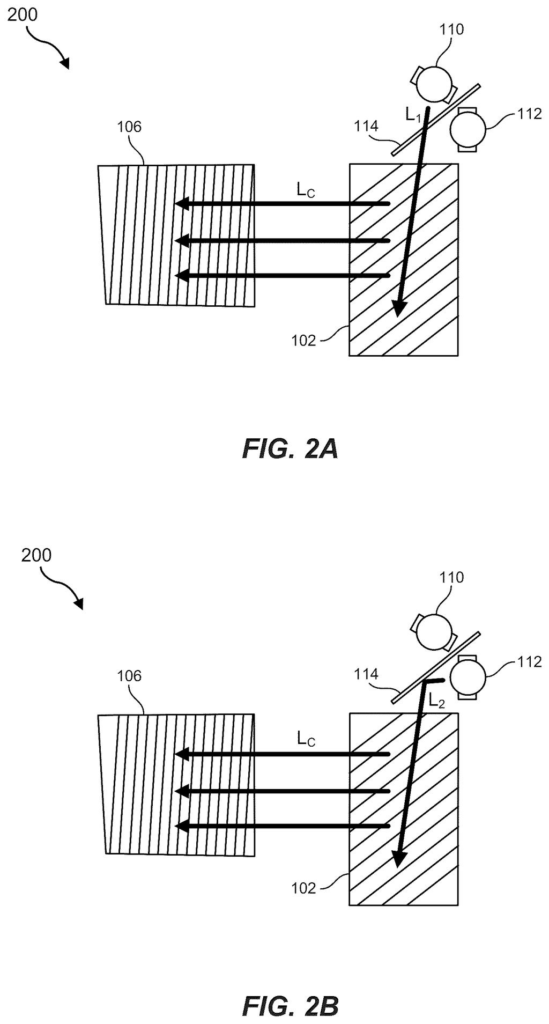
How Meta's color-combining mirror works in AR glasses
A surgeon slides on a pair of AR glasses before an operation. The display looks washed out, with colors bleeding into each other, because the tiny optics can't keep red, green, and blue light on separate, clean paths into the eye. That color chaos is the core challenge Meta is trying to fix here.
Meta's patent describes a system that uses a dichroic mirror (a special filter that passes some colors of light and reflects others) to merge light from two separate sources into a single clean beam. That combined beam then travels through a thin waveguide (a flat, transparent light-guide layer) that bounces and spreads it across the lens before sending it into your eye.
The goal is a display that's both compact enough to fit in glasses and bright enough to actually look good in daylight. Instead of one light source trying to do everything, each source handles part of the color range, and the mirror stitches them together precisely before any of it reaches the waveguide.
… a dichroic mirror configured to: transmit the first display light to the folding optical element; and reflect the second display light to the folding optical element; and an output optical element configured to receive the first display light and the second display light from the folding optical element …
Translation: The system uses a special mirror to combine two different colors of light before sending them to the user's eye.
How the dichroic mirror and waveguide route each color
The system described in the patent has four main pieces working together:
- Two separate light sources, each emitting a different color range (for example, one for red wavelengths and one for blue-green wavelengths).
- A dichroic mirror, an optical filter that transmits (lets through) one color and reflects the other, so both beams end up traveling in the same direction without mixing or canceling each other out.
- A folding optical element, essentially a reflective structure inside the waveguide that bounces the combined light along the lens plane, spreading it out and replicating it across a wider area.
- An output optical element that takes that spread-out light and redirects it toward the eyebox region (the zone in space where your eye needs to be to see the image).
The waveguide referenced throughout is described as a geometric reflective waveguide (GRWG), which uses physical mirror-like facets rather than diffraction gratings (patterns etched into glass) to steer light. Reflective approaches tend to be more efficient at preserving brightness across color channels.
By splitting the color-generation job between two sources and recombining them optically before they enter the waveguide, the system avoids the efficiency losses that happen when a single source has to cover the full color spectrum alone.
A display system for near-eye applications may include multiple light sources and a geometric reflective waveguide (GRWG). The system may include a dichroic mirror configured to combine light from the multiple light sources, a folding optical element configured to guide and replicate the combined light …
Translation: This headset uses a series of mirrors and light guides to project images directly into the wearer's field of view.
What this means for the next wave of AR headsets
AR glasses live or die on display quality, and display quality in a thin form factor lives or die on how cleanly you can get light from a source into the eye. Every millimeter of optical path wasted, every photon lost to misalignment or color bleed, shows up as a dim, ugly image that nobody wants to wear in public. The problem Meta is addressing here is real, expensive to solve in hardware, and has stalled the consumer AR category for years.
What's notable is the specific combination: dichroic mirrors are not new, and neither are waveguide displays. But applying this split-source architecture inside a geometric reflective waveguide (rather than the diffractive waveguides used in most current AR headsets) points toward a display stack that could offer better brightness and color accuracy in a thin form factor. This filing sits alongside a growing body of interesting tech patents in the AR optics space, where companies are racing to solve the same fundamental packaging problem from different angles.
The problem here matters enormously: poor display quality is the single biggest reason AR headsets have stalled in niche enterprise use instead of moving into everyday wear, and color management inside a thin waveguide is a core contributor. Meta's dichroic mirror approach is a measured, incremental attack on that bottleneck: it restructures how color channels enter the waveguide while leaving the waveguide itself alone, the sort of low-level optical fix that compounds into visible image-quality gains. The open question is whether aligning two separate light sources to a dichroic combiner at production scale costs more in manufacturing complexity than it returns in optics.
Get our take in your Top Stories
Liked this breakdown? Add Patentlyze as a preferred source on Google, and our plain-English take shows up more often in your Top Stories the next time Meta patent news breaks.
There are more where this came from
We read every patent application Big Tech publishes and send you the ones worth knowing. Plain English, free, every week.
The drawings
20 drawing sheets from US 2026/0235880 A1 · click any drawing to enlarge


Want this weekly breakdown for a company we don't cover? Patentlyze Pro →
Be the first to weigh in