
Meta's AR Headset Patent Tackles Contrast When Multiple Apps Collide
When two apps run side by side on an AR headset, one might need a bright, vivid display while the other works better in a dimmer view. Meta's new patent describes a system that finds a single brightness setting that works reasonably well for both at the same time.
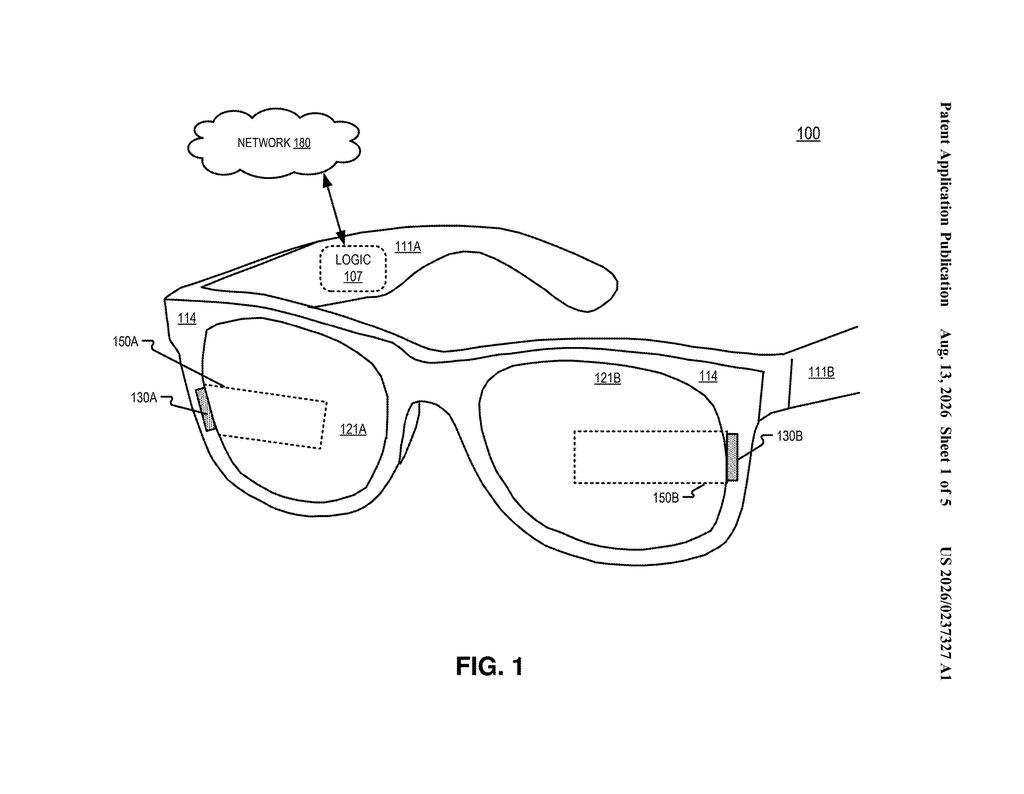
How Meta balances screen brightness across AR apps
A surgeon checks a patient's vitals on one AR display while a navigation overlay floats next to it. Each app was designed expecting full control of the screen, and without any coordination, the result can look washed out or too dark for one of them.
Meta's patent addresses that specific tension. When your AR headset is running two apps at once, the system looks at what each app needs in terms of contrast (the gap between its brightest whites and darkest blacks) and calculates a single combined target that tries to serve both. It then adjusts either the display brightness or a physical lens dimmer to hit that middle ground.
The practical effect is that you shouldn't see one app looking blown out or murky just because another app is open alongside it. The headset does the negotiating automatically, so you don't have to dig into any settings.
… generating a combined target contrast ratio based on the first augmented reality content and the second augmented reality content; and based at least in part on the combined target contrast ratio, adjusting a contrast ratio of the head-mounted display …
Translation: The headset calculates a single contrast setting that works for two different apps running at the same time.
How the combined contrast ratio gets calculated and applied
The patent describes a method running on a head-mounted display (HMD) that receives content streams from two separate AR applications simultaneously. Each application may have been built with its own contrast expectations, which can conflict when rendered together on a single optical system.
The core step is generating a combined target contrast ratio. Contrast ratio is the difference in luminance (brightness) between the lightest and darkest parts of an image; a high contrast ratio makes text pop and colors look rich, while a low one can make everything look flat. By analyzing both content streams, the system picks a ratio that balances the competing demands.
To actually achieve that ratio, the system has two tools:
- Display brightness adjustment, changing how much light the screen itself emits.
- Global dimming of a lens, physically darkening the optical lens in front of the screen, which changes how much of the real world bleeds through and affects perceived contrast in AR.
Using lens dimming is notable because AR headsets are transparent by design. Dimming the lens reduces real-world light that competes with the digital overlay, effectively boosting the perceived contrast of virtual content without cranking up screen power.
The combined target contrast ratio is used to adjust a contrast ratio of the head-mounted display by adjusting a display brightness or adjusting a global dimming of a lens of the head-mounted display.
Translation: The device manages screen visibility by either changing how bright the display is or darkening the headset lens.
What this means for multitasking on AR headsets
For AR headsets to be useful for real work or extended daily use, they need to handle multitasking without the display becoming a visual mess. This patent is tackling a problem that becomes more visible as AR platforms mature and users expect to run productivity apps, communication tools, and media side by side, the way they do on a phone or laptop today.
The tradeoff the design accepts is that neither app gets its ideal contrast; both compromise for a shared middle ground. That's a reasonable trade for comfort but could frustrate developers who build visuals that depend on precise luminance, and it puts some pressure on Meta to make the arbitration algorithm good enough that users never notice the compromise. The latest Big Tech patents in AR are increasingly focused on exactly these display-quality problems as companies push headsets toward all-day wear.
The design commits to a single global contrast value shared across two apps, which is the simplest possible arbitration scheme and probably the right call for a first generation of the feature. The real cost surfaces at the edges: a high-contrast medical visualization running next to a low-contrast navigation overlay will pull that shared value somewhere neither application was designed for. Whether that's acceptable depends entirely on how well Meta tunes the weighting algorithm, and the patent says almost nothing about how that weighting works. That gap is where the feature either feels polished or feels like a hack.
There are more where this came from
We read every patent application Big Tech publishes and send you the ones worth knowing. Plain English, free, every week.
The drawings
5 drawing sheets from US 2026/0237327 A1 · click any drawing to enlarge


Want this weekly breakdown for a company we don't cover? Patentlyze Pro →
Be the first to weigh in