
Meta Patents a Way to Teach Gesture Recognition Across Different Sensors at Once
Training an AI to read hand gestures is hard — and doing it separately for every type of sensor (camera, radar, EMG wristband) is even harder. Meta's new patent describes a shortcut: train one model well, then let it teach the others.
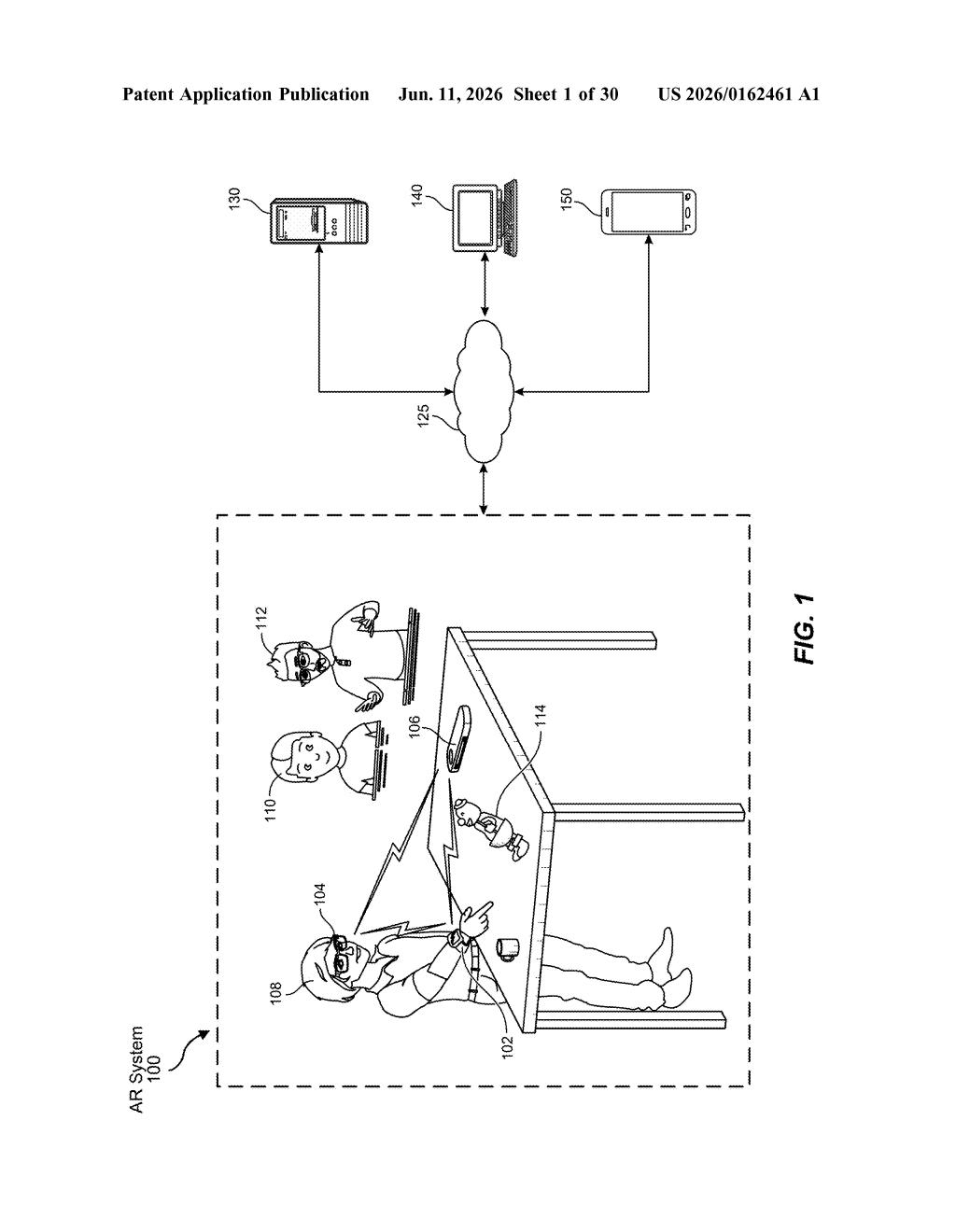
What Meta's cross-sensor gesture training actually does
Imagine teaching someone to recognize a thumbs-up gesture first by watching video footage, and then asking them to recognize that same gesture by touch alone. Because they already understand what a thumbs-up means, the second lesson goes much faster.
That's roughly what this Meta patent describes, but for AI. Their system trains one model to recognize hand gestures using one type of sensor — say, a camera — and then uses what that model learned to speed up training a second model that uses a completely different sensor, like a wristband that detects muscle movement.
The practical upside: you don't have to collect mountains of labeled training data for every sensor type from scratch. The knowledge transfers. For a company building AR glasses and wrist-worn controllers, that's a meaningful time and cost saver.
How the first model's learning transfers to the second
The patent describes a knowledge transfer (also called transfer learning) approach applied to gesture recognition across multiple input types, or "modalities." A modality is just the type of sensor doing the sensing — a camera capturing video, a radar chip bouncing radio waves off your hand, or an electromyography (EMG) wristband reading electrical signals from your muscles.
Normally, you'd train a separate AI model for each sensor type, and each would need its own large dataset of labeled gesture examples. This patent proposes training a first model on one modality until it reliably recognizes a gesture, then using that trained model's internal representations — the patterns it learned — to give a second model a head start on a different modality.
The core claim is deliberately broad:
- Train Model A on Sensor Type 1 (e.g., camera video)
- Use Model A's learned knowledge to bootstrap Model B on Sensor Type 2 (e.g., EMG or radar)
- Model B reaches accuracy faster and with less new training data
The patent title is notably sprawling — it lumps in references to activity tracking, code review, and customer surveys — but the actual claim text is tightly focused on this two-model gesture transfer setup. The extra title language likely reflects internal project grouping rather than the core invention.
What this means for Meta's AR glasses and wearables
Meta is building devices — Ray-Ban smart glasses, the Orion AR prototype, and EMG wristbands — that all need to understand hand and body gestures. Each of those devices uses different sensors, which means collecting separate labeled datasets for each one is expensive and slow. A transfer-learning approach that lets one sensor's trained model teach another could meaningfully compress that development timeline.
For you as a future wearable user, this kind of behind-the-scenes efficiency work is what determines whether gesture controls feel responsive and accurate or clunky and unreliable. It won't show up on a spec sheet, but it's the kind of foundational patent that quietly shapes how well a product works on day one.
The patent's core idea — using one sensor's trained model to teach another — is a real and useful technique in machine learning research. What's notable is how narrowly the actual legal claim is written compared to the absurdly broad title, which reads like a brainstorming document rather than a patent. This is a legitimate infrastructure filing for Meta's AR/wearables pipeline, not a moonshot.
There are more where this came from
We read every patent application Big Tech publishes and send you the ones worth knowing. Plain English, free, every week.
Want this weekly breakdown for a company we don't cover? Patentlyze Pro →