
Meta Patents a Way to Share Conversation Memory Between AI Agents
When you switch from one task to another mid-conversation with an AI assistant, it often forgets what you were just talking about. Meta has filed a patent for a system that carefully hands off only the relevant pieces of a conversation to each AI agent that needs them.
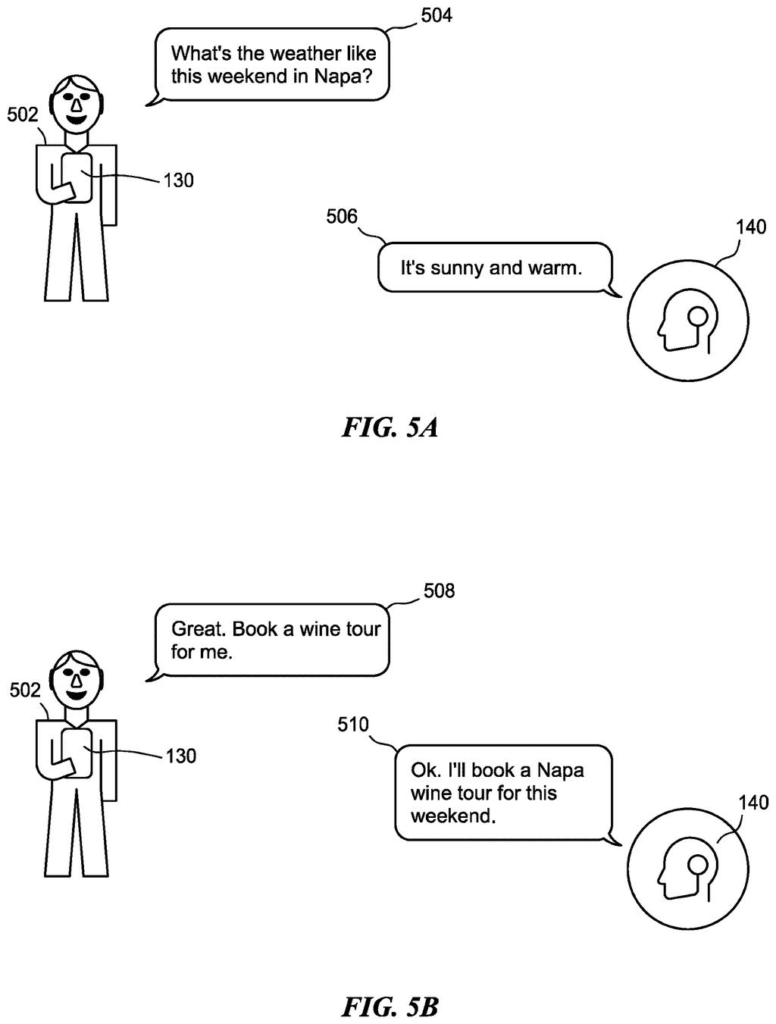
How Meta's assistant keeps track across different AI tasks
Ever asked a voice assistant for restaurant recommendations and then immediately told it to call one of them, only to watch it forget the name you just mentioned? That gap between tasks is exactly what Meta is trying to close.
Meta's patent describes a system where an AI assistant doesn't just restart from scratch every time you change what you're asking it to do. Instead, it figures out which details from your conversation are actually useful for the next task and passes only those along to the right AI agent. Think of it like a secretary who knows to include the address when forwarding your email to a driver, but doesn't include every unrelated message in the thread.
The system tracks two kinds of information during a conversation: the people and things mentioned (called entities) and the specific details about them (called slots, like a time or a city name). When a new task starts, it decides which of those are relevant and shareable before handing them off.
… determining a first subset of the identifiers of the entities and a second subset of the slots of the contextual information from the first dialog session are shareable with the agent based on the agent and first resources of the identifiers of the entities and second resources of the slots …
Translation: The system figures out which specific parts of a past chat conversation are safe to hand over to a new helper bot.
How the system selects and transfers context between agents
The patent describes a method for maintaining a running log of contextual information across a conversation session. That log tracks entities (people, places, objects mentioned by name) and slots (specific attributes attached to those entities, like a restaurant's hours or a contact's phone number).
When a user makes a new request during that same session, the system checks whether a different AI agent needs to handle it. If it does, the system runs a matching process: it looks at what resources the incoming agent is capable of using and compares them against the entities and slots already recorded. Only the entries that the agent can actually act on get passed through.
- Context tracking: The assistant logs entities and slots continuously during a dialog session.
- Handoff decision: The system detects when a task requires a different agent to take over.
- Selective sharing: It filters the context log to find only the details that agent can use.
- Task execution: The receiving agent runs the new task using only the approved subset of context.
This selective approach matters because sharing too much context between agents could be noisy or even a privacy concern, while sharing too little forces the user to repeat themselves. The system tries to find the right slice automatically.
What this means for Meta AI on glasses and phones
For anyone using Meta AI through Ray-Ban smart glasses or a phone, this kind of memory management is the difference between an assistant that feels coherent and one that feels like it resets every few seconds. The practical payoff is fewer moments where you have to repeat yourself mid-conversation, which is one of the most common frustrations with current voice assistants.
Meta's assistant ambitions span wearables, messaging apps, and standalone devices, all of which involve chaining together different specialized AI agents behind the scenes. A reliable context-passing system is the plumbing that makes multi-step, multi-agent conversations feel natural rather than fragmented. Patentlyze covers plain-English patent summaries of AI assistant filings like this one, where the infrastructure details often reveal more about a company's product direction than any press release does.
Meta's 129th filing we've tracked since May in our Meta coverage follows a hardware mute switch and skin-based data transfer as the company keeps exploring ways to move control closer to the body.
The gap between this patent and a real, shipped product is small. No new devices are needed, and the main pieces, a memory store, a session tracker, and a team of specialist helpers, already exist in working AI assistants today.
The one missing piece is a filtering tool that sorts through your context before handing you to the right specialist. Build that, and you get an assistant that actually remembers what you were doing instead of making you start over every time.
There are more where this came from
We read every patent application Big Tech publishes and send you the ones worth knowing. Plain English, free, every week.
The drawings
12 drawing sheets from US 2026/0245052 A1 · click any drawing to enlarge


Want this weekly breakdown for a company we don't cover? Patentlyze Pro →
Be the first to weigh in