
Microsoft Patents a Self-Auditing Automation System That Catches Its Own Errors
Most AI agents that take actions on your behalf have no internal check on whether those actions were correct. Microsoft is patenting a system where a second AI reviews the first one's work before anything goes wrong.
What Microsoft's self-reviewing AI agent actually does
Today's AI agents often operate like an employee who completes a task and files the paperwork without anyone reviewing it. If the AI picked the wrong tool, misread the situation, or produced a flawed result, there's typically nothing built in to catch that before the output lands.
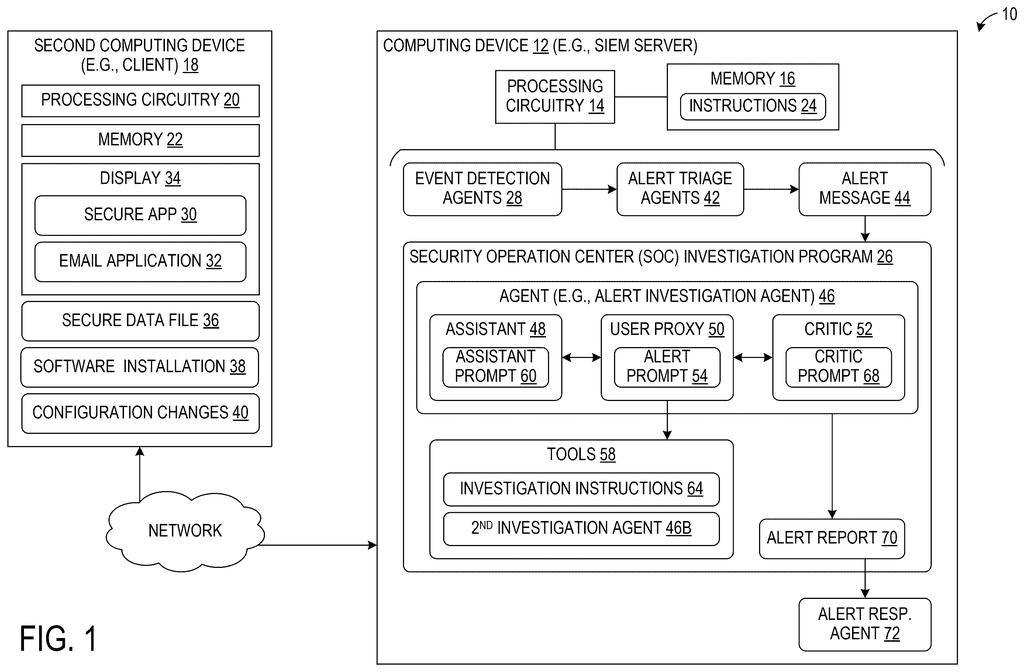
Microsoft's patent describes a system where an AI agent has three internal roles: an assistant that decides what to do, a user proxy that carries out the work, and a critic that reviews the results. After the assistant picks a tool and the proxy runs it, the proxy writes up a report on what happened. That report goes to the critic, whose entire job is to look for mistakes. Any errors it finds get sent back so the assistant can fix them.
Think of it like a built-in proofreader for AI decision-making. You get the same kind of result you'd hope for from a human team with a checker, except it's all happening automatically inside the agent itself.
… the critic reviews the tool response report for errors, and, in a case that one or more errors is detected by the critic, the critic returns the one or more detected errors to the user proxy, and the user proxy relays the one or more detected errors to the assistant.
Translation: The critic checks the report for mistakes and sends them back through the user proxy to the assistant.
How the critic catches errors between AI conversations
The patent describes a multi-agent architecture where a single automated AI system contains three distinct roles, all coordinating through structured conversations.
The user proxy is the central coordinator. It receives an incoming event (say, a support ticket, a data query, or an automated alert) along with instructions for how to handle it. It then runs what the patent calls an agentic flow (a structured sequence of AI-driven decisions and actions) to figure out which tools are needed.
In a first conversation, the user proxy asks the assistant what tool to use. The assistant recommends one, the proxy executes it, and the result comes back. The assistant then writes a tool response report, a structured summary of what the tool did and what it found.
- The report goes to the critic in a second, separate conversation.
- The critic's only job is to review that report for errors, anything from wrong outputs to incomplete responses.
- If errors are found, they're passed back through the proxy to the assistant, which can then correct course.
The whole loop runs automatically. No human has to intervene for the review step to happen.
In a first conversation between the assistant and the user proxy, the user proxy receives a recommendation for a tool and returns a tool response to the assistant after executing the tool.
Translation: The assistant and user proxy talk first to pick and run the right software tool.
What this means for AI that takes real-world actions
AI agents are being built to handle real tasks: booking things, sending emails, querying databases, triggering workflows. When those agents make mistakes, the cost isn't just a bad suggestion on a screen. It can mean a wrong action taken in an actual system. A built-in critic layer is one way to reduce that risk without requiring a human to watch every step.
the pattern in Microsoft's agentic AI filings points toward infrastructure for AI that operates with less human supervision, which makes error-checking architecture a logical piece of the puzzle. If your organization is thinking about deploying AI agents for anything consequential, the question of "who checks the AI's work" is one this patent is directly trying to answer.
Microsoft has filed its 29th application we've tracked since May in our AI agents working together watch, building on its earlier work on auto-rewriting prompts on failure and self-rewriting prompt systems.
The gap between this patent and a working product is unusually small. It describes a software-only design, no new hardware required, built around three roles: an assistant that recommends actions, a worker that carries them out, and a reviewer that checks the results before anything moves forward.
The shortest path to shipping this is essentially just building it. The structure already mirrors tools Microsoft's own developer community uses today, which means the blueprint has been informally tested in the wild already.
What determines whether this actually earns its place in a product is whether the reviewer role can be made reliable. An AI checker that misses mistakes, or flags correct work as wrong, adds delay without adding safety. That training and evaluation problem is the real work ahead.
There are more where this came from
We read every patent application Big Tech publishes and send you the ones worth knowing. Plain English, free, every week.
The drawings
6 drawing sheets from US 2026/0288566 A1 · click any drawing to enlarge


Want this weekly breakdown for a company we don't cover? Patentlyze Pro →
Be the first to weigh in