
Nvidia Patents a System That Splits Tasks Across Specialized AI Workers
Most AI assistants try to do everything themselves. Nvidia's new patent describes a system that breaks a job into pieces and hands each piece to the AI agent best suited to handle it, chosen by a neural network acting as a dispatcher.
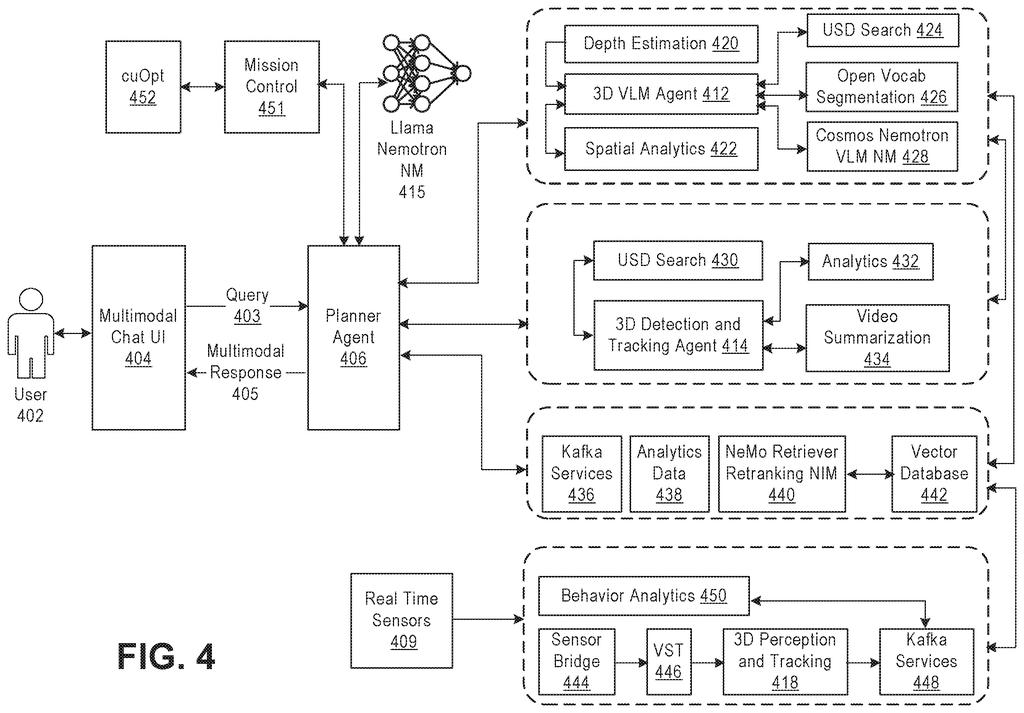
How Nvidia's task-routing AI divides and conquers
Today, when you ask an AI assistant to do something complicated, it tries to handle the whole thing on its own, even the parts it's not great at. That often leads to weak or incomplete answers. Nvidia wants to change that by building a system that acts more like a manager than a solo worker.
The idea is that instead of one AI struggling through a complex request, a coordinating system breaks your question into smaller steps and then picks a different specialized AI agent for each step, based on each agent's documented skills. Think of it like a dispatcher routing calls to whoever is actually on duty and qualified.
The agents can include things like vision systems, language models, or robots with specific physical capabilities. Each has a profile describing what it can do, and a neural network reads those profiles to make the matching decisions automatically.
… select, from a plurality of artificial intelligence (AI) agents, two or more agents to perform the subtasks based on one or more indicators, obtained from a configuration profile corresponding to each of the two or more AI agents, indicating capability of each of the two or more AI agents.
Translation: The system matches each subtask to the specific AI worker best qualified to handle it.
How the neural network reads agent profiles and assigns subtasks
The patent describes a system built around three main steps: receiving a task, breaking it into subtasks, and assigning each subtask to the right AI agent from a pool.
The core mechanism is a neural network acting as an orchestrator. When you submit a request, it generates a task plan, a structured workflow that defines what needs to happen and in what order. It then looks at a library of available AI agents, each described by a configuration profile (essentially a capability resume listing what that agent knows how to do).
Using those profiles, the neural network selects two or more agents to handle different parts of the plan. The agents can be anything: a computer vision model that reads images, a language model that generates text, or a physical robot that interacts with the real world. The term physical AI agents in the title refers to agents that can take actions in the physical world, not just generate text.
- Task intake: the system receives a user query or instruction
- Planning: a neural network builds a step-by-step workflow
- Agent selection: each step is matched to an agent based on capability profiles
- Execution and response: the agents run their steps, and results are combined into a final answer
… execute the task plan by using a neural network to select different agents to generate information to perform different operations in the task plan; and generate a response based on execution of the task plan.
Translation: A neural network runs the workflow by assigning various operations to different agents.
What this means for users of AI assistants and robotics
For you as a user, this matters because it changes what AI assistants can realistically handle. Right now, a single AI model tends to fail on the parts of a task that fall outside its strengths. A routing system like this would, in theory, let a single request tap into a vision specialist, a planning model, and a robotic arm without you needing to know any of them exist.
Nvidia's interest in physical AI and robotics makes this more than a software abstraction. Nvidia sells the compute that runs warehouses, factories, and self-driving vehicles. A standardized way to coordinate AI agents across those environments could become infrastructure for industrial automation, where errors are expensive and specialization is non-negotiable.
Nvidia's ninth filing we've tracked on our AI models working in teams watchlist since July builds on earlier applications like the script-and-voice one and the local task-routing hub.
Error reduction by specialization is the clearest benefit here. When one AI handles a request it's only partly equipped for, you get answers that are confidently wrong in places. Routing subtasks to agents with the right capabilities would, in practice, cut down on that failure.
That only works as well as the descriptions of what each agent can actually do. If those descriptions are incomplete or out of date, the system sends the wrong worker, and you end up with the same problem plus extra steps. The patent is quiet on how those descriptions stay accurate over time, which is where systems like this typically fall apart in real use.
For someone asking a complex, multi-part question, the practical change is more complete answers. You would notice it when an AI stops skipping the parts it couldn't handle or mangling the order of steps, which is a modest but real improvement in daily use.
There are more where this came from
We read every patent application Big Tech publishes and send you the ones worth knowing. Plain English, free, every week.
The drawings
32 drawing sheets from US 2026/0278390 A1 · click any drawing to enlarge


Want this weekly breakdown for a company we don't cover? Patentlyze Pro →