
Microsoft Patents an AI That Builds Apps From a Written Description
Microsoft has filed to cover an AI that takes a written description of an app, drafts the blueprint, and writes the code, pausing for a human to sign off along the way. The filing's poll-app example shows how much of the planning work it wants to automate.
What Microsoft's AI app-builder actually does
You've typed a few sentences describing the app you want: people can create polls, vote, search by topic and leave comments. Normally, a team of engineers would have to plan how all the pieces fit together before anyone writes real code.
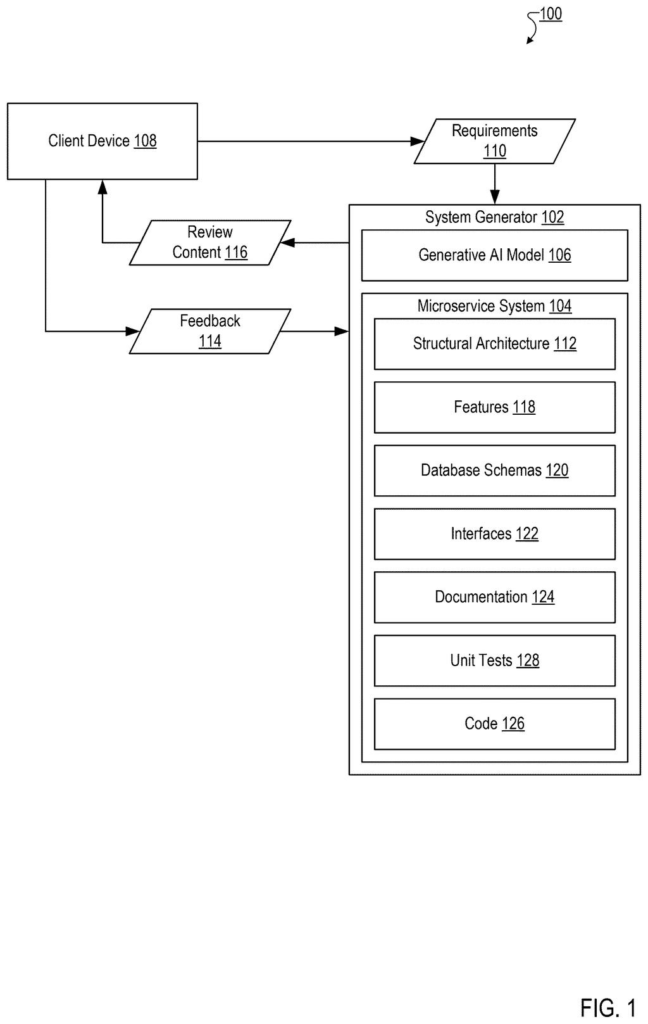
Microsoft's patent application describes handing that job to an AI model, one stage at a time. The AI first draws a blueprint of the app's parts and how they connect. You look it over and approve it or change it. Then the AI spells out what each part must do, writes the code, and packages everything into a version that can run.
The filing also describes the AI writing automatic tests and fixing its own code when a test fails. Stopping for your approval along the way is meant to catch mistakes early, before they pile up.
generating a structural architecture of a microservice system by requesting a generative artificial intelligence (AI) model to generate the structural architecture based on a natural language description of one or more requirements of the microservice system …
Translation: The system designs the software architecture by asking an AI to read plain text requirements.
How the AI goes from blueprint to finished build
A microservice system is an app built from many small, independent services (such as separate pieces for search, voting and user profiles), each doing one job and talking to the others. This patent application covers a pipeline in which a generative AI model (a large language model, like the ones behind chatbots) designs and builds one.
The steps, as claim 1 lays them out:
- Blueprint: from a written description of requirements, the AI produces a structural architecture, a map of the services, databases and connections between them. A person reviews it.
- Interfaces: once the blueprint is accepted, the AI writes an interface for each component, a list of function signatures (each function's name, inputs and outputs, with no working code inside).
- Code: the AI writes the code that fills in those functions.
- Build: the code is compiled (translated into a runnable program) into a build of the system.
The filing also describes extras that show up in later claims. The AI can pick monitoring features such as logging and tracing from a preset list, draft database layouts, write documentation, and write unit tests (small automatic checks) before the code. If code fails a test or a static analysis (an automatic scan for bugs), that failure goes back to the AI, which fixes the code or the test.
… compiling the code implementing the one or more interfaces to generate a build of the microservice system …
Translation: Finally, the generated code is compiled to create a working software build.
What this means for people who build software
Apps built from many small, independent parts let separate teams work in parallel, but they are hard to design and test. The filing says automating the blueprint, the code and the tests could cut development time and cost, and reduce bugs caused by tangled dependencies between parts.
The patent targets software teams, so you would feel it only indirectly, perhaps through faster app updates or cheaper software. The more telling detail is the design: a person signs off at each stage instead of letting the AI run unchecked. The filing also says the same approach could extend an existing system or modernize an old one, and could generate just part of a system.
Microsoft's 30th filing we've tracked since July on agents that act for you adds to earlier work like one diagnosing broken apps and one finding helper apps.
Claim 1 locks in a specific order: a written description goes in, an AI produces a blueprint, a human approves it, then the AI writes the function list, then the code, then a working build comes out. That sequence of steps, with the human approval baked into the middle, is what the claim actually covers.
The claim names no particular AI model, no minimum quality standard, and no error-checking requirement. That looseness makes it broad enough to reach many tools that follow the same staged pattern, even ones built by developers who never read this filing.
If granted, this patent could give Microsoft a legal claim over any software pipeline that moves from plain-language requirement to AI-generated blueprint to human sign-off to AI-generated code to compiled product. That is a wide net, and whether that exact sequence qualifies as a novel invention is the question examiners will have to answer.
Get our take in your Top Stories
Liked this breakdown? Add Patentlyze as a preferred source on Google, and our plain-English take shows up more often in your Top Stories the next time Microsoft patent news breaks.
There are more where this came from
We read every patent application Big Tech publishes and send you the ones worth knowing. Plain English, free, every week.
The drawings
10 drawing sheets from US 2026/0349677 A1 · click any drawing to enlarge


Show the other 2 sheets


Want this weekly breakdown for a company we don't cover? Patentlyze Pro →
Be the first to weigh in