
Microsoft Files Patent for an AI Coach That Tells Nurses What to Ask Next
Microsoft's filing describes an AI that follows a patient visit as it happens and tells the nurse which question to ask next, so no box in the chart gets skipped. It also flags answers that clash with what was written down earlier.
What Microsoft's chart-filling AI coach does
Today, a nurse talking with a patient often has to hunt through tabs and flowsheets in a digital chart, one eye on the screen and one on the person in the bed. That distraction is what Microsoft's filing says it wants to cut.
The idea: an AI tool looks at what has already been entered in the record and works out which blank field matters next. A chatbot-style AI then writes a suggestion, such as a question to ask or a test to run, and shows it on the device in front of you. It can also turn the live conversation into a transcript and highlight details that belong in the record.
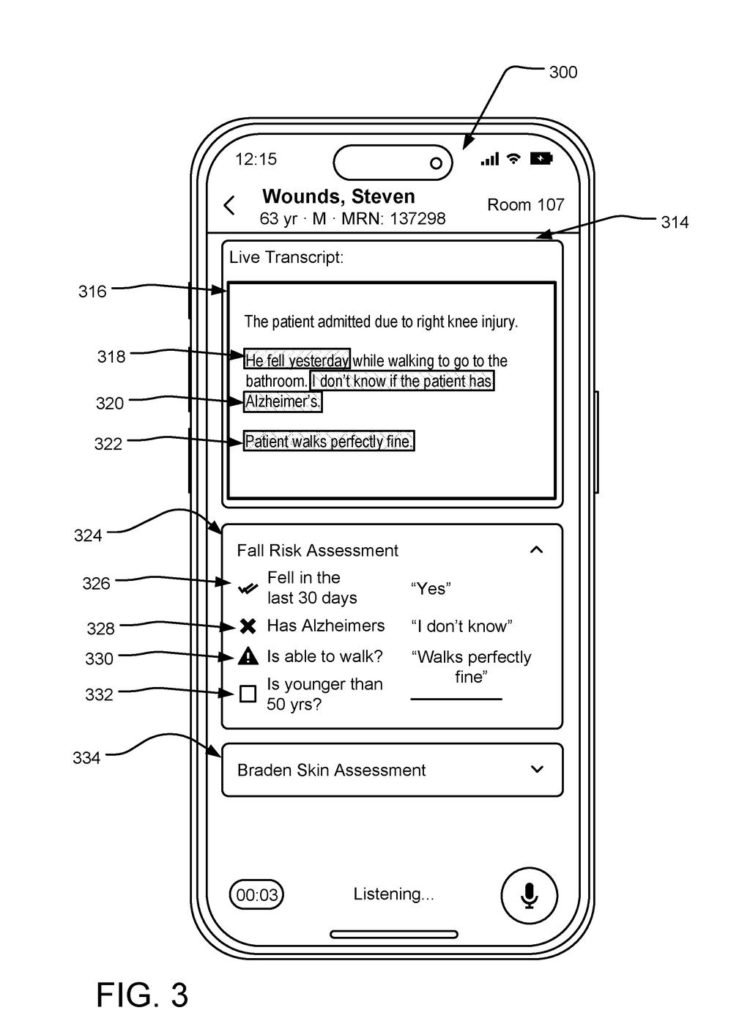
The filing says the same approach could help detectives, insurance adjusters and court reporters too. And if something said now clashes with an earlier entry, like 'he fell yesterday' next to 'walks perfectly fine,' the tool flags it.
… identifying a next input field of the electronic record based on the historical entities by executing a predictive model on the historical entities, wherein the next input field corresponds to a next entity in the context, the next input field is different from the first input fields; …
Translation: The system figures out what information is missing from the patient chart by analyzing what has already been entered.
How the AI picks the next blank field to ask about
The system starts from the record itself. It looks at the historical entities, meaning the answers already filled in for this case (for example, 'Fell in the last 30 days: Yes'). A predictive model, a program trained on examples of past records and which field came next, picks the next blank field that matters.
Then a generative AI model (the same family of technology as chatbots; the filing says it may be a large language model) receives that field plus the history. It writes suggested actions: questions to ask, or steps and tests to perform. These appear on the professional's device.
While the conversation runs, the filing describes the system doing more:
- Transcribing the audio and highlighting details that fit a field in the record.
- Marking a detail verified when its format fits the field (a 'Yes' for a yes/no box), missing when the person said they don't know, or contradicting when it clashes with an earlier entry.
- Entering verified details into the record, either during the visit or once it ends.
The professional can pick a guide first, such as 'Fall Risk Assessment,' to narrow which fields count. Profiles of the patient, the professional and the hospital can also shape the suggestions. The AI can even offer practical tips, like turning down a TV so the transcript comes out cleaner.
What this means for nurses and patients at the bedside
The practical payoff is time and attention. Charting is a big part of a nurse's day, and the filing says clicking through a huge record during a conversation pulls focus away from the person in front of you. A tool that points to the next question and fills in the easy answers could shorten that paperwork.
The contradiction flag matters just as much. Records get updated over many visits, and the filing points out that checking new information against old entries takes careful review when time is short. The same design is described for investigations, audits and insurance claims, so it is aimed at record-keeping work in general, not just hospitals.
Microsoft's 24th filing we've tracked since July on AI agents acting for you joins earlier work like searching databases by asking and cutting a job to fewer steps.
The benefit you would notice first is a nurse who looks at you instead of a screen. If the AI can name the next question and fill in the obvious answers, the visit feels more like a conversation and less like a form.
The contradiction alerts could catch the most important mistakes. A patient who says he fell yesterday and also walks perfectly fine is exactly the mismatch a rushed human can miss, and a prompt right then could prevent a wrong entry from sitting in a chart.
The risk is a wrong suggestion or a mis-heard word landing in a medical record, so the human check on every entry matters a lot. The filing keeps the professional in charge of confirming entries, and that is the right design. If it works as described, this is a useful tool for busy people who spend more time on paperwork than they would like.
Get our take in your Top Stories
Liked this breakdown? Add Patentlyze as a preferred source on Google, and our plain-English take shows up more often in your Top Stories the next time Microsoft patent news breaks.
There are more where this came from
We read every patent application Big Tech publishes and send you the ones worth knowing. Plain English, free, every week.
The drawings
11 drawing sheets from US 2026/0330128 A1 · click any drawing to enlarge


Show the other 3 sheets


Want this weekly breakdown for a company we don't cover? Patentlyze Pro →
Be the first to weigh in