
Microsoft Patent Trains Algorithms to Blend Social Feed Content Through Trial and Error
Every time you scroll a social feed, something has to decide what goes where. Microsoft just patented an AI system that makes those decisions using a self-teaching model, the kind used in game-playing AI, to mix different categories of content on the fly.
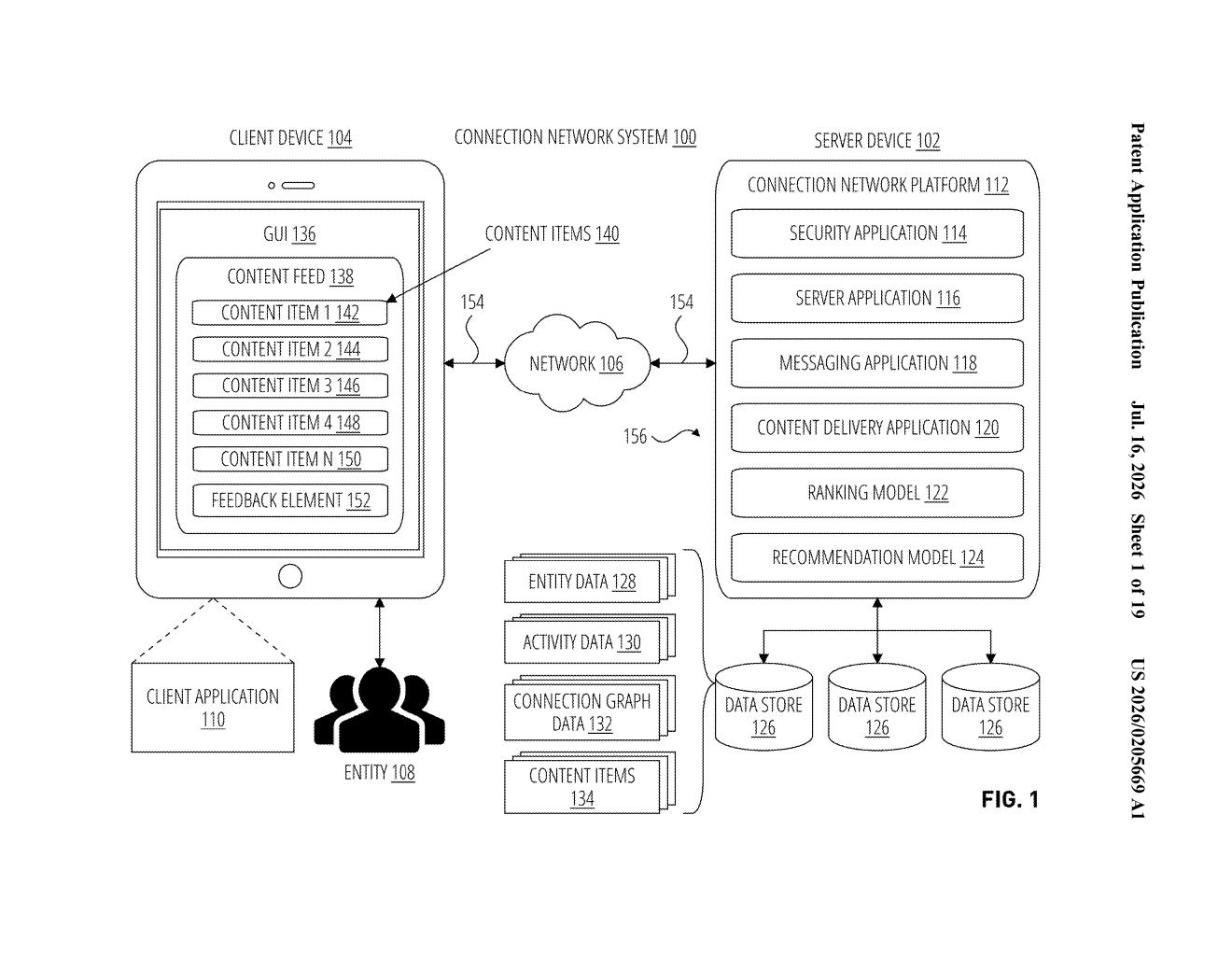
What Microsoft's feed-blending AI actually does
Imagine your LinkedIn feed has two kinds of posts competing for your attention: job updates from your network and sponsored content from advertisers. Right now, deciding how many of each to show you, and in what order, is a complicated balancing act. Microsoft's patent describes an AI that learns to do that mixing automatically.
The system uses a type of AI called reinforcement learning, the same family of techniques that taught computers to play chess and Go. Instead of being programmed with rigid rules, it figures out the best mix by trial and error over time, getting rewarded when users engage and penalized when they don't.
The result is a feed where different content types are scored, ranked, and slotted into specific positions, all in the moment you open the app. The AI was trained offline (on historical data) but runs its decisions live, meaning your feed is shaped by a model that has already learned from millions of past interactions.
How the Deep Q Network picks and places content
The patent describes a two-part system: an offline execution system that trains the AI model on historical data, and an online execution system that uses that trained model in real time when someone loads their feed.
The core AI is a Deep Q Network (DQN), a type of reinforcement learning model. Reinforcement learning works like training a dog with rewards: the model tries different actions, gets feedback on which ones worked, and gradually learns a policy for making good decisions. A DQN specifically uses a neural network to estimate which action (in this case, which content to show) will produce the best long-term outcome.
When a feed request comes in, the system scores a pool of candidates across at least two content types (think organic posts versus promoted content). A blending algorithm then picks the best items from each category and assigns them to specific positions in the feed. The patent refers to this as filling "slots."
- Candidate content items from two or more categories are scored using the DQN model
- A blending algorithm selects the top items from each category
- Those items are assigned to numbered positions in the feed
- The final ordered feed is displayed to the user
What this means for LinkedIn and professional feeds
Microsoft owns LinkedIn, and LinkedIn's feed faces exactly the challenge this patent addresses: mixing posts from your connections, job recommendations, news articles, and ads in a way that keeps people scrolling without feeling like they're drowning in promotions. A reinforcement learning approach could let the feed adapt to each user's behavior more fluidly than a fixed ranking formula.
For you as a user, the practical implication is a feed that theoretically gets better at showing you the right ratio of content types over time. The flip side is that the system is explicitly optimizing for engagement metrics, which means what you see is shaped by what the AI thinks will keep you on the platform, not necessarily what you'd choose yourself.
This is a solid, real piece of feed-ranking infrastructure, not a flashy AI demo. The use of a Deep Q Network for content blending is a legitimate engineering choice that several major platforms have explored. If Microsoft deploys this in LinkedIn's feed, the change would be invisible to users but could meaningfully shift how organic and paid content compete for screen space.
Get our take in your Top Stories
Liked this breakdown? Add Patentlyze as a preferred source on Google, and our plain-English take shows up more often in your Top Stories the next time Microsoft patent news breaks.
There are more where this came from
We read every patent application Big Tech publishes and send you the ones worth knowing. Plain English, free, every week.
Want this weekly breakdown for a company we don't cover? Patentlyze Pro →