
Microsoft Patents AI-Generated Live Environments for Video Calls
Microsoft is working on video call technology that goes far beyond blurred or static backgrounds: an AI model would generate a full, dynamic environment around you in real time, making it look like you're actually sitting inside a scene the software invented on the spot.
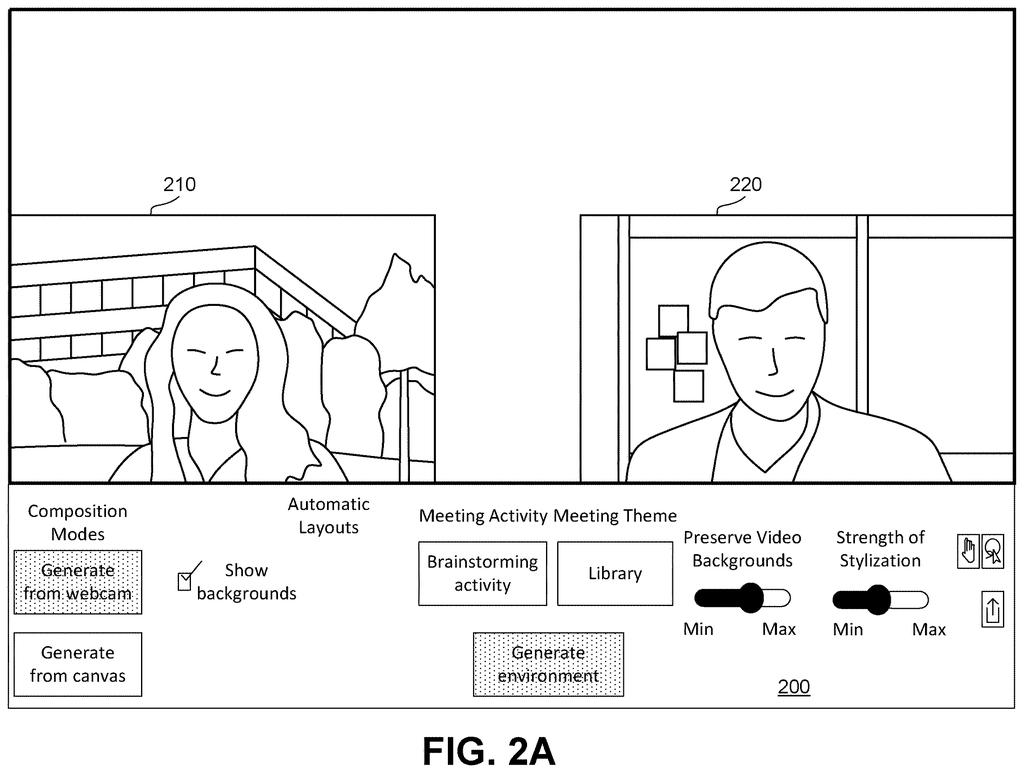
What Microsoft's AI video call backgrounds actually do
Right now, video call backgrounds are pretty blunt tools. You pick a static photo or a slightly smeared blur, and everyone on the call can tell it's fake within seconds. The background doesn't move, doesn't respond to the meeting's context, and definitely doesn't feel like you're all sharing the same space.
Microsoft's patent describes a system that uses a generative AI image model to create backgrounds that are built around you dynamically. The AI can take a text prompt related to the meeting, generate a convincing scene, and then layer you on top of it so it looks like you're physically present in that environment. The meeting organizer or even participants could shape what that environment looks like.
Two modes are described: one where the AI fills in and extends a scene around you (inpainting), and one where it reskins your entire surroundings in a new visual style (image-to-image restyling). Either way, the result is a background that's generated fresh for that call, not a stock photo you picked from a dropdown.
How the generative model places you inside a new scene
The patent describes a teleconferencing system that feeds a text or context-based prompt into a generative image model (the same category of AI that powers tools like DALL-E or Stable Diffusion) to produce a background environment tailored to the meeting.
Two distinct AI modes are at work:
- Inpainting mode: The AI fills in or extends the space around a user, generating new visual content to replace or augment what's behind them. Think of it as intelligently painting a new room around you.
- Image-to-image restyling mode: The AI takes the existing camera view and transforms its visual style entirely, so your home office might be rerendered to look like a conference room or an outdoor patio.
In both cases, the user is superimposed onto the generated image, creating the visual impression that they are physically inside the AI-created environment. The prompts driving the generation can relate to meeting context, such as the topic, participants, or a shared theme.
The system is designed for real-time use during a live teleconference, meaning the generation has to happen fast enough to keep up with a video feed. The patent also notes that multiple participants could potentially share a coherent generated environment, nudging video calls closer to a sense of shared virtual presence.
What this means for remote meetings and virtual presence
For you as a remote worker, the practical difference here is that your background could become an active part of the meeting rather than a static afterthought. A team call about a product launch could visually place everyone in the same branded space. A client presentation could match a consistent visual theme without anyone needing a green screen or a tidy home.
Microsoft keeps filing on AI-powered meeting and presence tools, and this patent fits that pattern squarely. Whether this ever ships as a Teams feature depends on whether the real-time generation is fast and reliable enough to not distract from the call itself. But the underlying move here is clear: Microsoft is testing whether AI can turn a two-dimensional video grid into something that at least feels like a shared space.
That makes this the seventh AI image & video filing from Microsoft we've tracked since June, a group that includes one on copying chart styles and one on cleaning up photos by content.
The honest case for this patent is straightforward: fake video backgrounds are one of the most consistently unconvincing things in modern remote work, and AI-generated ones that actually respond to meeting context would be a real improvement over a blurred IKEA bookshelf.
The harder question is whether the AI can generate these scenes fast enough and consistently enough to not become a distraction. A background that glitches, flickers, or renders you with three arms is worse than a static photo. The patent describes the capability but doesn't resolve the reliability problem, and that gap is where most ambitious video-call features have gone quiet.
For the average person on a Teams call, this would only matter the day it works without thinking about it. Until then, it's an interesting research direction dressed up in patent language.
There are more where this came from
We read every patent application Big Tech publishes and send you the ones worth knowing. Plain English, free, every week.
The drawings
16 drawing sheets from US 2026/0278869 A1 · click any drawing to enlarge


Want this weekly breakdown for a company we don't cover? Patentlyze Pro →
Be the first to weigh in