
Google Patents a System That Turns Smart Home Sensor Data Into Suggested Actions
Your smart home collects a mountain of data every day, but most of it just sits there. Google is patenting a way to make that data work, using an AI model that spots patterns across your sensors and turns them into concrete suggestions.
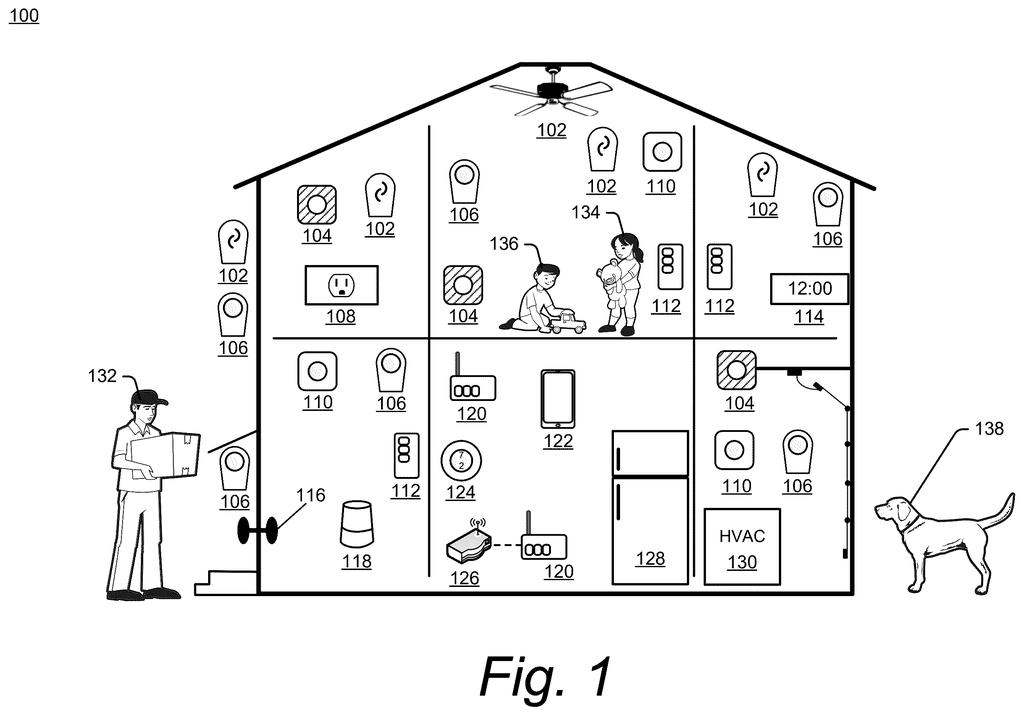
What Google's home-pattern AI actually does for you
Every time your front door opens, your thermostat adjusts, and your lights flip on, your smart home logs all of it. That data piles up fast, and right now most people never see any value from it beyond the individual device doing its one job.
Google's patent describes an AI that watches all those logged events together, finds patterns across them, and then proposes specific actions based on what it learns. So if your motion sensor and thermostat data consistently show that you're home by 6 p.m. on weekdays, the system could suggest an automation to pre-heat the house before you arrive. You'd get a suggestion to act on, rather than having to dig through settings yourself.
The idea is to close the gap between owning a smart home and actually getting the most out of it. Most people set up a handful of routines at install and never change them. This system is meant to notice what you've been missing.
generating, by one or more home surveillance sensors, home data; receiving, by a machine-learned (ML) model, the home data; generating, by the ML model, one or more correlations based on the home data …
Translation: Sensors collect activity data and an AI model analyzes it to find patterns.
How the ML model connects sensor events to actions
The patent describes a pipeline that starts with home surveillance sensors (motion detectors, door/window sensors, cameras, thermostats, and similar devices) continuously generating what the filing calls home data, a stream of timestamped events from around the house.
That data is fed into a machine-learned (ML) model, which finds correlations (repeating relationships between events, like the porch light turning on shortly before the front door opens every evening). The model doesn't just log those patterns; it uses them to generate a home action, a specific proposed change to how the home operates.
The action is then configured for output to the user, meaning the system presents it in a form the person can accept or reject rather than applying it automatically without consent. The patent doesn't prescribe exactly how that suggestion reaches the user, whether as a push notification, a card in an app, or a voice prompt, but the output step is explicitly part of the claimed method.
- Sensors generate continuous event logs
- ML model finds repeating cross-device patterns
- System proposes a concrete home action based on those patterns
- User receives the suggestion for review
What this means for Google Nest and Home users
For most people, the hardest part of a smart home is the setup, specifically knowing which automations to create. You have to think of the scenario yourself, find the right settings, and configure it manually. A system that watches your actual behavior and proposes automations removes that friction entirely. You'd notice it most the first time it suggests something you'd been meaning to set up for months.
Google's interest in ambient home intelligence shows up clearly here. The patent also has a privacy dimension worth noting: the model processes data from surveillance sensors, so how that data is stored, who can see it, and whether it leaves the device are questions this filing doesn't fully answer. Those are the details users will reasonably want before trusting a system like this.
Google's 46th filing we've tracked since May in our AI agents acting for you watch builds on earlier applications like formula writing from examples and proactive on-device suggestions.
Most people who buy smart home gadgets never get much out of them because setting up automations means knowing what you want before you've ever noticed the pattern. This system watches your home for you and makes the suggestion itself.
The practical difference shows up in small moments: your lights have been switching on at 7am every day, so your home offers to do it automatically. You didn't have to log a request or know that "routine" was even an option.
The document stays quiet on what happens to all the sensor data after it's been analyzed, and for something that watches your daily rhythms at home, that gap will matter to people before they decide to trust it.
There are more where this came from
We read every patent application Big Tech publishes and send you the ones worth knowing. Plain English, free, every week.
The drawings
13 drawing sheets from US 2026/0303401 A1 · click any drawing to enlarge


Want this weekly breakdown for a company we don't cover? Patentlyze Pro →
Be the first to weigh in