
New Browser Patent Detects When Your Medical Data Is Being Leaked
Most privacy tools tell you after your data has been exposed. Microsoft is patenting a system that warns you <em>before</em> you click — specifically when that click might reveal something sensitive like a medical condition.
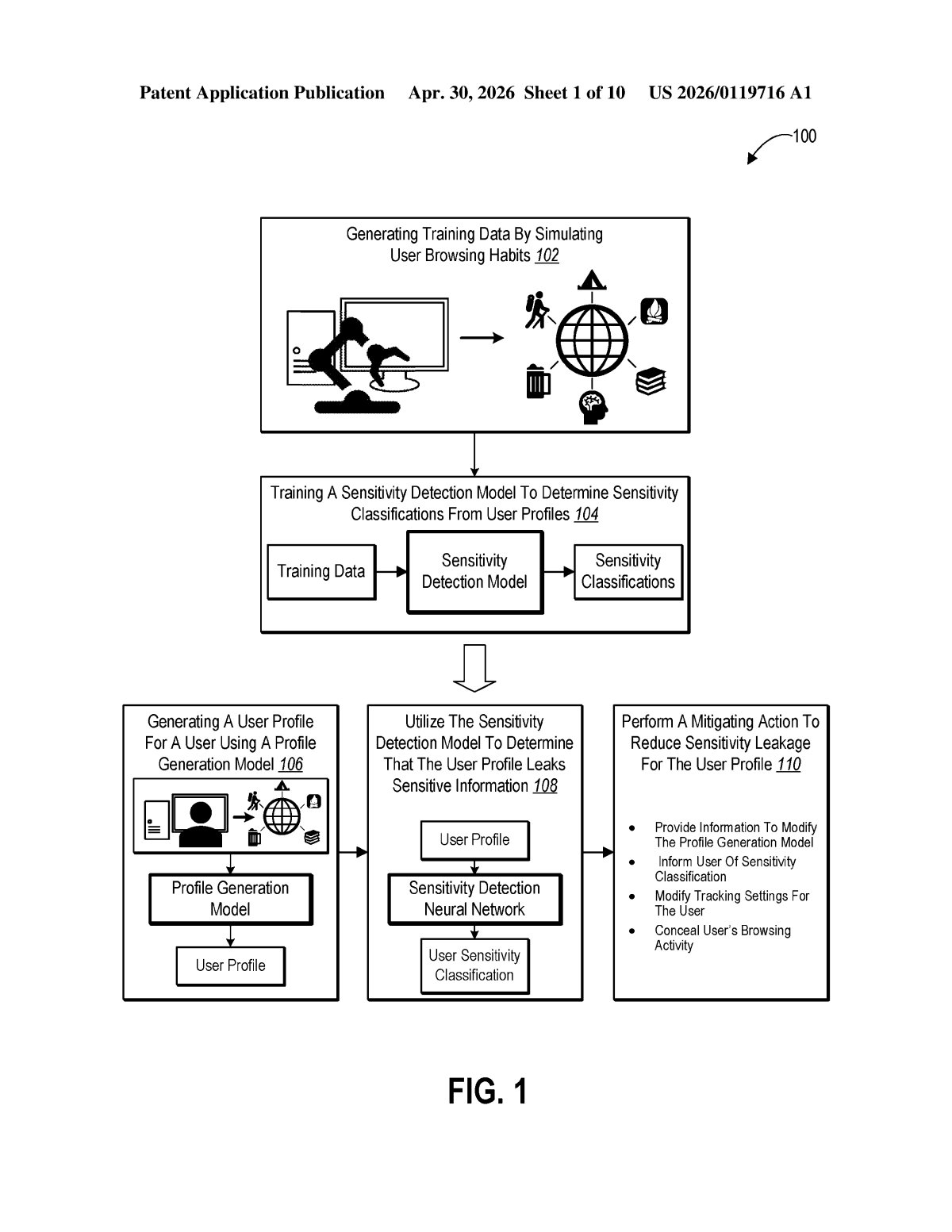
How Microsoft's browser spots health data leaks before they happen
Imagine you've been browsing websites about a specific health condition. Your browser, over time, has quietly built up a profile of your interests — and that profile now hints pretty strongly that you might have that condition. Now imagine an ad network or a website is about to learn that fact about you just because you clicked a button. Microsoft's patent describes a system designed to stop that from happening.
The idea is that your browser gets loaded with a personal "sensitivity classification" — basically a label describing what kind of private information your browsing history reveals about you, like a health condition or a financial situation. When you're about to interact with something on a page — say, a link or a button — the browser checks whether clicking it would expose that sensitive category.
If there's a high chance it would leak that information, the browser warns you first, before you click. You get to decide whether to proceed. It's like a privacy gut-check built directly into the browser.
How the sensitivity classifier flags risky browser interactions
The system operates in two main stages: classification and pre-interaction warning.
First, the system uses machine learning models to analyze a user's browsing activity and assign a "sensitivity classification" — a structured label identifying what private or sensitive information (such as a health condition, political affiliation, or financial status) could be inferred from that browsing history. Think of it as the system asking: "If someone looked at this person's browser profile, what sensitive facts could they deduce?"
Second, that classification is handed directly to the web browser. When you hover over or approach a selectable element (a link, button, or form field), the browser evaluates whether interacting with it would increase the chance that your sensitivity classification gets transmitted to a third party — an ad server, a website's analytics backend, etc. This is what the patent calls an "increased likelihood amount."
If that likelihood crosses a threshold, the browser surfaces a warning before you click — not after. The patent also mentions mitigation actions, suggesting the system can go further than just warning: it may be able to actively block or alter the outgoing data to prevent the leak from occurring at all.
What this means for health privacy in everyday browsing
Health data is one of the most sensitive categories of personal information, and current browser privacy tools are almost entirely reactive — they block trackers in bulk or show you reports after the fact. A system that reasons about what your browsing implies about you and warns you in real time is a meaningfully different approach. If this shipped in Edge, it would be one of the first browsers to do contextual, inference-aware privacy protection at the interaction level.
For you as a user, this could matter most on health-related sites, support forums, or condition-specific communities — places where the gap between "I visited this page" and "I have this diagnosis" is uncomfortably small. Whether Microsoft builds this into Edge, Bing, or a broader privacy product line, the underlying idea — modeling what your data implies, not just what it says — is a direction the whole industry will eventually have to reckon with.
This is genuinely interesting work, not just a checkbox privacy filing. The shift from blocking trackers to modeling inferred sensitivity — and acting on it preemptively — is a real architectural change in how a browser could think about your data. Whether it ships in a form users actually see is a different question, but the research team behind it (including Microsoft Research contributors) suggests this isn't just a legal placeholder.
There are more where this came from
We read every patent application Big Tech publishes and send you the ones worth knowing. Plain English, free, every week.
Want this weekly breakdown for a company we don't cover? Patentlyze Pro →