
Microsoft Patents a Detection Engine for Bot-Created Cloud Tenants
Bots don't just spam social media — they spin up fake cloud accounts to abuse free tiers, launder compute, or stage attacks. Microsoft's new patent describes a two-stage detection engine that catches them by looking at the fingerprints tenants leave behind, not just the accounts themselves.
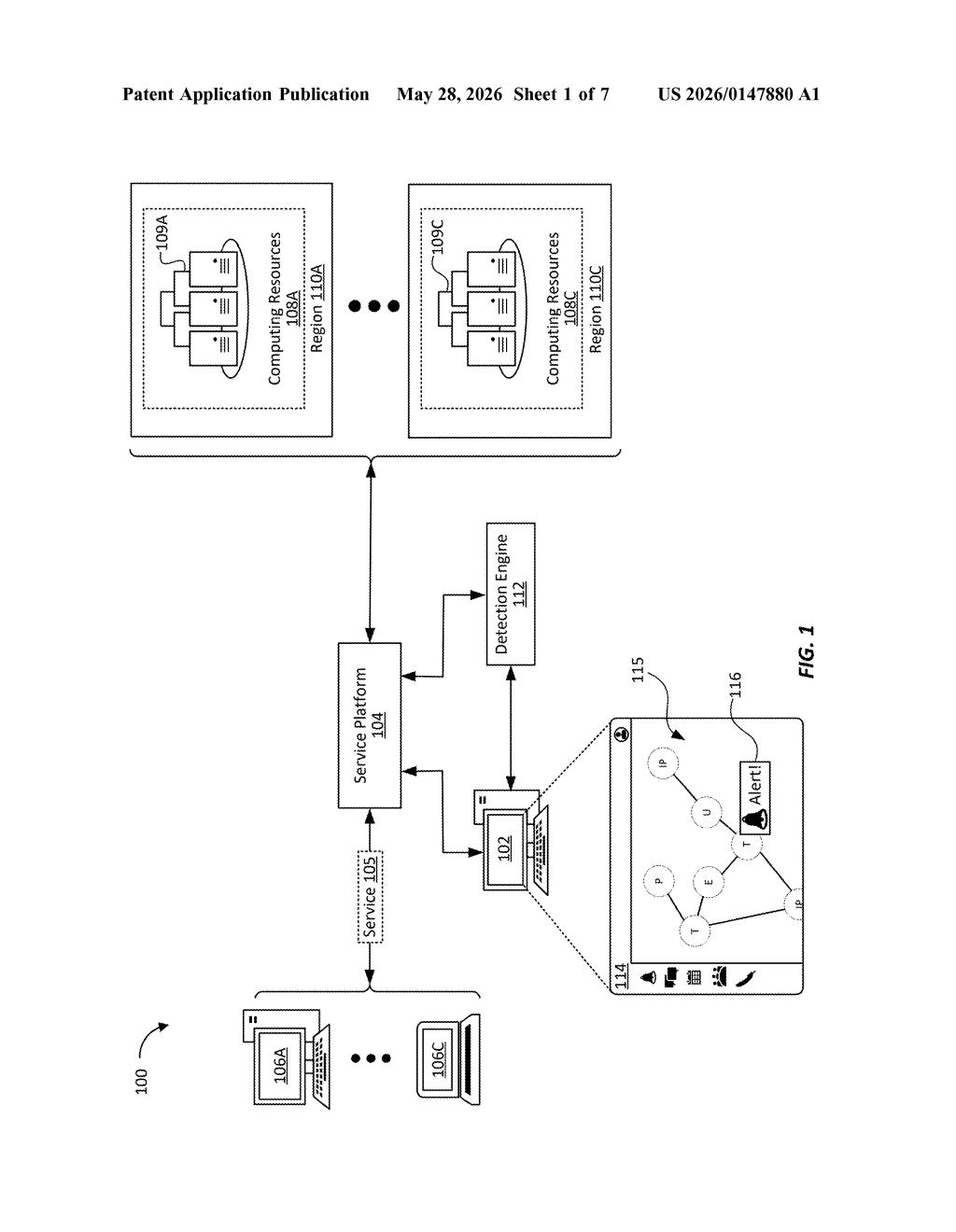
How Microsoft spots fake accounts in its cloud
Imagine someone sets up hundreds of fake Microsoft Azure accounts using automated scripts — each one looks legitimate on its own, but they all share suspicious patterns: the same IP ranges, the same storage buckets, the same weird configuration choices. Individually, none of them trips an obvious alarm. Together, they're a clear bot farm.
That's the problem this patent is trying to solve. Microsoft's proposed detection engine looks at the resources each cloud tenant uses — things like virtual machines, storage containers, and network addresses — and groups tenants together based on how similar those resources are. If a cluster of tenants looks suspiciously alike, the system flags it as a candidate for bot-created accounts.
Once a suspicious cluster is identified, a neural network takes over and reviews the tenants inside it one by one, separating the real accounts from the bots. The idea is to let pattern-matching do the heavy lifting at scale, and then let the AI handle the nuanced judgment calls.
How the clustering and neural network pipeline works
The patent describes a two-phase pipeline. In the first phase, the detection engine collects metadata about every tenant (a customer account or organization) within a cloud environment, along with the resources tied to each tenant — things like virtual machine configurations, storage endpoints, IP address blocks, or domain registrations.
It then runs a clustering algorithm that groups tenants based on relational similarity across those resources. The output is a graph-like structure where nodes represent tenants or resources and edges ("lines") represent shared or similar attributes. A cluster with unusually high internal similarity — many tenants pointing to the same handful of resources — is flagged as likely containing bot-created accounts.
In the second phase, that flagged cluster is fed into a neural network model (a pattern-recognizing AI trained to distinguish legitimate accounts from automated ones). The model reviews each tenant in the cluster and produces a per-tenant verdict: legitimate or bot-created.
- Phase 1 — Resource graph construction and cluster detection
- Phase 2 — Neural network classification within suspicious clusters
- Output — Labeled list of bot-created vs. legitimate tenants
The two-stage design is deliberate: clustering reduces the search space dramatically, so the neural network only has to do precise analysis on a small, high-suspicion subset rather than every tenant in the environment.
What this means for Azure fraud detection at scale
Cloud platform abuse — fake accounts created to exploit free tiers, mine cryptocurrency, or stage credential-stuffing attacks — is a real and expensive problem for providers like Microsoft Azure. Today, most detection relies on rule-based systems or manual review, which don't scale and are easy for sophisticated bots to evade. A graph-clustering approach that looks at relationships between accounts, rather than individual account behavior, is considerably harder to fool: a bot farm has to perfectly mimic not just one account, but dozens simultaneously.
For Azure customers, better bot detection means a cleaner, more secure multi-tenant environment — fewer abusive neighbors on shared infrastructure. For Microsoft, it's a direct cost-reduction play. Whether this engine ships as a standalone product or gets folded into existing security tooling like Microsoft Entra or Defender for Cloud is the question worth watching.
This is a genuinely useful fraud-detection architecture, and the two-stage design — cluster first, classify second — reflects real engineering pragmatism: you don't want to run a heavyweight neural network on every cloud tenant in existence. The graph-based similarity approach is the interesting part; it's the kind of technique that catches coordinated abuse that per-account rules completely miss. Worth watching if you follow cloud security or Microsoft's identity and access management stack.
There are more where this came from
We read every patent application Big Tech publishes and send you the ones worth knowing. Plain English, free, every week.
Want this weekly breakdown for a company we don't cover? Patentlyze Pro →