
Patent Adjusts AR Headset Image Sharpness Where Your Eyes Focus Based on Light
AR and VR headsets already cheat by rendering the part of the screen you're not looking at in lower quality — saving computing power. Microsoft's new patent takes that trick a step further by adjusting how the cheat works based on how bright or dark your environment is.
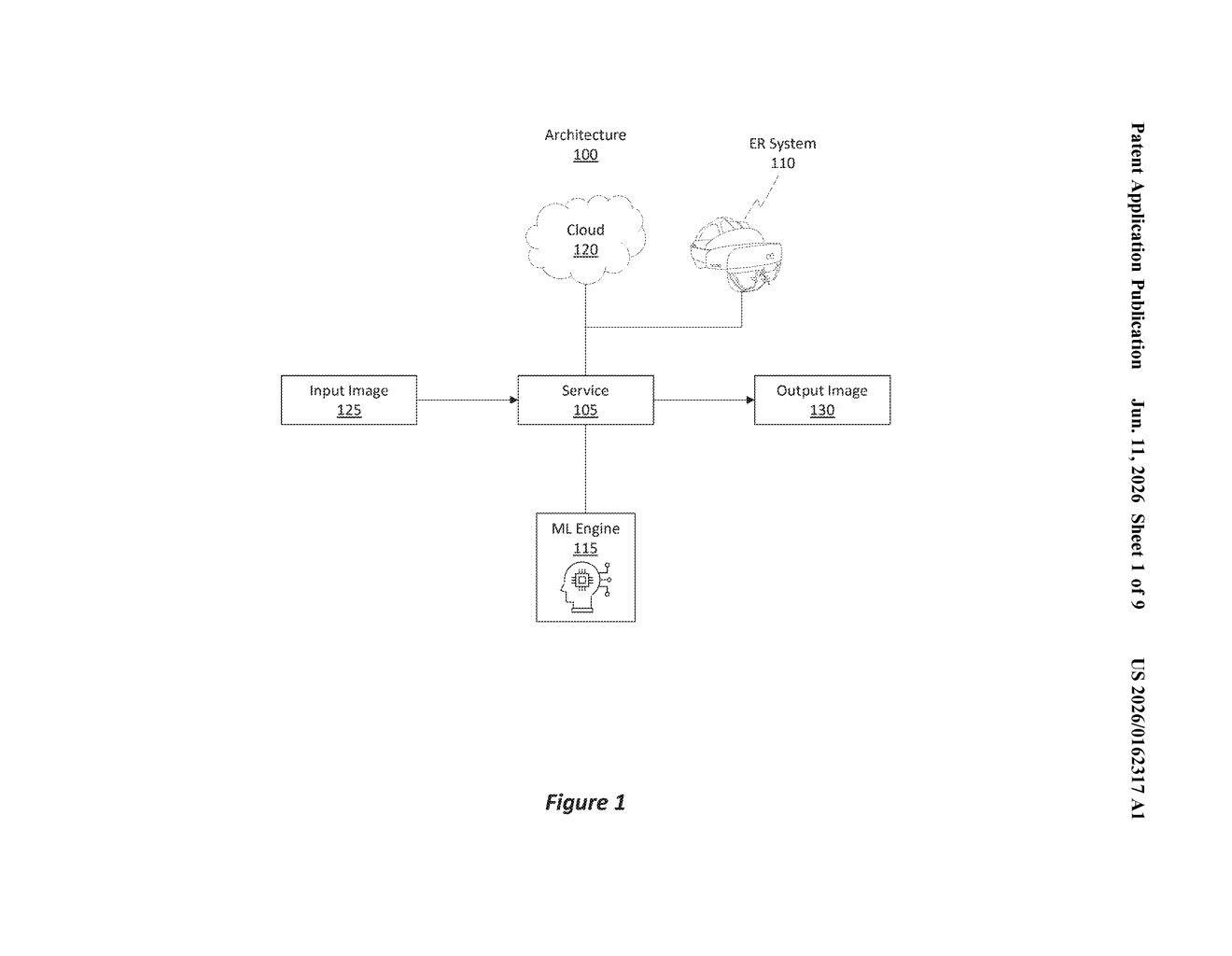
What Microsoft's lighting-aware eye-tracking display does
Imagine you're wearing a mixed-reality headset — think something like Microsoft's HoloLens — and you step from a dim room into bright sunlight. Your eyes adjust automatically, but the headset's display? That's trickier.
Most modern AR and VR headsets use a technique called foveated rendering: they track where your eyes are pointing and render that spot in sharp, full detail, while letting the edges of your vision go blurry and low-resolution. It's a clever shortcut — your brain barely notices the drop in quality at the edges. But the problem is, how well that illusion holds up changes depending on the light around you.
Microsoft's patent describes a system that watches the lighting conditions of a scene and adjusts exactly how much sharpness gets blended into the final image. In bright light, your pupils are smaller and your eyes are more sensitive to detail everywhere — not just where you're staring. So the system can shift the balance toward more detail, more broadly. The result is a display that works with your eyes rather than against them.
How the system blends full and low-res image layers
The system works by maintaining two versions of the same image simultaneously: a binned image (a low-resolution, down-sampled version of the full scene) and an un-binned image (a full-resolution crop centered on where the user is looking).
Both images can be processed — sharpened, denoised, or otherwise enhanced — independently before being combined. The low-res binned image is then scaled back up (up-sampled), and a cropped region from that up-sampled version is extracted to match the high-res crop's area.
Here's where the light parameter comes in: the system applies a biasing function — essentially a mathematical dial — that controls how much the final pixel values come from the high-res un-binned image versus the up-sampled low-res image. Under bright lighting conditions (where eyes are more detail-sensitive across the full field of view), the bias shifts toward incorporating more full-resolution pixels. Under dim conditions, it can lean more heavily on the cheaper low-resolution source without the user noticing.
The final step overlays and aligns the blended "biased" result onto the full up-sampled frame, producing a foveated image — one that concentrates rendering effort where it counts most, dynamically tuned to ambient light.
What this means for AR headset comfort and visual clarity
Foveated rendering is already one of the more important tricks keeping AR and VR headsets from requiring desktop-grade processors in a device you wear on your face. But static foveated rendering — the kind that doesn't adapt to context — can create visible quality mismatches when lighting changes, which is exactly what happens when you use a headset in the real world.
This patent suggests Microsoft is working to make that blending seamless under real-world conditions, not just controlled demo environments. For HoloLens or any future mixed-reality device, this could translate to a noticeably more comfortable visual experience — fewer moments where the display's shortcuts become visible artifacts that pull you out of the illusion.
This is solid, unglamorous engineering work on one of the genuinely hard problems in wearable displays. Foveated rendering that ignores lighting is like noise-canceling headphones that work fine in a quiet room but fall apart on a subway — technically correct in a narrow sense, but practically limited. Microsoft is filing smart foundational IP here that could meaningfully improve headset usability in real environments.
There are more where this came from
We read every patent application Big Tech publishes and send you the ones worth knowing. Plain English, free, every week.
Want this weekly breakdown for a company we don't cover? Patentlyze Pro →