
Microsoft Wants LLMs to Do Your Threat Modeling For You
Threat modeling is one of the most time-consuming parts of secure software development. Microsoft is patenting an approach that hands the job to a large language model.
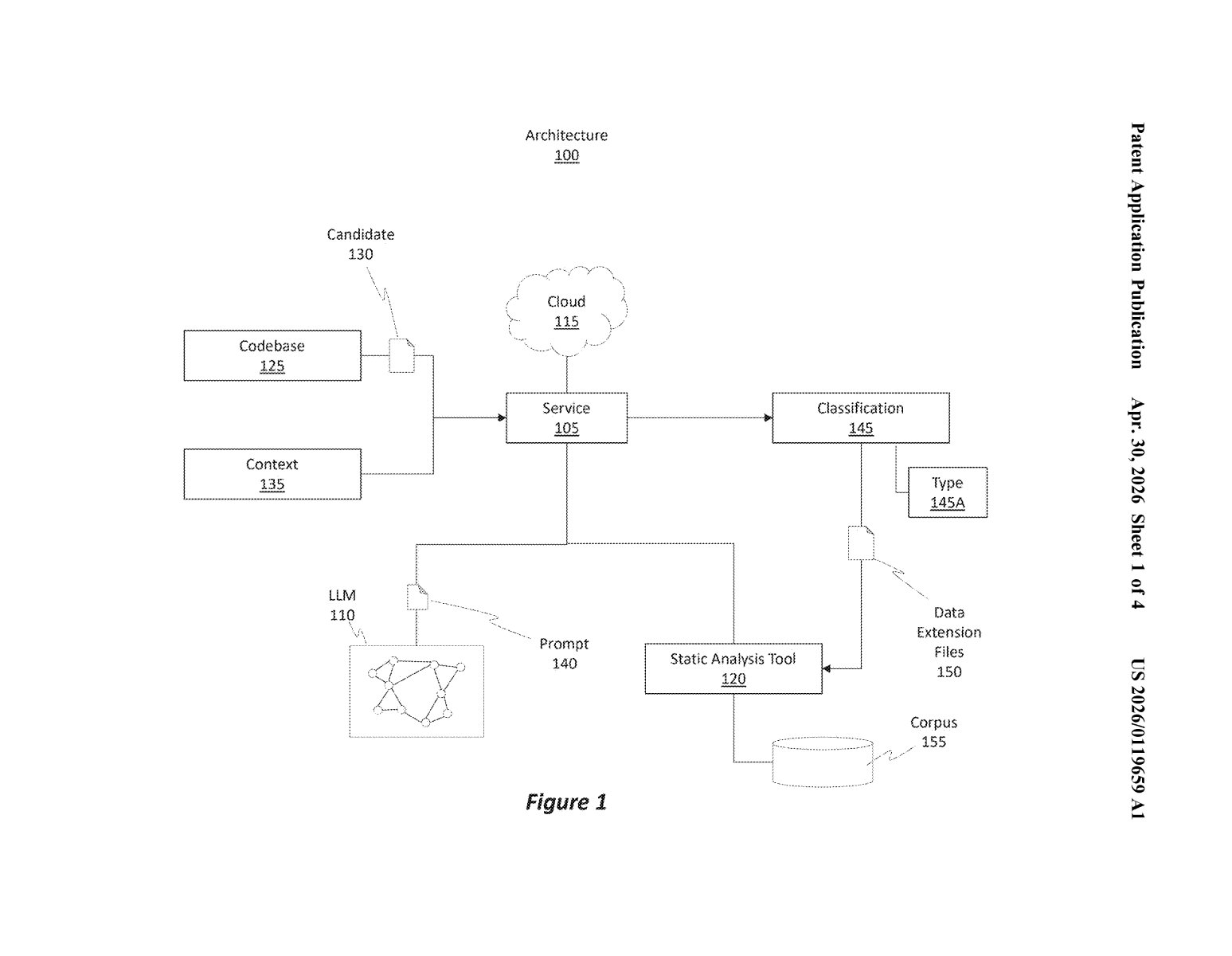
In plain English
When companies build software, security experts manually review designs to figure out how attackers might break in — a process called threat modeling. It's slow and requires specialized knowledge most teams don't have. Microsoft's patent describes a system where an AI language model (like the kind that powers ChatGPT) does this analysis automatically. You feed it information about your software, and it identifies potential security risks and attack paths, making security review faster and more accessible to developers who aren't security specialists.
How it works
The patent covers an LLM-based pipeline for automated threat modeling. The system likely ingests software architecture descriptions, data flow diagrams, or code artifacts and uses a large language model to reason about potential threats — mapping them to established frameworks such as STRIDE or MITRE ATT&CK. Rather than requiring a dedicated security architect to manually enumerate attack surfaces, the LLM generates threat scenarios, identifies vulnerable components, and potentially suggests mitigations. This is consistent with emerging 'security copilot' architectures where LLMs serve as a reasoning layer over structured security knowledge bases. Note: the full claim text was unavailable, so some specifics here are inferred from the title and classification.
Why it matters
Threat modeling is a known bottleneck in the software development lifecycle — most teams skip it because it's expensive and slow. Automating it with an LLM fits squarely into Microsoft's existing Security Copilot product strategy. If this works reliably, it could push security analysis earlier into the development process (shift-left security), which is a major industry goal.
This is a timely but narrowly scoped patent in a crowded area — several startups and researchers are already working on LLM-assisted threat modeling. Whether Microsoft's specific approach has meaningful novelty is impossible to judge without the full claims.
There are more where this came from
We read every patent application Big Tech publishes and send you the ones worth knowing. Plain English, free, every week.
Want this weekly breakdown for a company we don't cover? Patentlyze Pro →