
Microsoft Patents a System for Humans, Robots, and AI to Share Missions
Microsoft is patenting a way to run a single shared session where a human, a robot in the field, and an AI agent all participate together and coordinate tasks toward a common goal. Think of it as a group video call, except two of the attendees aren't people.
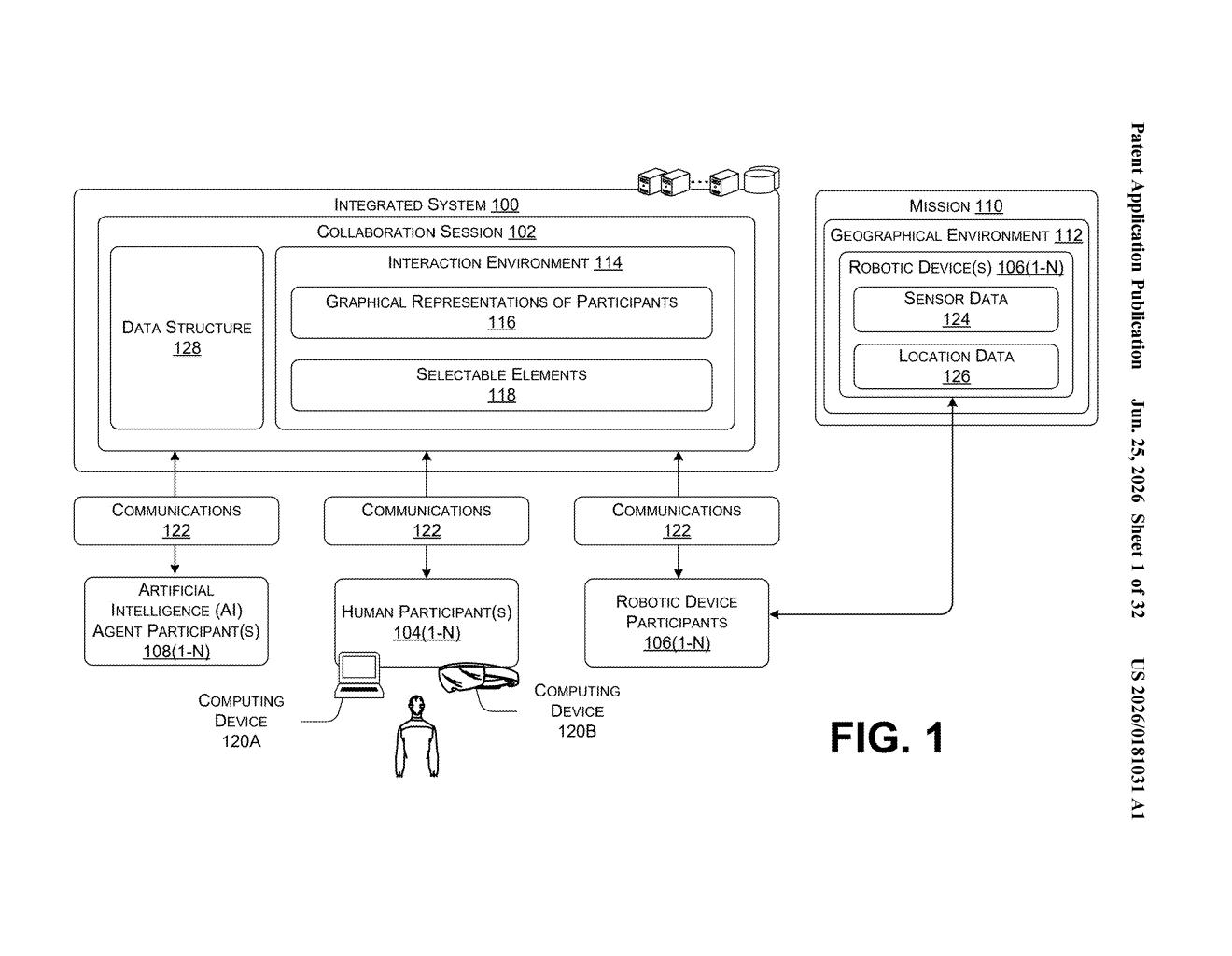
What Microsoft's human-robot-AI collaboration session actually does
Imagine a building fire where a rescue team needs to coordinate with a remote-controlled robot scouting ahead and an AI assistant tracking the floor plan. Right now, the human operator might be juggling separate screens, separate feeds, and separate tools. Microsoft's patent describes a single interface that pulls all three together.
The system creates what the patent calls a "collaboration session" built around a specific mission with defined goals and tasks. Each participant, whether a person, a robot, or an AI, gets a visual representation inside that shared environment. The human can flip between different views, like switching from their own perspective to the robot's camera feed, without leaving the session.
The key idea is that tasks get distributed across whoever (or whatever) is best suited to handle them. The robot handles physical presence in the environment, the AI processes and suggests, and the human makes decisions. One interface, three types of participants, one shared mission.
How the shared interface connects people, robots, and AI
The patent describes a method for running what it calls a collaboration session tied to a specific mission inside a real geographical environment. That mission has goals, and those goals break down into tasks distributed across the available participants.
The system generates an interaction environment, essentially a unified UI, that includes:
- A graphical representation for every participant (human, robot, and AI agent)
- An interactive switching control that lets the human toggle between at least two different "viewing states," such as a map overview versus the robot's live camera feed
- Real-time data piped in from the robotic device participant in the field
The robotic device is physically present in the geographical environment and feeds data back into the session. The AI agent participates alongside the human and robot, presumably processing information or handling subtasks autonomously, though the claim focuses on the structural framework rather than the AI's specific logic.
The interaction environment gets delivered to a computing device associated with the human participant, meaning this could run on a laptop, tablet, or similar endpoint. The patent is primarily about the architecture of how these three participant types share a session, not about the specific hardware involved.
What this means for AI-assisted field operations
The clearest real-world use cases are in emergency response, military operations, logistics, and industrial inspections, anywhere a human operator needs to coordinate with physical robots and AI assistants in a high-stakes environment. Today that kind of coordination typically requires custom-built control software or juggling multiple tools at once. A standardized session model from a company like Microsoft could mean this kind of human-robot-AI teamwork gets built into general-purpose productivity platforms rather than staying locked in niche industries.
For you as a future user, this is the architecture behind a world where your AI assistant and a warehouse robot are both in the same "meeting" as you, sharing tasks without you having to manually relay information between them. Whether Microsoft builds this into Teams or Azure is speculative, but the filing signals a clear strategic interest in mixed human-machine collaboration infrastructure.
This is a genuinely interesting systems-level patent because it formalizes something that doesn't really exist as a product yet: a unified session model for humans, robots, and AI agents working together. The claim is broad and architectural, which means it's more about staking territory than describing a finished product. That's worth watching given Microsoft's investments in both Azure robotics services and AI agents.
There are more where this came from
We read every patent application Big Tech publishes and send you the ones worth knowing. Plain English, free, every week.
Want this weekly breakdown for a company we don't cover? Patentlyze Pro →