
Wearable Tech Patent Detects How Skin Shifts Against a Sensor
Your skin is a surprisingly good electrical signal. Microsoft wants to use that fact to let a wearable device know the moment it leaves your wrist, or the moment someone else picks it up.
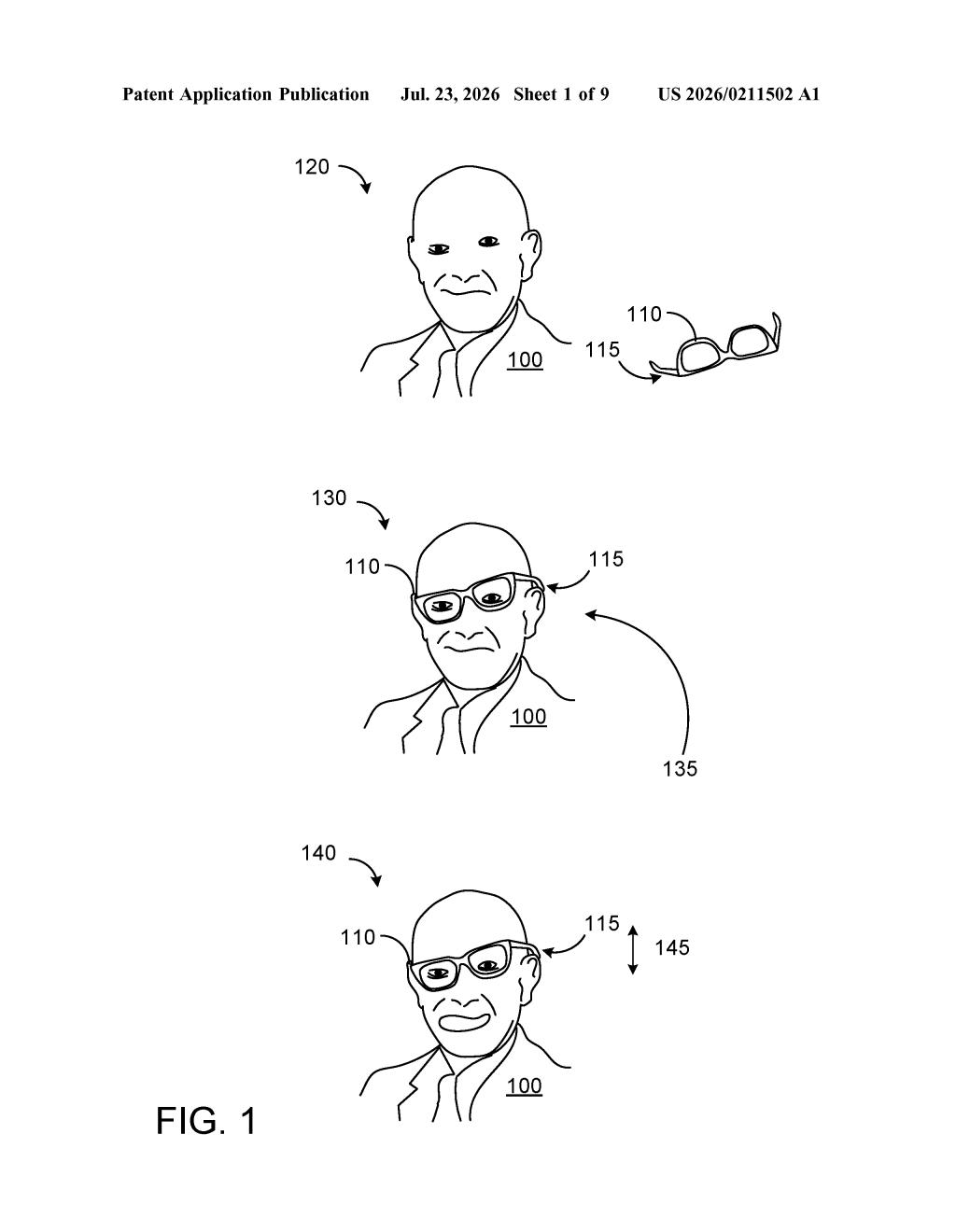
How Microsoft's wearable knows it's touching your skin
Imagine putting on a smartwatch and having it automatically unlock because it can tell it's touching your skin, not just sitting on a table. That's the basic idea behind this Microsoft patent.
The wearable uses a tiny electrical probe on its outer surface. When your skin gets close to or touches that probe, it changes how electricity flows through a small internal circuit. The device measures that change and can tell whether something living is touching it, and even how much your skin has shifted position relative to the device.
This kind of detection could be useful for everything from automatic locking when you take a device off, to more accurate health tracking that knows when your wearable has slipped out of place on your wrist.
Inside the oscillator-to-voltage detection circuit
The patent describes a circuit built around a reporting capacitor, a component that stores a small electrical charge. One side of this capacitor is a metal electrode on the outside of the wearable. The other side is formed by the user's skin itself when the device is worn. Skin conducts electricity, so it effectively completes the circuit.
An oscillator (a component that generates a repeating electrical signal at a precise speed, measured in frequency) drives that electrode. When the capacitance changes because your skin moves closer, farther away, or shifts position, the oscillator's frequency shifts too. The circuit then converts that frequency change into a voltage, which is much easier for a small processor to read and act on.
The conversion chain works like this:
- A voltage follower (a low-distortion amplifier) cleanly copies the oscillating signal.
- A differentiator sharpens that signal into a series of distinct pulses.
- An envelope detector (a diode-and-capacitor circuit that tracks the peak of those pulses) converts pulse rate into a steady voltage reading.
The controller reads that voltage, compares it to the device's baseline frequency, and concludes whether skin is present and how much it has moved.
What this means for wearable health and security features
Wearables have needed reliable on-body detection for years. Most current devices use optical heart-rate sensors as a rough proxy for whether you're wearing the device, which wastes power and can be fooled by light leaking in. A capacitive frequency approach like this one is low-power, runs continuously in the background, and doesn't require a light source.
For you as a user, the practical wins are automatic lock-and-unlock when you take the device off, and health sensors that know to stop recording when your smartwatch or fitness band has slipped out of place. That second point matters a lot for medical-grade wearables, where bad sensor placement silently corrupts the data.
This is solid, practical engineering for a real problem in wearable devices. On-body detection is one of those features that most people never think about until it works badly, and a low-power frequency-based approach is genuinely more elegant than the optical hacks currently in wide use. Whether Microsoft ships this in a Surface-branded wearable or licenses it is another question entirely.
There are more where this came from
We read every patent application Big Tech publishes and send you the ones worth knowing. Plain English, free, every week.
The drawings
9 drawing sheets from US 2026/0211502 A1 · click any drawing to enlarge


Want this weekly breakdown for a company we don't cover? Patentlyze Pro →
Be the first to weigh in