
Microsoft Patents Smarter Training for AI That Ranks Search Results
Every time a search engine decides which result goes first, a ranking model is doing invisible math. Microsoft has filed a patent for a cleaner way to teach that model, one that throws out some of the messiest parts of the training process.
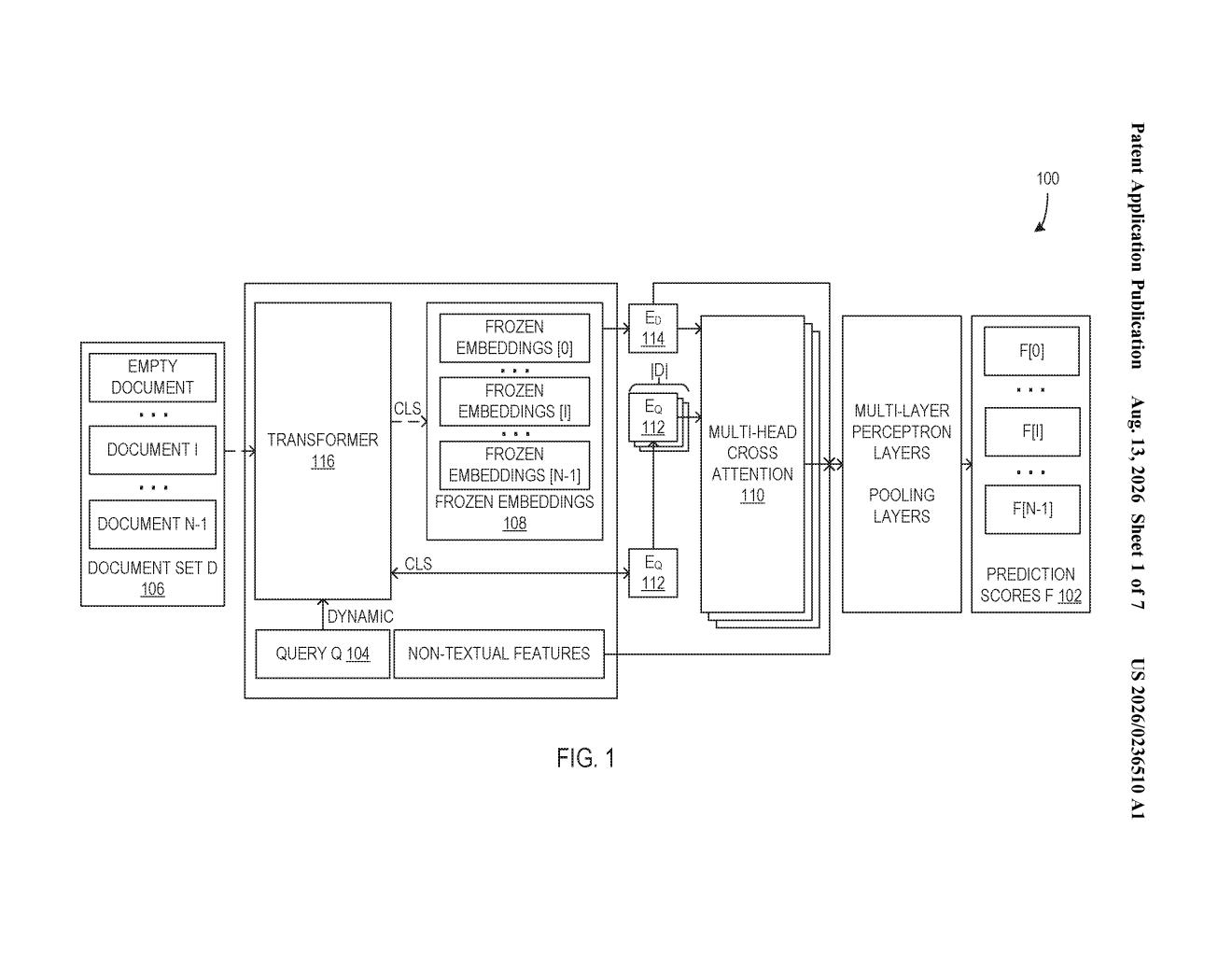
What Microsoft's document-ranking training method actually does
Imagine you're asking an AI to sort a pile of documents by how relevant they are to your question. To learn how to do that well, the AI needs to practice on thousands of examples first. But there's a catch: all those practice documents have to be fed into the system in a consistent way, and the standard approach is to either chop long documents short or pad short ones with filler. Both options distort the training.
Microsoft's patent describes a way to skip that compromise entirely. The system feeds documents in without cutting or stuffing them, then compares the AI's predicted relevance scores in pairs, calculating exactly how far off each ranking was. That gap information gets turned into a compact signal that tells the model how to improve, step by step.
The result is a training pipeline that works with documents as they actually are, not artificially reshaped versions of them. For a company that runs Bing and builds search tools into Office and Azure, even a modest improvement in how ranking models are trained could ripple across a lot of products.
… serializing the training data avoids truncating or padding the one or more candidate documents …
Translation: The system processes search results in their entirety instead of cutting them off or adding filler to make them fit.
How the score-difference vector shapes the model's training
The patent covers a system for training what researchers call a learning-to-rank model (an AI that sorts documents by relevance to a query). The key steps are:
- Serializing without padding or truncation: Training data typically needs to be uniform in size. The standard fix is to cut long documents or pad short ones with blank tokens. This system avoids that, preserving documents at their natural length.
- Pairwise score comparison: The model produces a relevance score for each candidate document. The system then builds a pairwise score difference matrix, essentially a grid comparing every document's score against every other document's score.
- Score difference vector: That grid gets collapsed into a single vector (a list of numbers) using information about which documents are actually the correct answers. This focuses the training signal on the comparisons that matter most.
- Loss calculation and adjustment: The vector is used to calculate loss (a measure of how wrong the model was), and the model's internal weights are nudged to reduce that error next time.
The pairwise approach is common in ranking research, comparing pairs of documents tends to produce better-calibrated models than simply scoring each document in isolation. The novelty here is in how Microsoft packages the pairwise comparison into a linear vector and couples it with the no-padding serialization step.
The disclosure herein describes training a document recommendation model using loss data generated from a linear score difference vector.
Translation: The AI learns to rank search results better by calculating the mathematical gap between how it scores different documents.
What this means for Microsoft's search and recommendation tools
For everyday users, ranking models are everywhere: the order of Bing results, the documents surfaced in Microsoft 365 Copilot, the answers a Teams search hands back. A better-trained ranking model means more relevant results appearing higher, with less time spent scrolling past noise. The efficiency gain in training also matters at Microsoft's scale, where these models are retrained frequently as content changes.
Claim 1 of this patent is fairly specific: it covers the combination of padding-free serialization, pairwise score matrix, vector transformation using a correct-document reference, and loss-based adjustment, all as a single system. That specificity limits how broad a fence this filing would actually draw around the idea, but it also reflects real engineering choices that Microsoft has apparently committed to in its ranking infrastructure. Microsoft's search and AI work sits alongside a stream of interesting tech patents from major cloud companies refining how AI models are trained and deployed at production scale.
Claim 1 is narrow enough to leave plenty of room for competitors to train ranking models differently, but it covers a specific, coherent pipeline rather than a vague concept. If granted, it would block the exact combination of padding-free serialization plus a linear score-difference vector used together in a single training system, which is specific enough to matter for anyone building a nearly identical pipeline. The practical significance depends on whether this combination turns out to be the obvious convergent solution that the industry lands on, or just one of several workable approaches.
Get our take in your Top Stories
Liked this breakdown? Add Patentlyze as a preferred source on Google, and our plain-English take shows up more often in your Top Stories the next time Microsoft patent news breaks.
There are more where this came from
We read every patent application Big Tech publishes and send you the ones worth knowing. Plain English, free, every week.
The drawings
7 drawing sheets from US 2026/0236510 A1 · click any drawing to enlarge


Want this weekly breakdown for a company we don't cover? Patentlyze Pro →
Be the first to weigh in