
Microsoft Patents a Broker That Routes Workloads to Secure Execution Environments
Microsoft is patenting a system that acts like an air-traffic controller for sensitive computing jobs — automatically routing encrypted workloads to whichever trusted hardware enclave best fits your security policy.
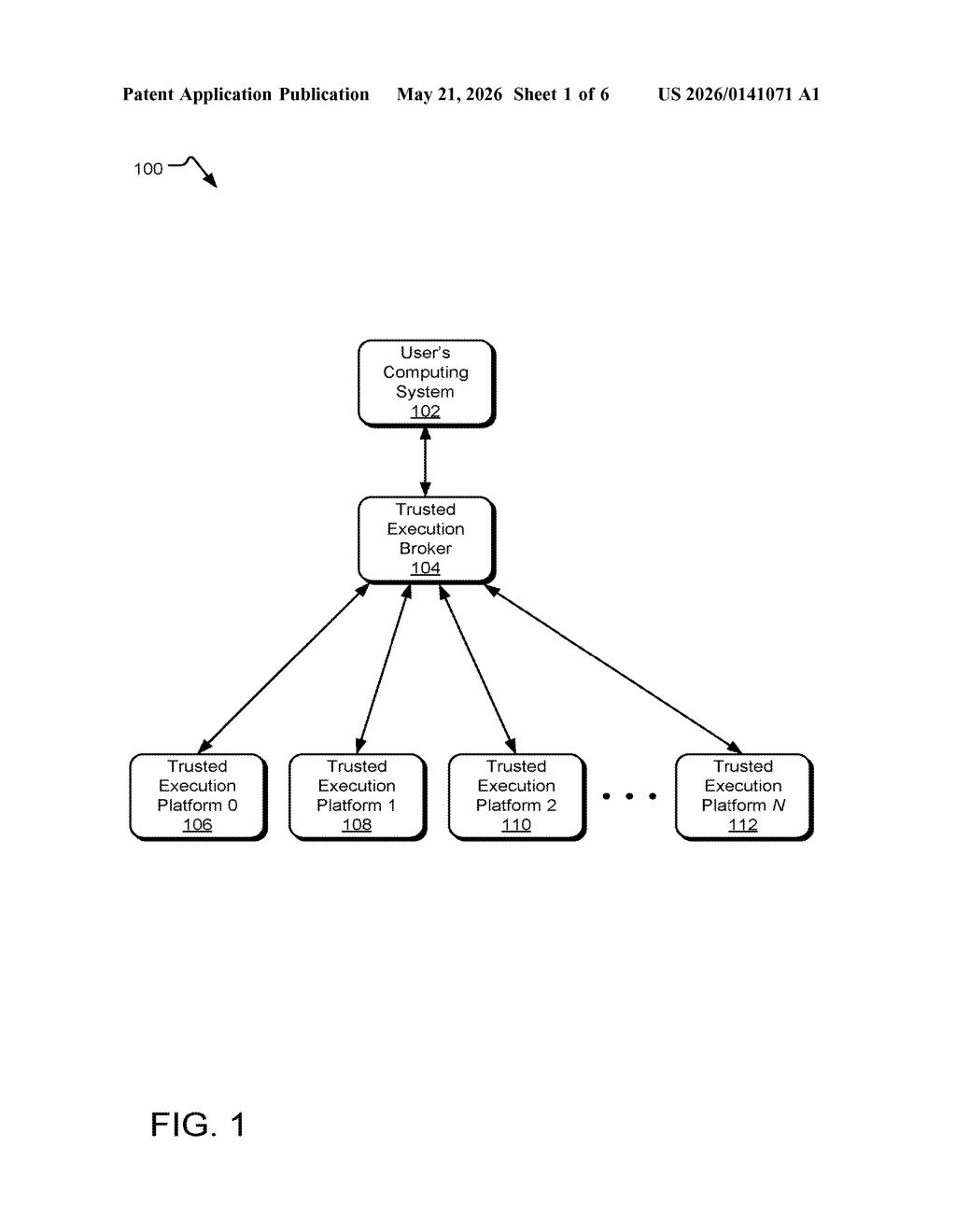
What Microsoft's Trusted Execution Broker actually does
Imagine you have a job that needs to run in a super-secure computing environment — maybe it processes medical records or cryptographic keys. Right now, picking which secure environment to use, and making sure it actually follows your rules, is largely a manual headache. Microsoft's Trusted Execution Broker is designed to handle that automatically.
You send your code, your data, and a set of policies (think: "only run on hardware that meets this attestation standard") to the broker. It picks a compatible trusted execution environment, wraps everything up into a protected package, ships it off, collects the result, and hands it back to you — with an audit trail attached.
The key idea is that your security requirements travel with the workload, not as a separate configuration you have to manage manually. The broker enforces them at dispatch time, so you don't have to trust that whoever set up the server did it right.
How the broker selects and dispatches to a TEE platform
A Trusted Execution Environment (TEE) is a hardware-isolated zone inside a processor — think Intel SGX or AMD SEV — where code runs in an encrypted bubble that even the host operating system can't peek into. They're widely used for confidential computing in the cloud.
Microsoft's patent describes a Trusted Execution Broker layer that sits between a client (your application) and multiple TEE platforms. The workflow looks like this:
- Your system sends a workload payload containing input data, executable code, and trusted execution policies (rules like which attestation certificates are acceptable, or which TEE vendor is allowed).
- The broker reads those policies and selects an appropriate platform from a pool of available TEEs.
- It wraps the code and data into a brokered payload — a format the selected TEE can consume — and dispatches it.
- The TEE runs the code, returns an encrypted result, and the broker validates and forwards that result back to your system along with audit data proving the execution happened correctly.
The audit trail component is notable: it's not just a routing layer, it's also an attestation relay, meaning you get cryptographic evidence that your policies were honored.
What this means for confidential cloud computing
As enterprises move sensitive workloads to the cloud, confidential computing is becoming a real requirement — not just a checkbox. The problem today is that TEE platforms are fragmented: Intel SGX, AMD SEV, ARM TrustZone, and cloud-specific variants all have different APIs and attestation models. A broker that abstracts that complexity and enforces policy portably is genuinely useful infrastructure.
For Microsoft Azure, this fits neatly into its confidential computing push. If this ships as a service, it could make it much easier for enterprises to run regulated workloads — healthcare, finance, government — across a mixed TEE landscape without writing bespoke integration code for each platform.
This is unglamorous but strategically important plumbing. Confidential computing is real and growing, and the fragmentation problem across TEE vendors is a genuine pain point that large enterprise customers feel acutely. A brokering layer like this is the kind of thing Azure would absolutely build and productize — it lowers the barrier to adopting confidential computing without locking customers into a single hardware vendor.
There are more where this came from
We read every patent application Big Tech publishes and send you the ones worth knowing. Plain English, free, every week.
Want this weekly breakdown for a company we don't cover? Patentlyze Pro →