
Intel Patents a Brain-Inspired Chip Approach to Finding the Fastest Route Through Complex Networks
Intel thinks the way to solve one of computing's most common problems, finding the shortest path through a web of connected points, is to let artificial neurons fire signals at each other the way real brain cells do.
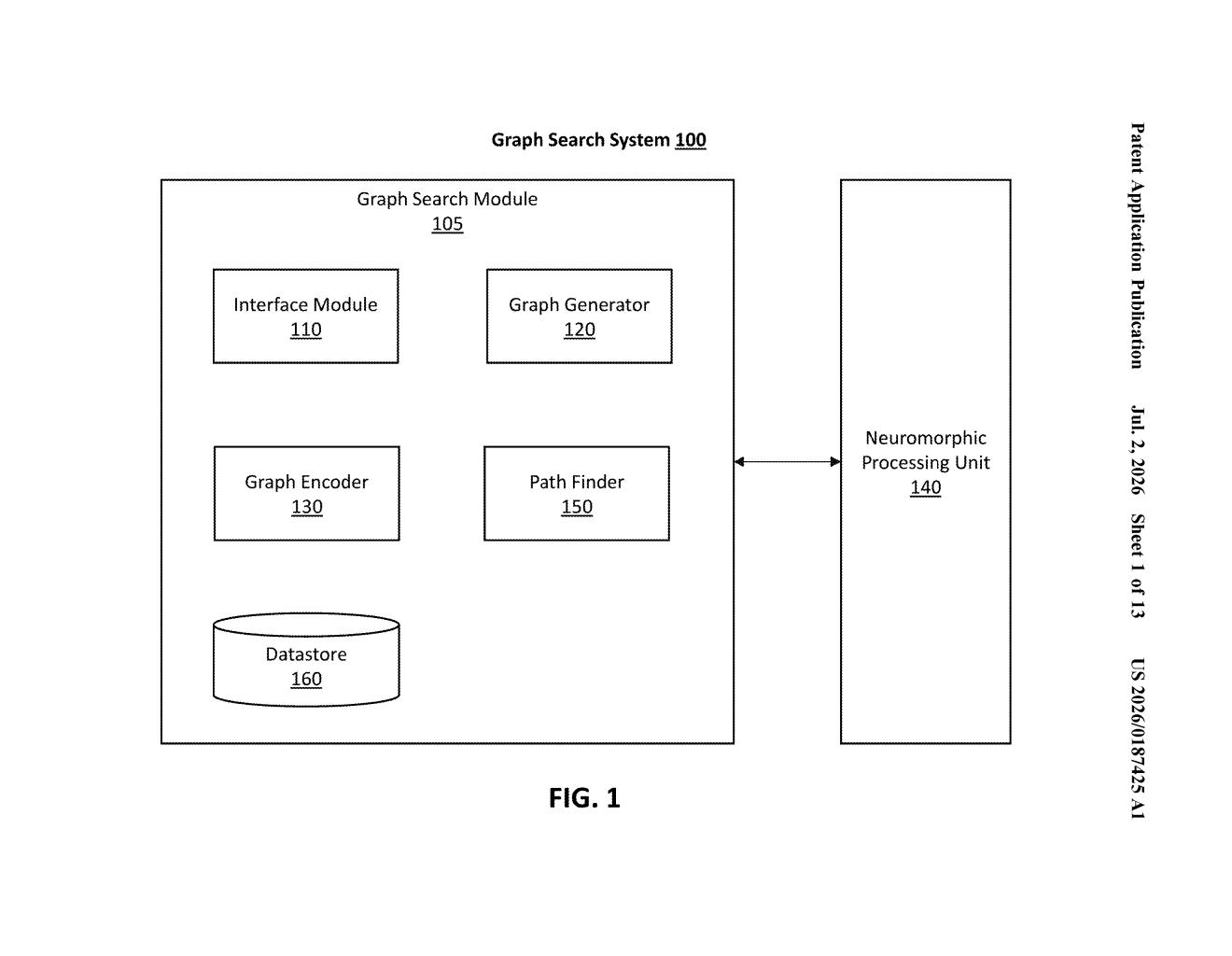
How Intel's spiking neurons find the shortest path
Imagine you're trying to find the fastest driving route through a city where every road has a different speed limit, toll, or traffic level. A computer has to try many possible paths and pick the cheapest one. That calculation gets expensive fast when the map has thousands of roads.
Intel's patent describes a different approach: instead of running that calculation on a regular processor, it maps the entire road network onto a special kind of chip where each intersection is represented by an artificial neuron. The neurons then "fire" signals at each other in two waves, one going forward through the network and one bouncing back, and together those two waves reveal the shortest route.
This type of chip, called neuromorphic hardware, is designed to mimic how biological brains process information, using quick electrical pulses rather than continuous number-crunching. Intel's idea is that this style of computing could solve path-finding problems faster and with less energy than conventional chips.
Inside Intel's two-phase forward-backward spike search
The patent describes a system that converts a weighted graph (a collection of nodes connected by edges, where each edge carries a cost or distance value) into a neural network running on neuromorphic hardware.
The process works in two distinct phases:
- Forward spike propagation: Starting from a source node, each neuron fires a signal (a "spike") to its neighbors. The spike carries two pieces of information: the firing neuron's current best-known cost and the weight of the edge connecting them. A receiving neuron updates its own cost only if the new value is lower than what it already holds, essentially the same logic as the classic Dijkstra shortest-path algorithm, but executed in parallel across many neurons at once.
- Backward spike propagation: Once the forward wave reaches the target node, a reverse wave travels back through the network. Each neuron uses the timing of the spikes it receives, specifically which time step they arrived in, to figure out whether it sits on the optimal path.
At the end, neurons that lie on the shortest path report their identifiers to a host processor, which assembles the full route. The key claim is that the spiking hardware can run these parallel updates far more efficiently than a conventional CPU grinding through the same graph sequentially.
What neuromorphic path-finding means for real-world routing
Path-finding is everywhere in computing: GPS routing, network packet delivery, chip design, logistics planning, and AI planning systems all rely on variants of this calculation. Any speed or energy improvement at that layer has wide downstream effects.
Intel's Loihi neuromorphic chip line is the obvious candidate for this kind of workload. If the approach delivers on its efficiency promise, it could make Intel's neuromorphic hardware attractive for data-center routing or edge devices where power budgets are tight. That said, neuromorphic computing remains a niche research area, and turning a patent like this into a shipping product involves engineering challenges that are nowhere near trivial.
This is a solid, specific research patent rather than a product announcement. Intel's neuromorphic team has been publishing work in this space for years, and this filing is a natural extension of that program. It won't change anything you use tomorrow, but it is a real technical contribution to the question of what neuromorphic chips are actually good for beyond academic benchmarks.
Get our take in your Top Stories
Liked this breakdown? Add Patentlyze as a preferred source on Google, and our plain-English take shows up more often in your Top Stories the next time Intel patent news breaks.
There are more where this came from
We read every patent application Big Tech publishes and send you the ones worth knowing. Plain English, free, every week.
Want this weekly breakdown for a company we don't cover? Patentlyze Pro →