
Nvidia Patents a Local Network Hub That Routes AI Tasks to the Right Device
What if your home network had a traffic controller that automatically sent every AI request to whichever device on your Wi-Fi was best equipped to handle it? That's the core idea in Nvidia's latest patent filing.
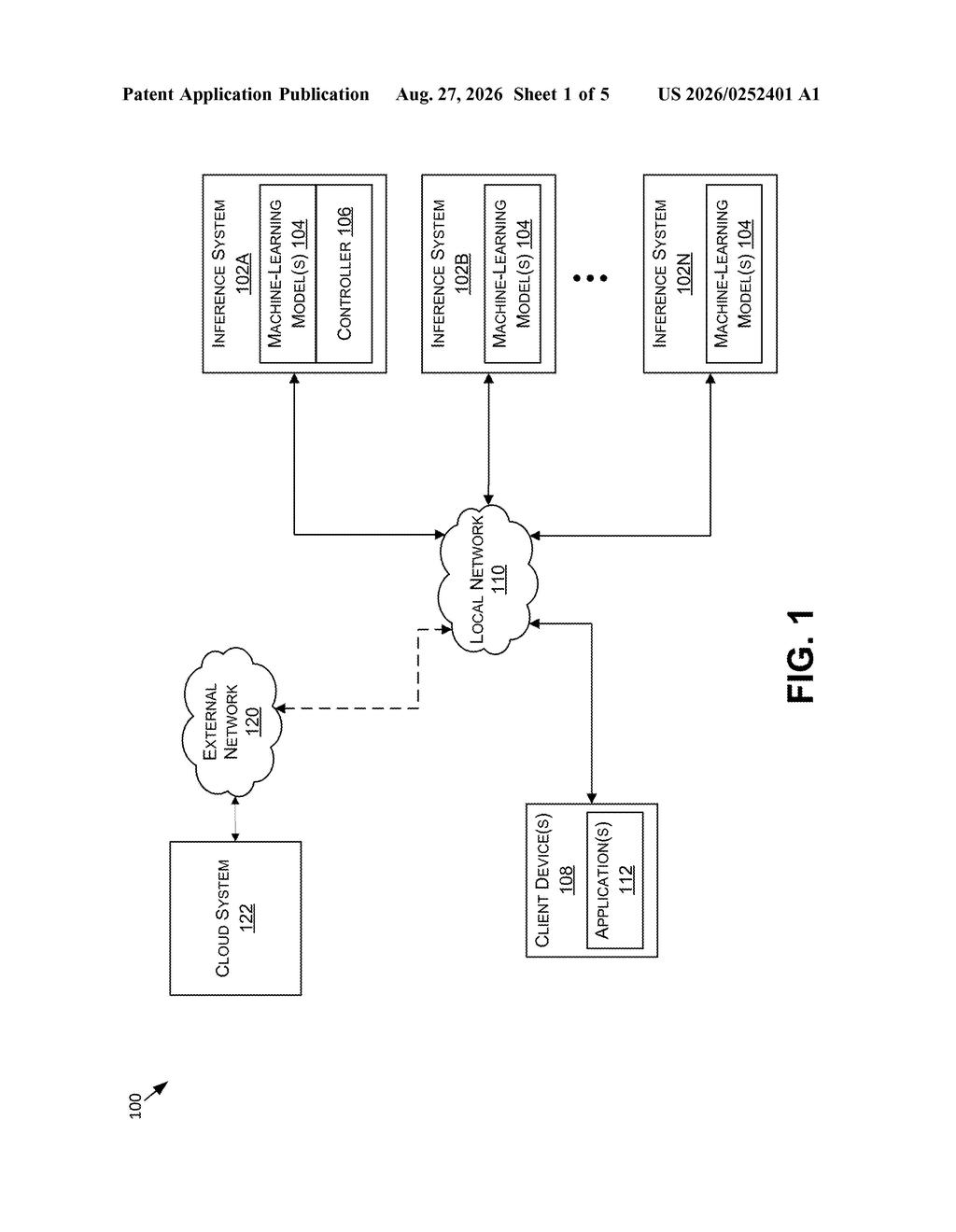
How Nvidia's AI router decides which device does the work
Imagine you ask your laptop to summarize a document, but your gaming PC sitting two feet away is far more powerful and sitting idle. Right now, most software has no way to hand that job off automatically. You either do it locally on the device in your hands, or you send it to a distant server somewhere on the internet.
Nvidia's patent describes a kind of AI dispatcher for your local network. When any device on your home or office network needs to run an AI task, it sends a request to this central hub. The hub looks at what the task requires and what every connected device is capable of, then points the requesting device to the best one for the job.
The result is that your whole network's computing power, not just the device you happen to be holding, becomes available for AI work. Your phone could offload a heavy AI task to your desktop or a dedicated AI box on your shelf, automatically, without you doing a thing.
receive, from a device of a local network, a request for an inference task; select a first inference device of a plurality of inference devices connected to the local network based at least on the inference task and one or more processing capabilities of the plurality of inference devices; …
Translation: The system accepts an AI request and picks the best local hardware for the job.
How the hub matches tasks to devices on your network
The patent describes a local inference hub: a system (it could be software running on a dedicated device or a router-like appliance) that acts as a matchmaker between AI workloads and the machines capable of running them.
Here's the core flow:
- A device on the local network, say a phone or a thin laptop, sends the hub a request describing an AI task it needs done (called an inference task, meaning the AI is being asked to produce an answer rather than being trained from scratch).
- The hub evaluates the request against a list of all connected inference devices, comparing the task's requirements against each device's processing capabilities, things like available GPU memory or specialized AI chips.
- The hub responds with a pointer to whichever device is the best fit. The requesting device then sends its work there directly.
The patent doesn't detail exactly how the hub learns about each device's capabilities, but the concept implies some kind of registration or discovery step when devices join the network. The hub itself is positioned as a coordinator, not the machine actually doing the AI work. Think of it as a dispatcher rather than a processor.
The system can provide an indication of the first inference device to the device of the local network in response to the request.
Translation: It then points the requesting device directly to the chosen hardware.
What this means for running AI without the cloud
Running AI on your own hardware, rather than shipping data to a cloud server, matters for speed, privacy, and cost. The problem has always been that most devices aren't equally capable: your laptop might struggle with a task your desktop handles in seconds. Without a coordination layer, software can't take advantage of that unevenness. This patent proposes exactly that coordination layer, a local hub that makes the whole network act like one shared AI resource.
For Nvidia, a company that already sells everything from consumer graphics cards to dedicated AI appliances like the Jetson line, a protocol that ties those devices together inside a home or office network is a natural next step. The filing is still at the concept stage, describing the routing logic without specifying new hardware, so the shortest path to a real product would be software that runs on existing Nvidia gear. Readers tracking where AI computing is heading can find plain-English patent summaries of on-device and edge AI filings across the industry, of which this one is a clear example.
This is the sixth Nvidia filing we've tracked since July on AI models working together, following one on self-correcting engineering specs and one on models sharing information directly.
This patent is essentially a software routing protocol, no new chip, no new sensor, just a coordination layer that could theoretically run on hardware Nvidia already ships. That's actually the fastest possible path to a product: write the dispatcher software, push it via an update, and existing Jetson boxes or Shield devices could start talking to each other.
The catch is that the value of a hub like this scales with how many capable AI devices people actually own. Right now, most households have one powerful GPU at most, which makes the routing problem trivial. The patent reads like infrastructure built for a future where AI accelerators are as common as smart speakers.
Whether Nvidia ships this as a consumer feature or pitches it at small-business and enterprise edge setups, where multiple AI appliances sharing work is already a real problem, will determine how quickly it moves from filing to product.
Get our take in your Top Stories
Liked this breakdown? Add Patentlyze as a preferred source on Google, and our plain-English take shows up more often in your Top Stories the next time Nvidia patent news breaks.
There are more where this came from
We read every patent application Big Tech publishes and send you the ones worth knowing. Plain English, free, every week.
The drawings
5 drawing sheets from US 2026/0252401 A1 · click any drawing to enlarge


Want this weekly breakdown for a company we don't cover? Patentlyze Pro →
Be the first to weigh in