
Nvidia Patents an AI System That Predicts Chip Stress Before It Happens
Most chips wait until they're already overheating to slow down. Nvidia's new patent describes an AI that sees the heat coming and adjusts the chip's settings before things go wrong.
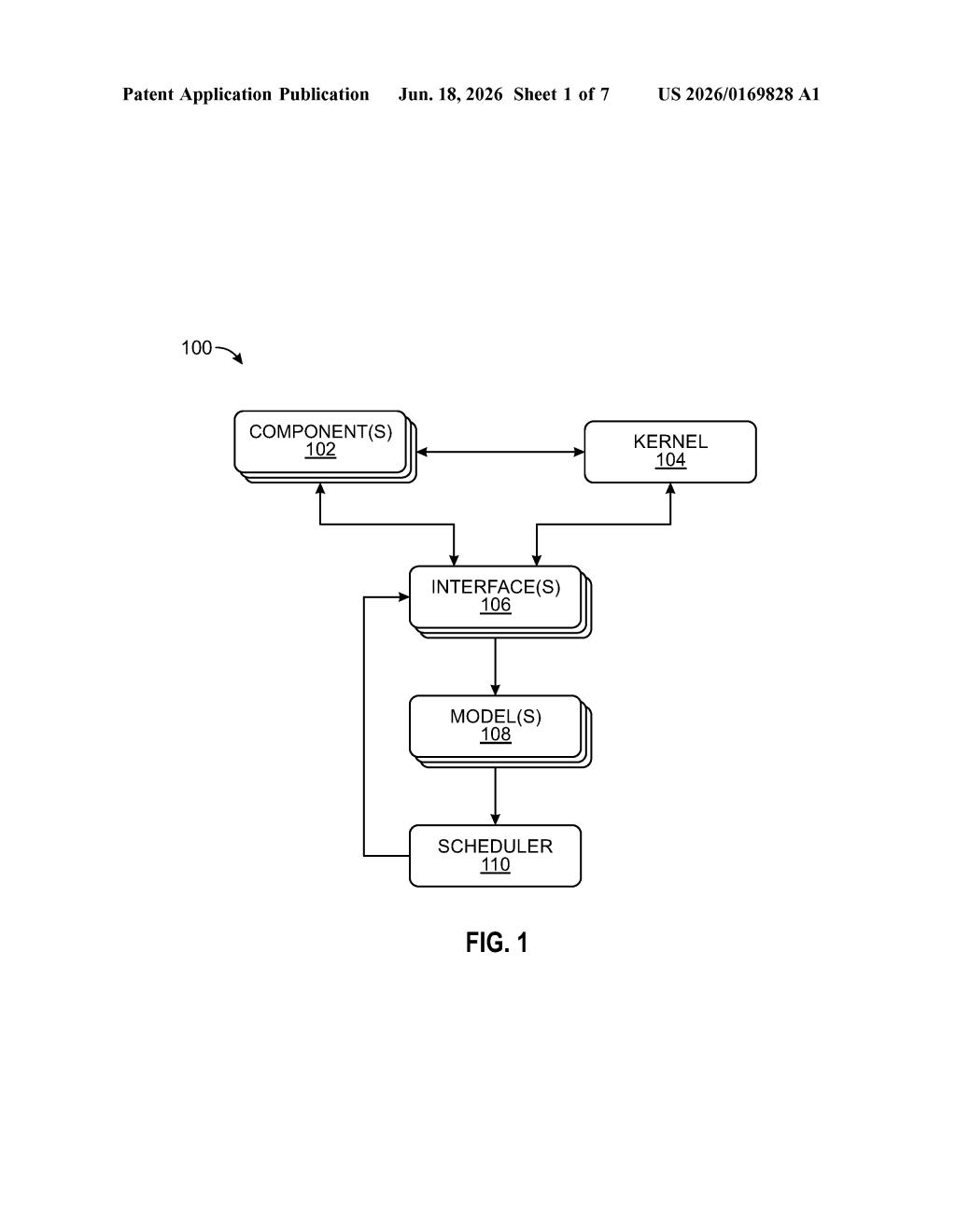
How Nvidia's AI thermal manager actually works
Imagine your car's engine warning light only turns on after the engine has already seized. That's basically how most chips handle heat and workload today — they react after the problem has already hit. Nvidia wants to fix that.
This patent describes a system where an AI model watches real-time data from inside a processor — things like temperature, power draw, and how hard each core is working — and uses that information to predict where the chip is headed, not just where it is right now.
Once the AI makes its prediction, it updates the chip's internal settings before performance drops or temperatures spike. The goal is a processor that quietly keeps itself in the ideal operating zone, squeezing out more performance without letting heat or power become a problem.
How the AI reads chip state and rewrites hardware config
The patent describes a three-step loop running continuously on or alongside a processor:
- Monitor: Dedicated hardware sensors track at least one metric from the processing unit — things like die temperature, clock frequency, power consumption, or utilization per core.
- Predict: An AI model (the patent doesn't lock in a specific architecture) ingests those sensor readings and outputs a predicted state — essentially a forward-looking snapshot of where the chip's health metrics are trending.
- Update: The system writes that prediction into a static data structure (think: a configuration table baked into hardware that normally doesn't change at runtime) to adjust how the chip allocates its resources for the next task.
The key technical wrinkle is the "static data structure" piece. Normally, hardware configuration tables are fixed — they describe how the chip is wired, not a variable you tweak on the fly. By having the AI update these structures, Nvidia is proposing something closer to a continuously self-tuning chip rather than one running fixed firmware rules.
The system is described broadly enough to apply to CPUs, GPUs, or any associated processing unit — which, for Nvidia, likely means the AI accelerator silicon at the heart of its data center and PC graphics products.
What this means for GPU performance and heat management
Thermal throttling — when a chip forcibly slows itself down because it's too hot — is one of the most frustrating performance ceilings in computing. You feel it when your laptop fan screams during a video export, or when a GPU-heavy workload suddenly slows to a crawl mid-run. A system that anticipates the throttle event rather than reacting to it could keep performance more consistent in exactly those moments.
For Nvidia, the business angle is clear: its data center GPUs are expensive, power-hungry, and run flat-out for hours training AI models. Shaving even a small amount of wasted thermal headroom — keeping chips closer to their performance ceiling without tripping safety limits — translates to real efficiency gains at scale. If this makes it into future GPU firmware or driver stacks, the benefit would flow to cloud providers and, eventually, to anyone running demanding workloads on Nvidia hardware.
This is unglamorous systems work, but it's exactly the kind of thing that separates a great chip from a great chip that also runs great. The interesting bet here is using AI to modify structures that hardware engineers traditionally treat as fixed — that's a real architectural shift, not a firmware tweak dressed up in a press release.
There are more where this came from
We read every patent application Big Tech publishes and send you the ones worth knowing. Plain English, free, every week.
Want this weekly breakdown for a company we don't cover? Patentlyze Pro →