
Fast Light Field Rendering Patent Reuses Cached Frame Data
Rendering a 3D scene from dozens of angles at once is expensive work, and graphics hardware has to repeat a lot of the same calculations each time. Nvidia's new patent describes a way to do that job in a single organized pass by reusing color and transparency data it already computed.
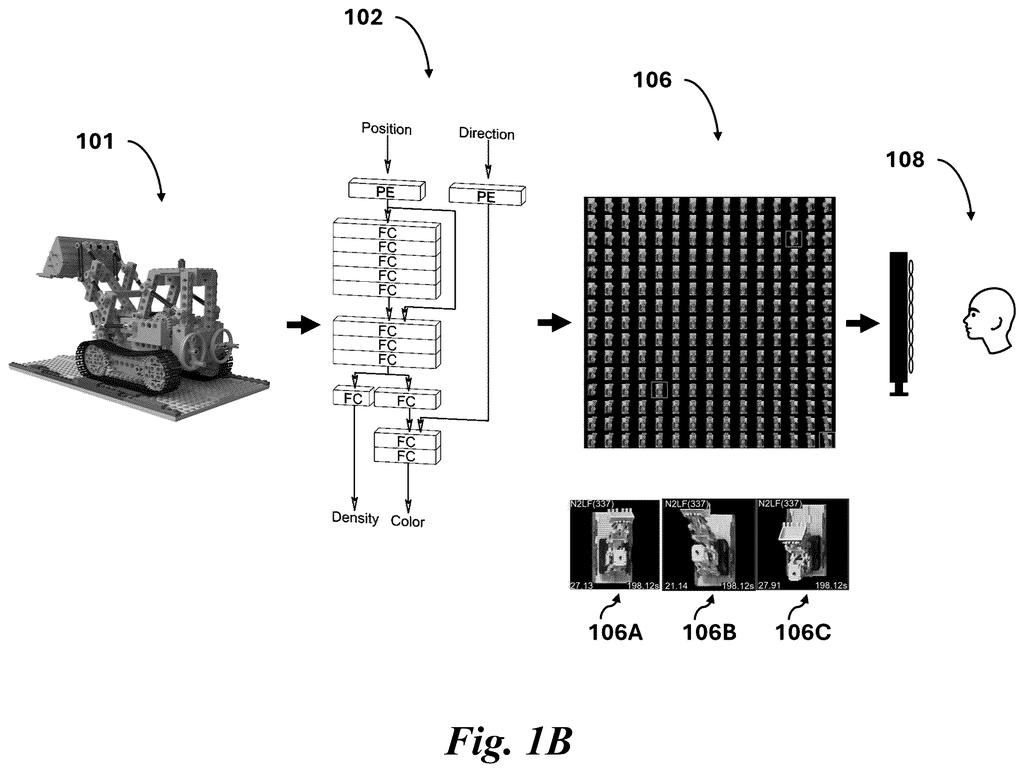
What Nvidia's multi-view rendering shortcut actually does
Imagine a 3D scene that a VR headset or a holographic display needs to show from 50 slightly different angles simultaneously, one for each possible position your eyes might be at. Normally the computer redraws the scene from scratch for every single angle, which takes a lot of processing power.
What Nvidia is patenting here is a shortcut. Instead of starting over for each angle, the system computes the color and transparency of every point in the scene once from a central reference viewpoint, stores those results in memory, and then reuses them when building all the other angles. A single organized sweep through the scene's volume is all it takes to assemble the full set of images.
The practical payoff is speed. Less repeated work means the same hardware can produce richer, more complex light-field images faster, which matters a lot for technologies like VR, mixed reality headsets, and any 3D display that needs to show different images to different parts of your eye at the same time.
How the plane sweep and cached color values work together
The patent describes a rendering pipeline built around what engineers call a light field quilt, which is a grid of dozens of images each captured from a slightly different viewpoint. Together they let a display show a convincing 3D scene without special glasses, because each eye (or each position you might move to) gets the right image.
The key innovation is how the system computes that quilt. It starts by dividing the 3D scene into volume chunks, essentially slices of the scene's depth. For each slice, it calculates color values (what color is this point in space?) and transmittance values (how much light passes through this point?) relative to a single reference viewpoint, then stores both sets of results in a cache (temporary fast memory).
Once those values are cached, a plane sweep operation reuses them to build every other viewpoint image. Think of it like pre-slicing a loaf of bread: you do the cutting once and then anyone can take the slices they need, rather than each person cutting their own loaf from scratch.
- Obtain the 3D scene representation
- Divide it into depth-ordered volume chunks
- Compute and cache color and transparency per chunk, referenced to one central view
- Run a single sweep to assemble all the multi-angle output images from the cache
What this means for VR headsets and real-time 3D displays
Light field displays and VR headsets that show true per-eye depth images are bottlenecked by how quickly a GPU can render all those views. If Nvidia can cut that work down to a single organized pass, the same chip can handle more views, higher resolution, or faster frame rates without a hardware upgrade. That directly affects how comfortable and convincing next-generation headsets feel to wear.
Nvidia makes the GPUs that drive most professional VR and simulation systems, so a rendering method it patents tends to end up in its own hardware and software stack. Whether this appears as a driver feature, an API in its rendering toolkit, or inside a future headset chip is an open question, but the target audience is clear: anyone building or using real-time 3D displays where every millisecond of render time counts.
This is genuinely useful engineering work, not a flashy concept. Caching intermediate rendering results to avoid redundant computation is the kind of practical optimization that makes better products possible. The fact that Nvidia has seven named inventors on it, including researchers from its deep learning and VR teams, suggests this is production-bound work rather than a speculative filing.
There are more where this came from
We read every patent application Big Tech publishes and send you the ones worth knowing. Plain English, free, every week.
The drawings
12 drawing sheets from US 2026/0212591 A1 · click any drawing to enlarge


Want this weekly breakdown for a company we don't cover? Patentlyze Pro →
Be the first to weigh in