
Samsung Patents a Circuit That Prevents Overheating by Learning Its Own Workload History
Most chips slow down after they overheat. Samsung is patenting a system that slows down before overheating happens, by watching how the chip has been running in the recent past.
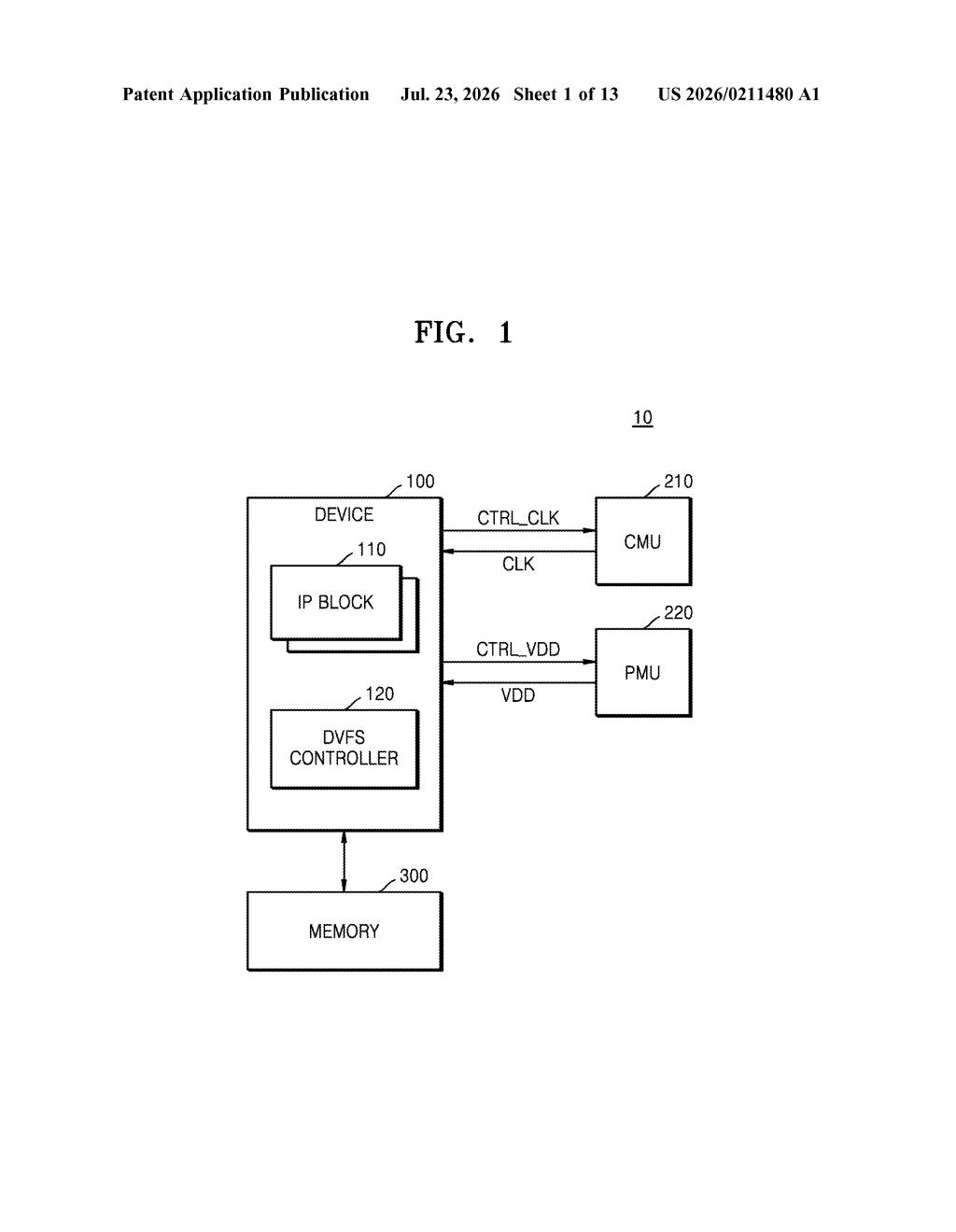
How Samsung's heat-prevention chip control actually works
Imagine your laptop fan kicks in five seconds too late, and by then the processor has already throttled down and your video call has stuttered. That delayed reaction is a real problem in chip design: the system only responds after heat has already built up.
Samsung's patent describes a controller built into a chip that tracks how fast the chip has been running and for how long, then uses that history to predict when a dangerous heat spike is likely. Instead of waiting for a temperature alarm, it proactively caps the chip's speed before things get out of hand.
The key idea is that the controller doesn't just look at the current moment. It looks at the pattern of recent activity, then decides the safe speed limit for the next stretch of work. Think of it like a driver who sees a long uphill grade coming and downshifts early, rather than flooring it until the engine overheats.
How the DVFS controller reads frequency patterns to cap clock cycles
The patent centers on a component called a Dynamic Voltage and Frequency Scaling (DVFS) controller, a standard piece of chip architecture that adjusts how fast a processor runs (its clock frequency) and how much power it draws (its voltage) based on workload demand.
What's different here is how the controller makes its decisions. Rather than only reacting to the current temperature or workload, it examines frequency patterns: a record of which speeds the chip ran at and for how many clock cycles it ran at each speed. Using that history, it calculates a safe "post-operating frequency" for the next window of work.
Critically, the controller then enforces a threshold cycle limit, meaning it won't run the chip at that new frequency for longer than a predetermined number of cycles. This is the core overheating prevention mechanism: even if the workload demands full speed, the controller cuts off sustained high-frequency operation before heat accumulates to a dangerous level.
The system applies this logic to an IP block (a self-contained functional unit inside a larger chip, such as a GPU core, image processor, or neural-network accelerator). This makes the approach modular: different IP blocks can have their own frequency histories and thresholds.
What this means for Samsung chips running hot under heavy loads
For consumer devices, sustained heat is the enemy of both performance and longevity. Chips in smartphones and tablets already use DVFS, but reactive systems that wait for heat sensors to trigger are always playing catch-up. A pattern-aware controller that enforces time limits on high-frequency bursts could mean fewer dropped frames, fewer thermal throttle events, and less long-term wear on the silicon.
For Samsung specifically, this matters across a wide product range: from Galaxy smartphones to the Exynos chips it designs for its own devices and sells to other manufacturers. A smarter thermal governor baked into the silicon itself is also harder for competitors to replicate in software alone, which gives it some durable value as a differentiator.
This is solid, unglamorous chip engineering. Proactive thermal management using frequency-pattern history is a meaningful improvement over purely reactive systems, and it's the kind of low-level optimization that actually shows up in real-world device performance. It won't make headlines on its own, but it's exactly the sort of patent that ends up improving the next generation of Exynos or Snapdragon-competing silicon.
There are more where this came from
We read every patent application Big Tech publishes and send you the ones worth knowing. Plain English, free, every week.
The drawings
13 drawing sheets from US 2026/0211480 A1 · click any drawing to enlarge


Want this weekly breakdown for a company we don't cover? Patentlyze Pro →
Be the first to weigh in