
Nvidia Patents AI That Fills Game Surfaces With Repeating Images No Eye Can Detect
Every game world is full of textures — stone floors, grassy fields, brick walls — and they almost always repeat in ways your eye can spot. Nvidia's new patent describes an AI that generates a small set of texture tiles designed to snap together so naturally that the repetition becomes nearly invisible.
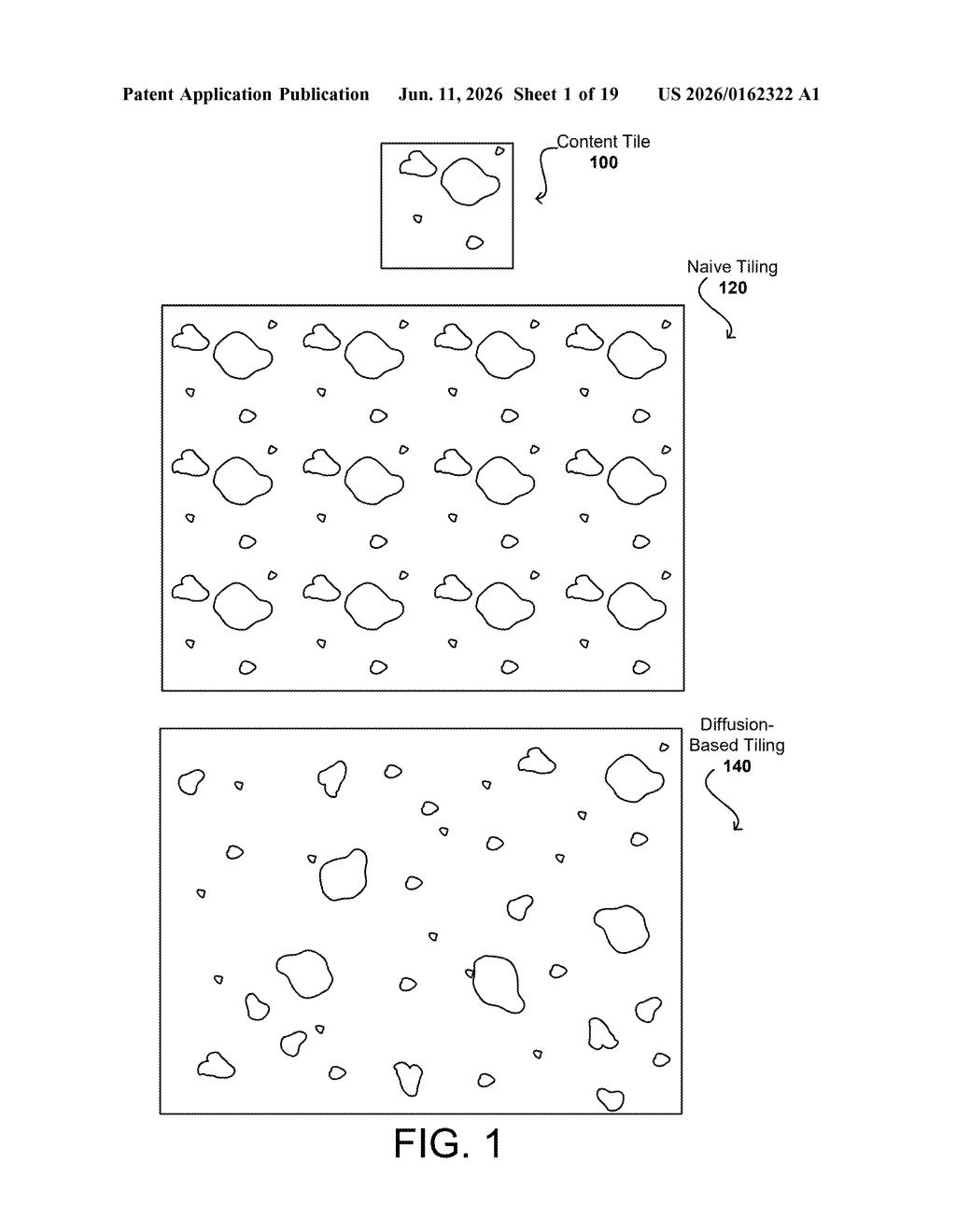
How Nvidia's tile-matching AI hides the repeating pattern
Imagine a video game's stone floor. The artist probably painted one small tile of stone, then repeated it across the whole surface — and if you look closely, you can usually spot the pattern looping. It's one of those small annoyances that breaks the illusion of a real world.
Nvidia's patent describes a system that uses an AI image generator — similar to the kind behind Stable Diffusion — to create a set of texture tiles rather than just one. Each tile is designed with specific rules about what its edges must look like, so any tile can sit next to any other tile without a visible seam or repeat.
The result is that a game engine can randomly pick and place tiles from that small set, and the surface looks naturally varied. You get the coverage of an endlessly repeating texture, with the look of something hand-crafted and non-repeating. Less storage, less artist time, and floors that don't look like wallpaper.
How the diffusion network learns edge-matching rules
The system centers on a diffusion neural network — an AI that learns to remove noise from images step by step (the same core idea behind image generators like Stable Diffusion). Here, that network is trained with an extra constraint: the images it produces must obey boundary conditions, meaning the pixel values along each tile's edges must be compatible with the edges of the other tiles in the set.
The process works roughly like this:
- A user specifies the type of content they want — say, cracked concrete or mossy rock.
- A set of noisy placeholder images is fed into the trained network as starting points.
- The diffusion network iteratively refines those noisy images into finished tiles, respecting the edge-matching rules at every step.
- The final tiles can be placed in any order — randomly or algorithmically — as long as each placement satisfies the boundary conditions.
The key insight is that by generating a set of tiles simultaneously (rather than one generic tile to be stamped repeatedly), the AI introduces enough visual variation that the human eye doesn't lock onto any repeating pattern. The patent notes that the repetition should not be "obviously detectable by a typical human viewer," which is the practical bar the system is designed to meet.
What this means for game graphics and real-time rendering
Texture repetition is a well-known weak spot in real-time 3D graphics — it signals "game" rather than "world" and is expensive to fix manually. Traditionally, artists either paint massive unique textures (high storage cost) or hand-craft Wang tile sets (high labor cost). An AI that automates the tile-set generation could cut both costs significantly, especially as game worlds grow larger and more detailed.
For players, this is largely invisible work — which is exactly the point. If the patent describes a shipping system, the payoff is environments that feel more grounded and less obviously procedural. For developers, particularly studios using Nvidia's tools and GPUs, it's a meaningful reduction in the time spent on texture assets that nobody consciously notices but everybody subconsciously feels.
This is genuinely useful, unglamorous engineering — the kind of problem that every 3D graphics team has lived with for decades. Automating seamless tile-set generation with a diffusion model is a clever application of a mature AI technique to a specific, solvable pain point. It won't make headlines the way a new GPU does, but it's exactly the sort of tooling improvement that quietly raises the floor on what a small team can produce.
There are more where this came from
We read every patent application Big Tech publishes and send you the ones worth knowing. Plain English, free, every week.
Want this weekly breakdown for a company we don't cover? Patentlyze Pro →