
Nvidia Patents Always-On Eye Tracking That Knows Who Is Looking
Nvidia has filed a patent for an eye-tracking system that doesn't just follow where you're looking, it also figures out who is doing the looking, and adjusts its behavior accordingly.
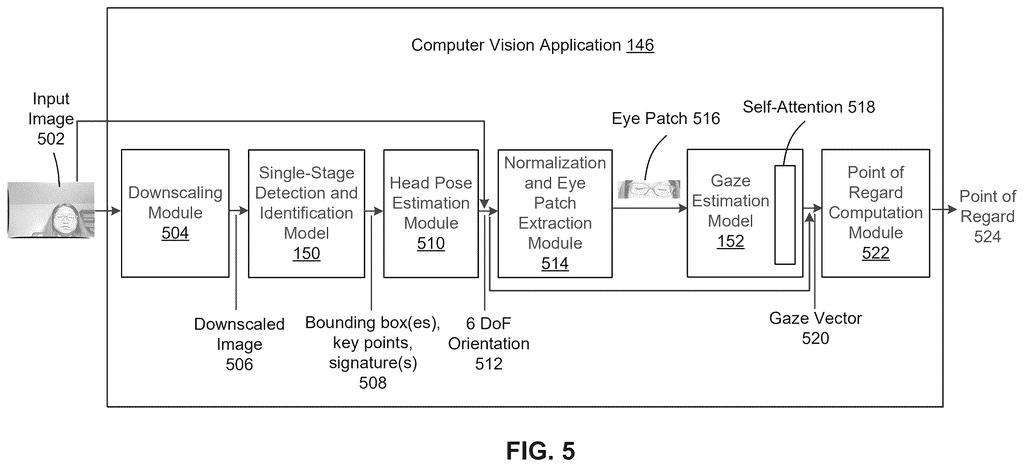
What Nvidia's always-on eye tracking actually does
Imagine sitting down at your computer and it immediately knows it's you, then starts tracking exactly where your eyes are focused on the screen, all without you pressing a button or logging in. That's the basic idea behind this Nvidia patent.
The system uses a camera and a trained AI model to do two things at once: recognize your face and track your gaze. Because it knows who you are, it can personalize how it interprets where you're looking, different people hold their heads differently, have different eye shapes, and sit at different distances from the screen.
The result is what the patent calls "always-on" eye tracking: a system running in the background, continuously, ready to act on wherever your attention lands. Think of it like a cursor that follows your eyes instead of your hand, but one that also remembers your preferences.
processing a first image using a first trained machine learning model that detects a face within the first image and predicts an identity of the face; determining at least one of an eye gaze or a point of regard based on the face and the identity of the face …
Translation: An AI scans a picture to find a face, figure out who it belongs to, and track where those eyes are looking.
How the model links your face identity to your gaze
The patent describes a computer-implemented method built around a single machine learning model that handles two tasks simultaneously: detecting a face in a camera image and predicting the identity of that face (who the person is, not just that a face is present).
Once identity is established, the system determines one of two things: eye gaze (the direction the eyes are pointing) or a point of regard (the specific spot in the physical world or on a screen that the eyes are aimed at). The distinction matters: gaze is a direction vector, point of regard is a location. Knowing who you are helps the model make that conversion more accurately, since it can factor in your personal eye geometry and typical head position.
Finally, the system triggers actions based on where you're looking. The patent leaves "action" broadly defined, which could mean scrolling, selecting, dimming a display, or waking a device from sleep.
The "always-on" framing in the title suggests the system is designed to run continuously at low power, similar to how a smartphone's face-unlock camera stays alert without draining the battery, rather than activating only when a button is pressed.
The disclosed method for eye tracking includes processing an image using a trained machine learning model that detects a face within the image and predicts an identity of the face …
Translation: The system uses artificial intelligence to recognize specific people and follow their gaze in real time.
What this means for AR glasses and PC interfaces
Eye tracking has been a niche input method for years, mostly confined to accessibility tools and high-end VR headsets. Tying it to face recognition changes the equation: a system that knows who is looking can skip calibration, switch profiles automatically when a different person sits down, and deliver more accurate gaze estimates from the start. For you as a user, that means less setup friction and fewer false readings.
the pattern in Nvidia's AR and spatial-computing filings points toward a world where cameras on headsets and monitors do far more than capture video. If this system ships in something like a next-generation PC webcam or AR glasses platform, always-on gaze input could become as ordinary as a mouse click.
Nvidia's seventh filing we've tracked in our AR glasses race since July builds on earlier work like keeping AR objects locked and one predicting eye movement.
The shortest path from this patent to a real product is probably a driver update, not a new device. Standard webcams already capture what this approach needs, and Nvidia's software already sits close enough to your screen to act on where your eyes land.
The privacy gap is the real obstacle. A camera that continuously identifies your face and tracks where you look is exactly what regulators and users tend to push back against hardest, and the patent says nothing about consent or data handling.
The detail that matters most is the identity-plus-gaze combination. Most eye tracking requires a setup ritual because the system has no idea who it's looking at. Tying face recognition to gaze prediction skips that step entirely, which is a practical improvement that tends to survive from patent to actual product.
There are more where this came from
We read every patent application Big Tech publishes and send you the ones worth knowing. Plain English, free, every week.
The drawings
8 drawing sheets from US 2026/0288234 A1 · click any drawing to enlarge


Want this weekly breakdown for a company we don't cover? Patentlyze Pro →
Be the first to weigh in