
Nvidia Files Patent for On-Screen Worlds That Change Based on How You React
Nvidia's patent application describes a screen that watches how you react, then rearranges its own furniture, colors and layout to get a better reaction next time.
What Nvidia's self-adjusting interface does
You're a few minutes into a game set in a virtual kitchen, and your eyes keep skipping past the appliance in the corner. You never click it. You never say a word about it. Still, someone is paying attention.
According to this Nvidia patent application, that someone is software. It watches how you react, through clicks, how fast you respond, where you look, even your facial expressions, and treats all of it as a silent vote. Then an AI model picks a change to the screen, like swapping a stove for a refrigerator or redoing the floor, that it expects you will respond to more happily.
The idea is that the screen keeps adjusting itself, so you never have to dig through settings to say what you want. It simply learns from how you behave.
… causing one or more machine learning models to determine one or more modifications to the one or more attributes of the one or more objects of the user interface based, at least in part, on the one or more features, the one or more modifications to increase a reward value calculated from second feedback information expected in response to the one or more modifications …
Translation: AI decides how to change the screen to maximize your future satisfaction.
How the reward score steers each change
The patent describes a loop with three steps. First, a feedback analyzer (software that turns raw activity into numbers) collects signals from you. Those can be explicit, like ratings or survey answers, or implicit, meaning inferred from behavior: mouse clicks, how quickly you react, eye and body movement, facial expressions, stress readings, and which settings or objects you touch.
Second, a machine learning model takes those numbers and picks changes to the objects on screen. Every object has adjustable parameters, such as color, size, position, sound, behavior, and how often it shows up. The model's goal is to raise a reward value, a score for how well you are expected to respond to the change. The filing says the models may be trained with reinforcement learning (trial and error, where the model is rewarded for good guesses) or inverse reinforcement learning (working out what counts as good by watching many examples).
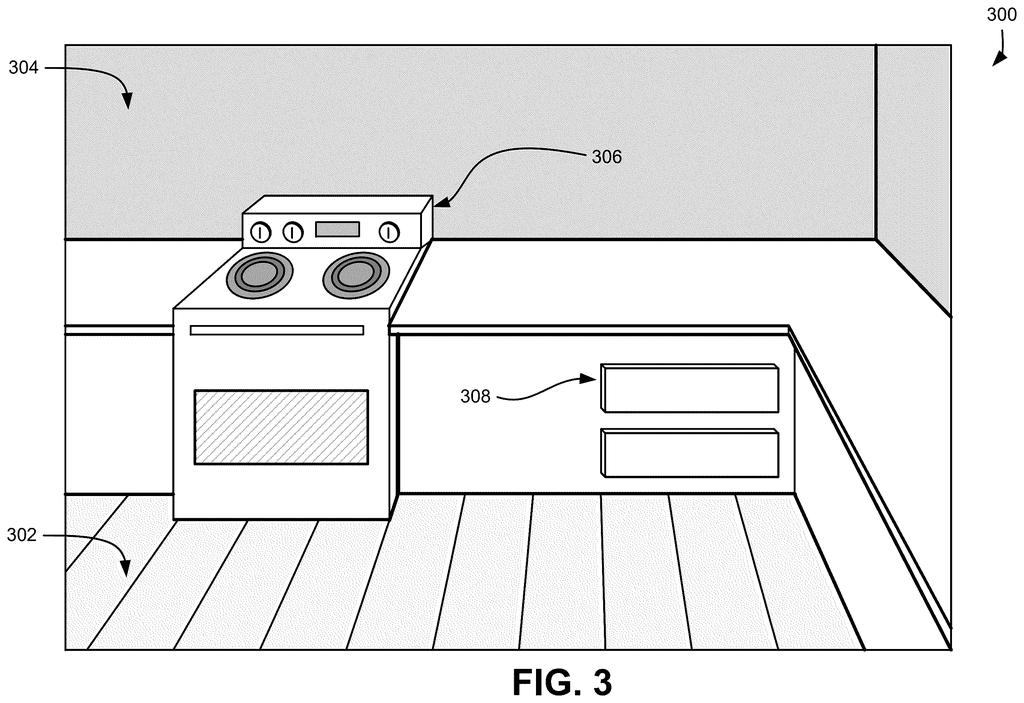
Third, the app applies the change and shows it to you. The patent's example is a virtual kitchen where an appliance switches from a range to a refrigerator and the floor type and look are altered. The pieces can run on your device, on a server that streams the game to you, or split between both.
… using direct and/or implicit feedback of user interaction with one or more objects in an environment.
Translation: It tracks both explicit actions and subtle habits while you use the system.
What this means for Nvidia's cloud games and VR
For you, the practical upshot is an app that adjusts itself instead of asking you to dig through menus. The filing names games, 3D design tools and streamed cloud applications as places this could run, on devices ranging from a phone to a VR headset. The more you use it, the more it could tune the experience to your habits.
It also raises an obvious question about how much your screen should watch. Gaze tracking, facial expressions and stress readings are personal data, and the filing lists them as possible inputs. How a company stores that data, and whether you can switch it off, would matter as much as how well the model guesses what you like.
Nvidia's 77th filing in the AI simulation filings we cover since May adds to a run that includes one sharpening fuzzy 3D edges and phone video into 3D scenes.
Of everything in this filing, the shortest path to a real feature is plain software. Nothing in it calls for new chips or a new device. The system can run on a phone, console, laptop or headset, on the player's side or on a server that streams the game. Clicks, reaction speed and settings changes are already available on all of those.
What has to exist first is a trustworthy way to turn a frown or a long stare into a score. The filing says a reward can come from reaction speed, gaze, facial expressions or a survey answer, but it gives no recipe for weighing them. That is where a product would stand or fall.
The easiest route to shipping is narrow: a streamed game or 3D tool that already logs your interactions and tunes one thing at a time, like the look of a room. Reading your face is a far longer road, and probably one that needs your clear consent before it starts.
Get our take in your Top Stories
Liked this breakdown? Add Patentlyze as a preferred source on Google, and our plain-English take shows up more often in your Top Stories the next time Nvidia patent news breaks.
There are more where this came from
We read every patent application Big Tech publishes and send you the ones worth knowing. Plain English, free, every week.
The drawings
56 drawing sheets from US 2026/0319646 A1 · click any drawing to enlarge


Show the other 48 sheets


Want this weekly breakdown for a company we don't cover? Patentlyze Pro →
Be the first to weigh in