
Nvidia Patents a Hidden Infrared System That Maps Your Car's Cabin in 3D
Nvidia wants to fill a vehicle cabin with invisible infrared light and hidden cameras — not to take photos, but to build a real-time 3D model of everyone inside. The goal is a monitoring system that knows exactly where your head is, what your hands are doing, and whether you're paying attention.
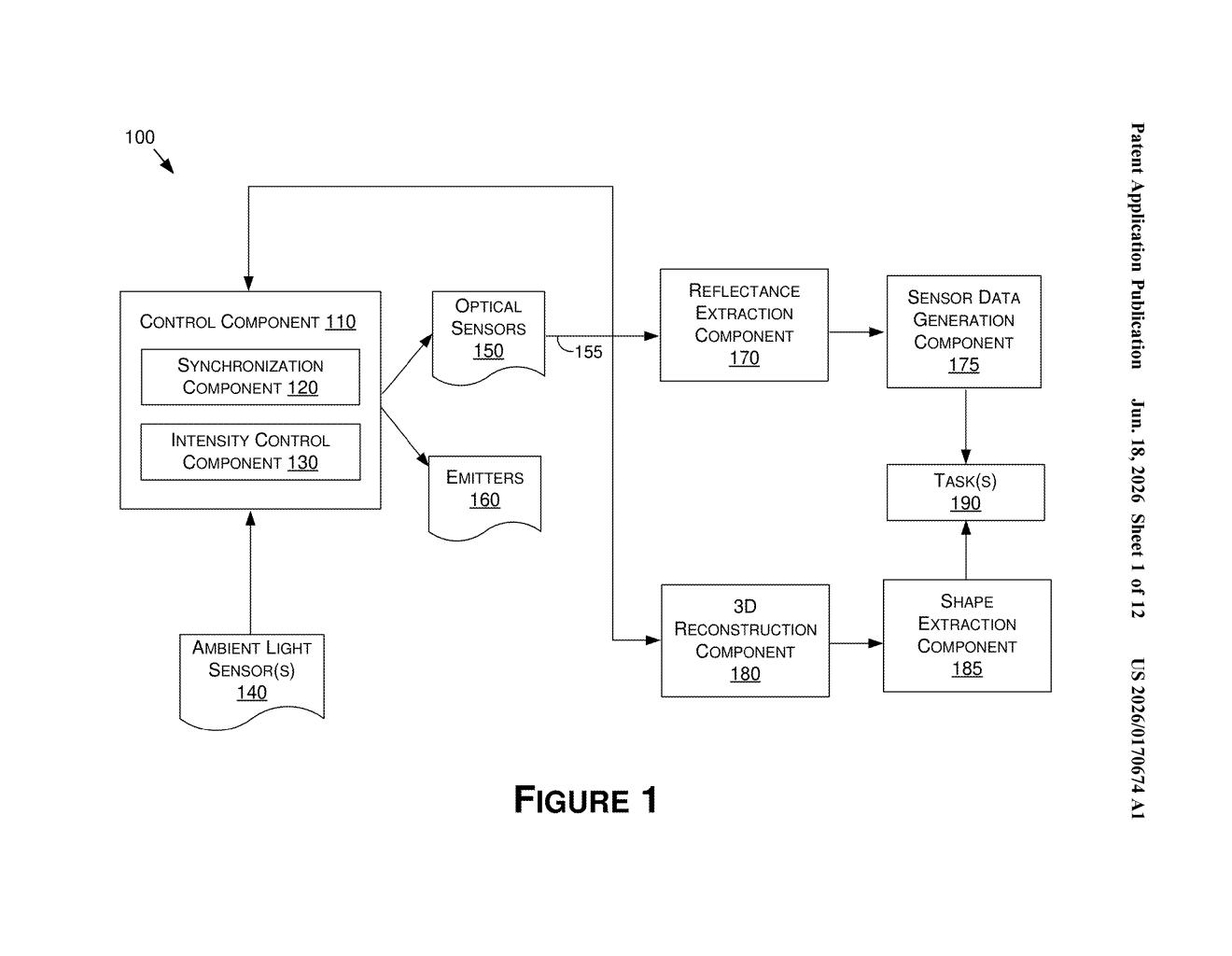
What Nvidia's invisible cabin scanner actually does
Imagine your car's dashboard quietly scanning you with light you can't see. That's roughly what Nvidia is describing here. The patent outlines a setup where small infrared lights and cameras are tucked inside ordinary car interior parts — headliners, pillars, steering column trim — so passengers never notice them.
Those hidden sensors work together to build a 3D picture of the cabin in real time. Instead of a flat photo, the system figures out the exact shape and position of people inside — where your head is tilted, where your hands are, whether your eyes are open. It's closer to a 3D body scan than a security camera snapshot.
That 3D model then feeds into driver and occupant monitoring tasks. Think: the car noticing you're drowsy and nudging you awake, or an autonomous vehicle confirming a passenger is seated before it pulls away. The "invisible" part matters — it means the system can work in the dark and without making anyone feel watched by a visible camera lens.
How hidden IR emitters build a live 3D map of passengers
The patent describes a network of infrared (IR) emitters and optical sensors — essentially night-vision cameras — hidden inside standard cabin trim pieces like pillars, headliners, or seat frames. Because IR light is invisible to human eyes, the whole sensing apparatus is concealed.
The sensors are synchronized so they all capture frames at the same moment. Using stereo vision (the same principle your two eyes use to judge distance), the system compares slightly different views from multiple cameras to calculate how far away each point in the scene is. This produces a depth map — a grid where every pixel has a distance value attached to it.
Those depth maps are then stacked and processed into a 3D point cloud (picture thousands of floating dots, each representing a real surface point inside the cabin). From that cloud, the system runs surface reconstruction — a technique that connects the dots into a continuous 3D mesh, like inflating a wireframe model over the raw data.
From the finished 3D surface, the system can extract:
- A full 3D pose — the position and orientation of a person's body
- Keypoints such as facial landmarks (eye corners, nose tip, chin)
- Any other shape representation useful for downstream tasks
Those outputs then drive decisions — alerting a drowsy driver, confirming occupant position for airbag calibration, or feeding data to an autonomous driving stack.
What this means for driver monitoring and autonomous cars
Driver monitoring is no longer optional. New safety regulations in the EU and proposed rules elsewhere increasingly require that vehicles confirm a human driver is attentive. A hidden IR system that works in darkness and doesn't require a visible camera pointed at your face is a much less intrusive way to meet those requirements — which matters both for consumer acceptance and for automakers who want monitoring that doesn't feel like surveillance.
For Nvidia specifically, this fits squarely into its DRIVE platform for autonomous and assisted-driving systems. If your car's compute module already runs Nvidia silicon, adding a certified 3D cabin-sensing pipeline becomes a software and sensor integration problem — not a hardware reinvention. That's a meaningful competitive angle as automakers shop for end-to-end in-vehicle AI stacks.
This is practical, near-term work — not a moonshot. Cabin sensing is already on the market in premium vehicles, but most systems use flat 2D cameras with face-detection software bolted on. A genuine real-time 3D reconstruction pipeline is meaningfully more capable, and hiding the emitters inside trim pieces is a smart answer to the 'nobody wants a camera staring at them' problem. Worth watching as occupant monitoring rules tighten globally.
There are more where this came from
We read every patent application Big Tech publishes and send you the ones worth knowing. Plain English, free, every week.
Want this weekly breakdown for a company we don't cover? Patentlyze Pro →