
Nvidia Patents a System for Simulating Entire Wireless Networks on a Processor
Building and testing a cellular network is expensive — you need towers, devices, and real radio spectrum. Nvidia's new patent describes a way to fake all of it in software, running multiple virtual mobile devices simultaneously, each with its own distinct radio resource profile.
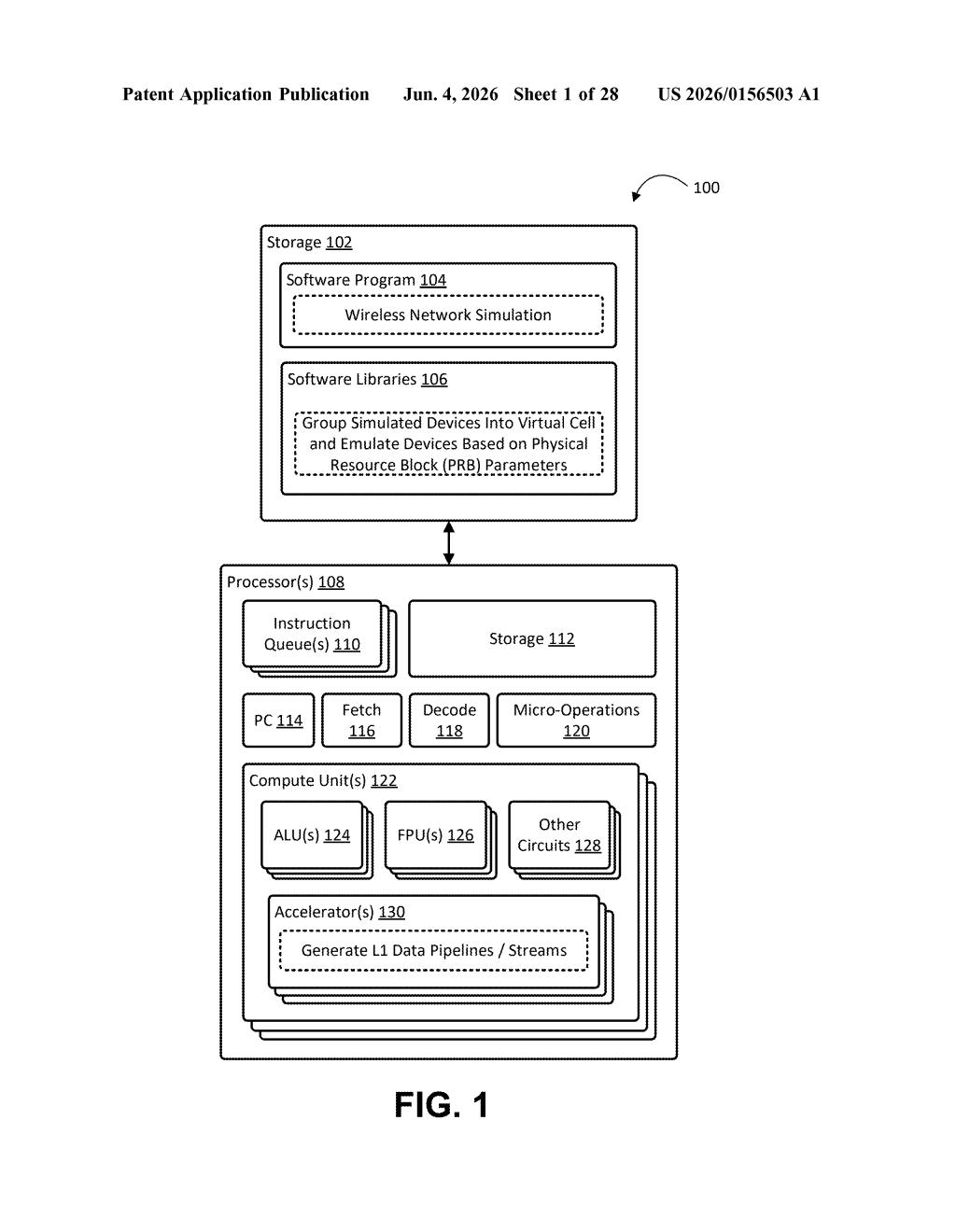
What Nvidia's wireless network emulator actually does
Imagine you're building a new cellular network and you need to test how it handles thousands of phones connecting at once. Renting real spectrum and buying real devices is costly and slow. Nvidia's patent describes a way to simulate that entire scenario on a processor — no physical phones required.
The system creates a virtual network and populates it with simulated mobile devices grouped into virtual cells, just like a real carrier network. Each simulated device gets its own set of radio parameters, so the simulation can realistically model how different devices compete for network resources.
The key trick is that the processor can pick different emulation programs for different devices based on those radio parameters — meaning the simulation isn't one-size-fits-all. It's a flexible testbed that can mimic a wide variety of real-world device behavior without leaving the lab.
How the processor picks emulation programs per device
At the technical core, this patent describes a processor (or set of circuits) that runs mobile device emulation programs — software stand-ins for physical phones or IoT devices on a cellular network.
The selection of which emulation program runs for a given device is driven by Physical Resource Block (PRB) parameters — the specific chunks of radio spectrum (in LTE/5G, the radio band is divided into these fixed-size blocks) assigned to each simulated device. Two devices with different PRB allocations can trigger two entirely different emulation routines, letting the simulator model heterogeneous device behavior accurately.
The system also groups simulated user equipment (UE — telecom shorthand for any device that connects to a network) into virtual cells, mirroring how a real base station manages which devices it's serving. This cell-based structure lets the simulator reproduce realistic interference, handoff, and capacity scenarios.
- Virtual network generation with user equipment assignment
- PRB-parameter-based selection of per-device emulation programs
- Cell grouping to simulate base station behavior
- Scalable to two or more simultaneous device emulations
What this means for 5G infrastructure testing
For telecom infrastructure vendors and network equipment makers, validating 5G software at scale is a hard problem — you either need a massive device farm or you accept that your lab tests won't reflect real-world conditions. A processor-driven emulation system like this could compress that validation cycle significantly, running stress tests that would otherwise require physical hardware.
Nvidia has been pushing into the telecom and RAN (Radio Access Network) market with its Aerial software platform, which runs 5G base station software on GPUs. A robust mobile-device emulation system would pair naturally with that effort — letting network operators test Aerial-based base stations against simulated traffic loads without deploying real user devices. That's the strategic angle worth watching here.
This is a fairly narrow, infrastructure-level patent — it won't show up in a consumer product announcement. But it fits neatly into Nvidia's longer-term play to become the compute backbone of software-defined telecom networks. The PRB-parameter-driven emulation selection is a sensible engineering approach, not a dramatic leap, but the kind of quiet plumbing work that becomes valuable when you're selling GPU-based 5G base station software to carriers.
There are more where this came from
We read every patent application Big Tech publishes and send you the ones worth knowing. Plain English, free, every week.
Want this weekly breakdown for a company we don't cover? Patentlyze Pro →