
Qualcomm Patents a Multi-Device System for Tracking Moving Objects Over Wi-Fi
Qualcomm is working on a way to let multiple wireless devices act together like a distributed radar system, detecting and tracking moving objects by analyzing how signals bounce off them.
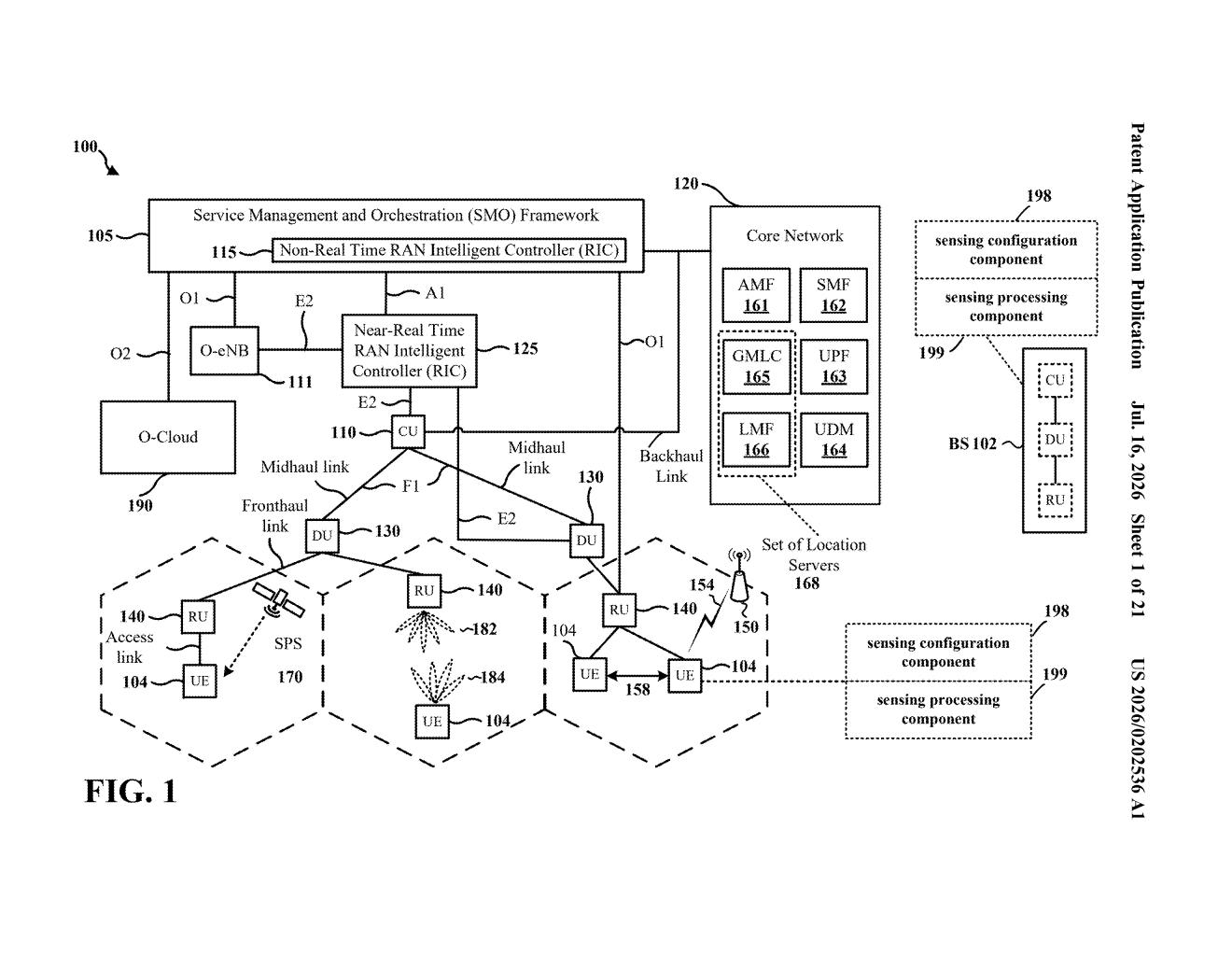
How Qualcomm's wireless radar tracks moving objects
Imagine your home's Wi-Fi router can tell when someone walks through a room, not with a camera, but by noticing how wireless signals bounce differently when something moves. That's the basic idea behind wireless sensing, and Qualcomm is trying to make it work across several devices at once.
This patent describes a system where a wireless device receives signals that have reflected off a moving object (like a person or a car), then uses the slight frequency shift those reflections carry to figure out how fast that object is moving. The frequency shift comes from the Doppler effect, the same physics that makes a passing ambulance siren sound higher-pitched as it approaches you.
The interesting part is that this approach is designed to work across multiple wireless nodes simultaneously, meaning several base stations or access points can each measure the same moving object from different angles, giving a more complete and accurate picture than a single device could manage alone.
How the Doppler rotation math works across nodes
The patent centers on a technique called Doppler frequency estimation, which measures how much a wireless signal's frequency changes when it reflects off a moving object. A signal bouncing off something stationary comes back at the same frequency it left; a signal bouncing off something moving comes back slightly shifted. That shift tells you the object's speed relative to the sensor.
To make accurate measurements across multiple devices, each sensing signal is paired with a time-domain rotation coefficient (essentially a mathematical tag applied at specific intervals). The receiving device uses these tags to calculate a multiplicative factor for each time slot, which it then applies when measuring the incoming signal. This corrects for timing offsets and keeps the math consistent across a network of devices that aren't perfectly synchronized.
The system is designed around simultaneous multi-node sensing, where several wireless access points or base stations each track the same object via different reflection paths. Each node independently calculates its own Doppler reading, and those readings can be combined for a fuller picture of the object's motion and position.
Key components in the claim include:
- A configuration describing which signals to listen for and on which reflection path
- Per-slot multiplicative factors derived from the rotation coefficient
- A Doppler frequency calculation that ties the received signals back to those factors
What this means for wireless sensing and device tracking
Wireless sensing is an area several chip makers and device companies are actively building toward. The promise is detection and tracking without cameras or dedicated radar hardware, using the radio signals already flying around in your home or office. Getting multiple nodes to cooperate accurately is one of the harder engineering problems in that space, and this patent addresses it directly.
For you as a consumer, this kind of technology could eventually show up in smart home hubs, Wi-Fi routers, or cellular base stations that can detect falls, monitor occupancy, or track movement, all without any additional sensors. Qualcomm supplies the chips that power a large share of the world's wireless infrastructure, so if this technique makes it into a chipset specification, it could spread widely and quickly.
This is a specific, well-scoped engineering patent aimed at a real problem in wireless sensing: coordinating Doppler measurements across multiple nodes without a single synchronized clock. It's not flashy consumer technology yet, but Qualcomm's position in the chip supply chain means this kind of work tends to end up in actual products. Worth keeping an eye on if you follow the emerging 'Wi-Fi as radar' space.
There are more where this came from
We read every patent application Big Tech publishes and send you the ones worth knowing. Plain English, free, every week.
Want this weekly breakdown for a company we don't cover? Patentlyze Pro →
Be the first to weigh in