
Nvidia Patents a Self-Checking System That Keeps Cars Accurately Within Their Lanes
Self-driving cars fail, in part, because a single lane-detection system can be confidently wrong. Nvidia's latest patent describes running several of those systems at once and using their disagreements as an early-warning signal.
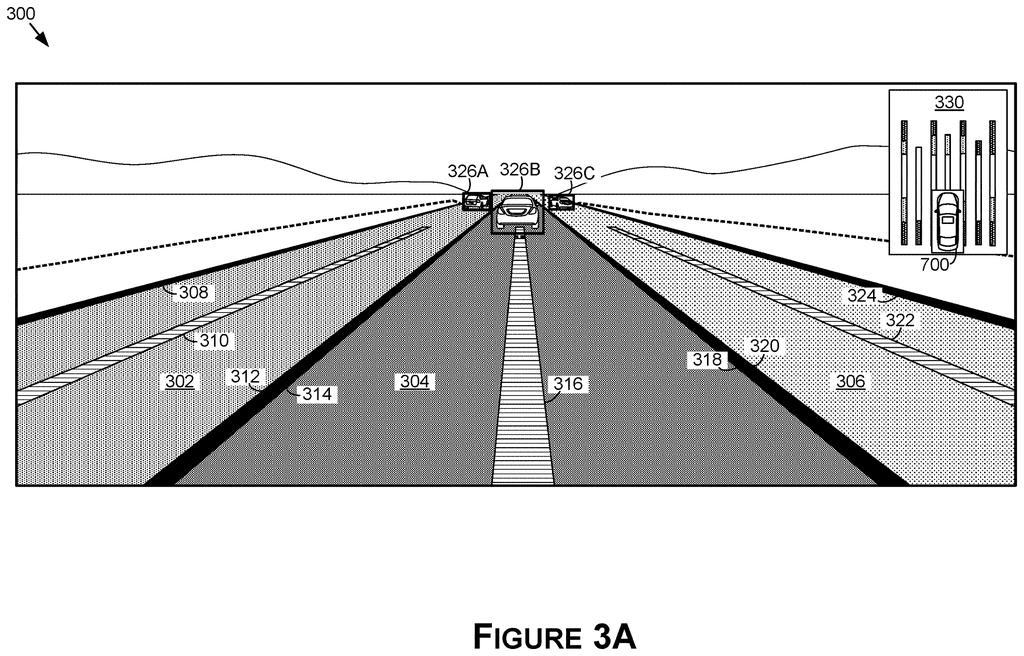
How Nvidia's self-driving lane system catches its own mistakes
You're in a self-driving car on a winding mountain road in heavy rain, and the lane markings are barely visible. The car's software has to decide, right now, exactly where the road goes. If it guesses wrong, there's no driver to correct it.
Nvidia's patent describes a way to handle that by running multiple lane-reading systems at the same time, each looking at the road from a slightly different angle or using different data. The car then compares all their answers. If they mostly agree, it proceeds confidently. If they start to disagree, that disagreement itself is a warning: something unusual is happening, and the system should be more careful.
The practical upside is that no single bad sensor reading or software glitch can silently send the car in the wrong direction. One system failing independently of the others is far less dangerous than one system failing with nothing to catch it.
determine at least a first feature representation associated with a first source and a second feature representation associated with a second source that is different from the first source …
Translation: The car compares data coming from two completely different places.
How the fused feature representations get combined and checked
The patent centers on what Nvidia calls a path perception ensemble: a collection of separate software modules, each producing its own estimate of where the road is and where the car should go.
Each module generates a feature representation (essentially a compact mathematical description of what it sees in the environment, extracted from sensor data). The system then checks whether the representations from different sources are related or aligned. When they are, it combines them into a single fused feature representation that blends the strengths of each input. That fused output then drives the car's planning and navigation decisions.
The key insight is in how disagreement is handled. Because each module is designed to fail in different ways under different conditions, tracking how much they agree gives the system a live quality score for its own lane-reading. If two modules diverge sharply, that divergence is a measurable signal, not just an error to suppress.
The hardware described includes:
- CPUs and GPUs for general computation
- Dedicated hardware accelerators for speed-sensitive tasks
- External sensors covering fields of view around the vehicle
The architecture is explicitly aimed at handling high-curvature roads, bad weather, and complex intersections where a single-source system is most likely to struggle.
… by analyzing whether and how much the individual path perception signals agree or disagree.
Translation: It checks how well different sensors agree with each other to catch mistakes.
What redundant lane-reading means for autonomous vehicle safety
For self-driving technology, quiet failures are the hardest problem. A system that knows it might be wrong is far safer than one that is wrong without knowing it. This patent builds that uncertainty awareness directly into the lane-detection pipeline, rather than bolting it on as an afterthought.
For anyone who will eventually ride in an autonomous vehicle, the implication is straightforward: the car is less likely to make a confident, uncorrected mistake in exactly the conditions where driving is already hardest. Nvidia's track record in autonomous-vehicle perception patents gives context for how seriously the company is treating the reliability side of this problem, not just raw detection accuracy.
That makes this Nvidia's 57th filing we've tracked since May in the self-driving sensing race, following one on self-testing simulations and cameras sharing what they see.
The underlying idea is straightforward: run several independent methods for detecting lane markings at the same time, then measure how much they agree. When they disagree, that disagreement itself becomes a warning signal. Aviation and industrial safety have used this logic for decades.
What makes this close to shippable is that it does not require new hardware. The document describes cameras, radar, and onboard processors that already exist in production driver-assistance systems. The software layer that fuses the competing readings sits on top of hardware Nvidia already sells.
The real question is whether the agreement-checking adds enough delay to matter at highway speeds. If that latency problem is solved, this moves from a reliability paper into a feature a driver can depend on today.
There are more where this came from
We read every patent application Big Tech publishes and send you the ones worth knowing. Plain English, free, every week.
The drawings
13 drawing sheets from US 2026/0279202 A1 · click any drawing to enlarge


Want this weekly breakdown for a company we don't cover? Patentlyze Pro →