
Nvidia Patents a Priority-Ordered Telemetry Controller for Multi-Device Systems
When you're running hundreds of GPUs in a data center, not all performance metrics are equally urgent. Nvidia's new patent describes a controller that figures out which telemetry data to grab first — so the most critical signals always get through.
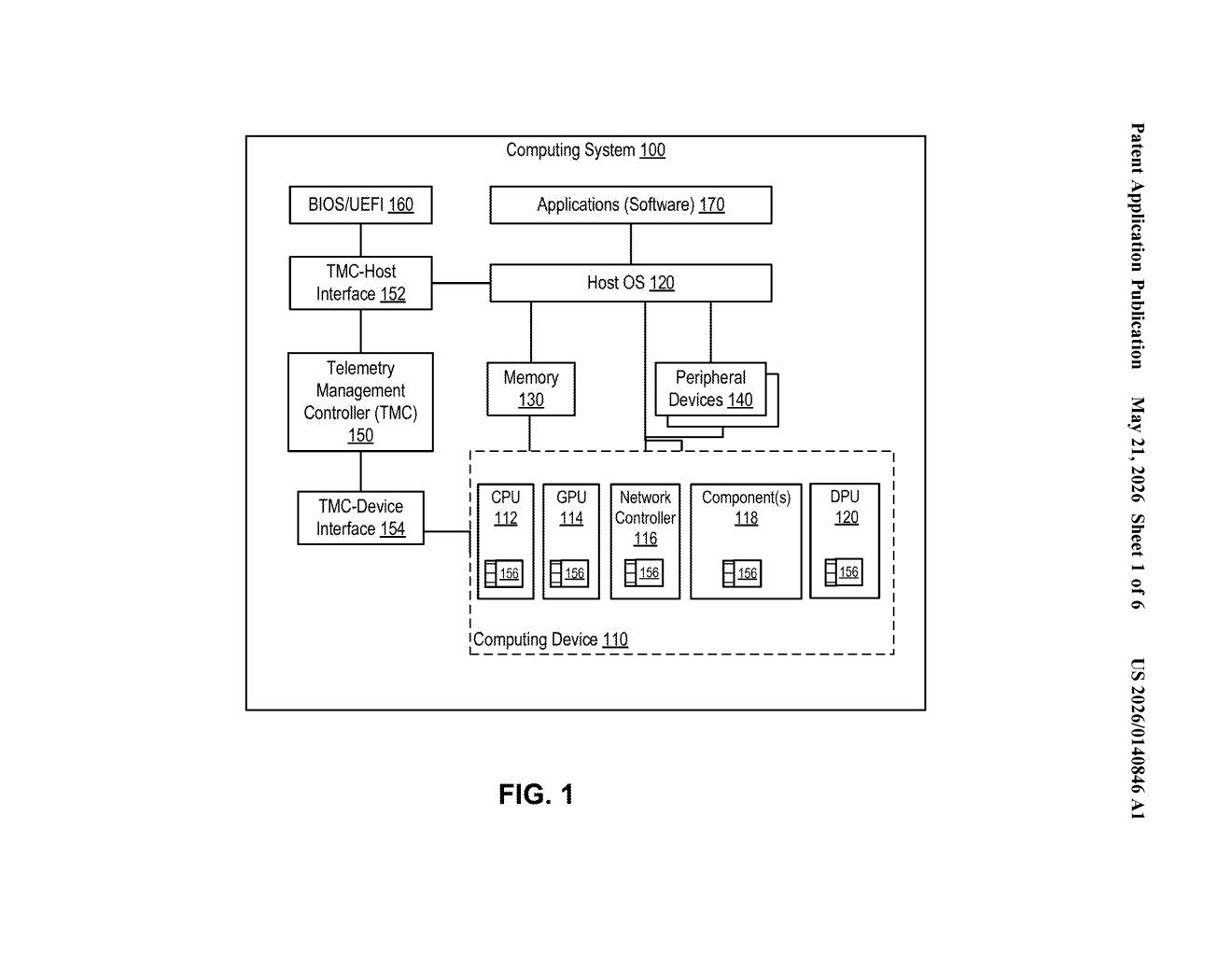
What Nvidia's telemetry priority system actually does
Imagine your data center is running dozens of servers and GPUs simultaneously, and you want to know how they're all doing — temperatures, power draw, error rates, and more. Normally, a monitoring system might just grab all that data in whatever order it happens to, which can mean the most important signals get stuck behind less urgent ones.
Nvidia's patent describes a Telemetry Management Controller (TMC) that sits between your software and all those computing devices. When a request comes in for performance data, instead of fetching everything randomly, the TMC sorts the requested metrics by priority and collects them in that order — most critical first.
The clever part is that it works regardless of what software is making the request, so you don't need to rewrite your monitoring tools to take advantage of it. The TMC handles the prioritization layer on its own.
How the TMC orders and retrieves telemetry data
The patent describes a Telemetry Management Controller (TMC) that sits as a dedicated intermediary between host software and a fleet of computing devices. It exposes two interfaces: a TMC-Host Interface (facing applications and the OS) and a TMC-Device Interface (facing the actual hardware).
When a request arrives asking for multiple types of telemetry — say, GPU utilization, memory bandwidth, thermal readings, and error logs all at once — the TMC doesn't just forward the request blindly. It first constructs an ordered list of those telemetry types ranked by their associated telemetry priority values, then dispatches retrieval from the connected devices in that ranked sequence.
Key components described in the patent include:
- A priority assignment mechanism per telemetry data type
- An ordering engine that resolves the ranked retrieval list
- Software-agnostic operation — the TMC works independently of which application issued the request
- Support for BIOS/UEFI and OS-level integration via the host interface
The software-agnostic framing is notable: the claim is that any application can issue a raw telemetry request without needing to encode priority logic itself — the TMC handles that internally.
What this means for data center performance monitoring
In large-scale GPU clusters — exactly what Nvidia sells into — monitoring latency and data ordering matter. If a thermal warning or memory error is buried behind lower-priority polling requests, operators could miss it. A dedicated controller that enforces retrieval priority could make fault detection faster and more reliable at scale.
For data center operators running Nvidia hardware, this kind of firmware-level telemetry management could reduce the complexity of building custom monitoring stacks. The software-agnostic design means your existing observability tools — Prometheus scrapers, DCGM integrations, proprietary dashboards — could benefit without modification. That's a real operational advantage in environments where tooling standardization is hard.
This is solidly useful infrastructure work, not a flashy AI story. Nvidia is clearly thinking about the operational layer of running massive GPU fleets — the boring-but-critical plumbing that keeps data centers healthy. It won't make headlines, but if it ships into future server management firmware, operators will quietly appreciate it.
Get our take in your Top Stories
Liked this breakdown? Add Patentlyze as a preferred source on Google, and our plain-English take shows up more often in your Top Stories the next time Nvidia patent news breaks.
There are more where this came from
We read every patent application Big Tech publishes and send you the ones worth knowing. Plain English, free, every week.
Want this weekly breakdown for a company we don't cover? Patentlyze Pro →