
Nvidia Patents a Method to Shrink AI Models Without Losing Accuracy
Nvidia has filed a patent for a way to compress AI models using randomly chosen scaling factors, a subtle twist on a technique that determines how efficiently neural networks run on chips.
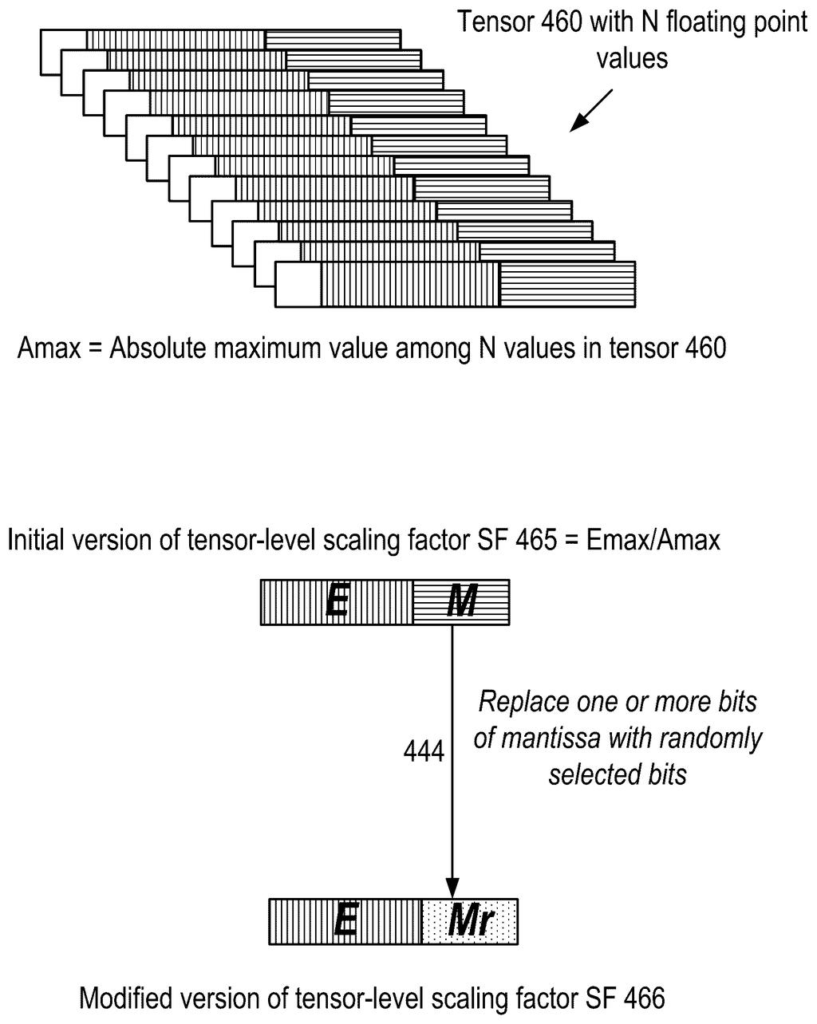
What Nvidia's randomized neural network compression does
Imagine trying to pack a suitcase: you could fold everything the same way every time, or you could try slightly different folding approaches to see what fits best. Nvidia's patent applies a similar idea to AI models.
Neural networks are enormous collections of numbers. To run them efficiently on chips, those numbers get compressed into smaller, cruder values, a process called quantization. Normally, compression uses a fixed formula. Nvidia's approach picks the compression ratio randomly each time, which can prevent the model from developing blind spots caused by always compressing the same way.
The practical payoff is that AI models trained or run this way may end up more accurate for a given chip budget, or use less power without losing performance. It's a low-level technique that most users would never notice, but it could improve every AI product Nvidia's chips power.
How the random scaling factors shrink AI model weights
Quantization is the process of taking the high-precision floating-point numbers inside a neural network (think 32-bit decimals) and converting them to lower-precision integers (think 8-bit or 4-bit whole numbers). This shrinks the model's memory footprint and speeds up computation, but it can introduce errors if done carelessly.
Nvidia's patented approach introduces randomness into the selection of the scaling factor, the multiplier that controls how big or small each number looks after compression. Instead of always using a fixed, deterministic scaling factor, the processor picks one from a random distribution.
This matters because fixed quantization schemes can systematically bias a model in the same direction every time, accumulating errors that compound during training. Random scaling factors act like a form of noise injection (a technique used in other parts of AI training to improve generalization), potentially averaging out those errors over many passes.
- One or more circuits inside the processor handle the random scaling selection.
- The technique applies to one or more portions of a neural network, meaning it can be used selectively, not necessarily on the whole model at once.
- The claim is processor-level, meaning this could be implemented in hardware, firmware, or a combination of both.
What this means for AI training costs and chip efficiency
Quantization is one of the main levers the AI industry uses to run large models without needing infinite memory and power. Any improvement here has a multiplying effect: better quantization means the same Nvidia chip can handle a bigger model, or the same model runs cheaper in a data center. That feeds directly into Nvidia's pitch to cloud providers and enterprise AI customers.
For everyday users, you wouldn't interact with this directly. But if it works as described, AI assistants, image generators, and recommendation systems running on Nvidia hardware could become more accurate or cheaper to operate, which eventually shows up in product quality and pricing.
This is deep plumbing, not a headline feature. Randomized quantization is a real research direction with published academic backing, so Nvidia is staking out IP on a specific hardware implementation of a known idea. It's not flashy, but quantization patents are the kind of thing that determines who wins the next round of inference chip benchmarks.
There are more where this came from
We read every patent application Big Tech publishes and send you the ones worth knowing. Plain English, free, every week.
The drawings
29 drawing sheets from US 2026/0220454 A1 · click any drawing to enlarge


Want this weekly breakdown for a company we don't cover? Patentlyze Pro →