
Nvidia Patents a Lighting Cache System That Speeds Up Ray-Traced Scenes
Ray tracing looks stunning but it's brutally expensive — your GPU has to figure out how every light source affects every surface in a scene, dozens of times per second. Nvidia's new patent is a way to cheat smartly: remember which lights actually matter in each part of a scene, and stop wasting time on the ones that don't.
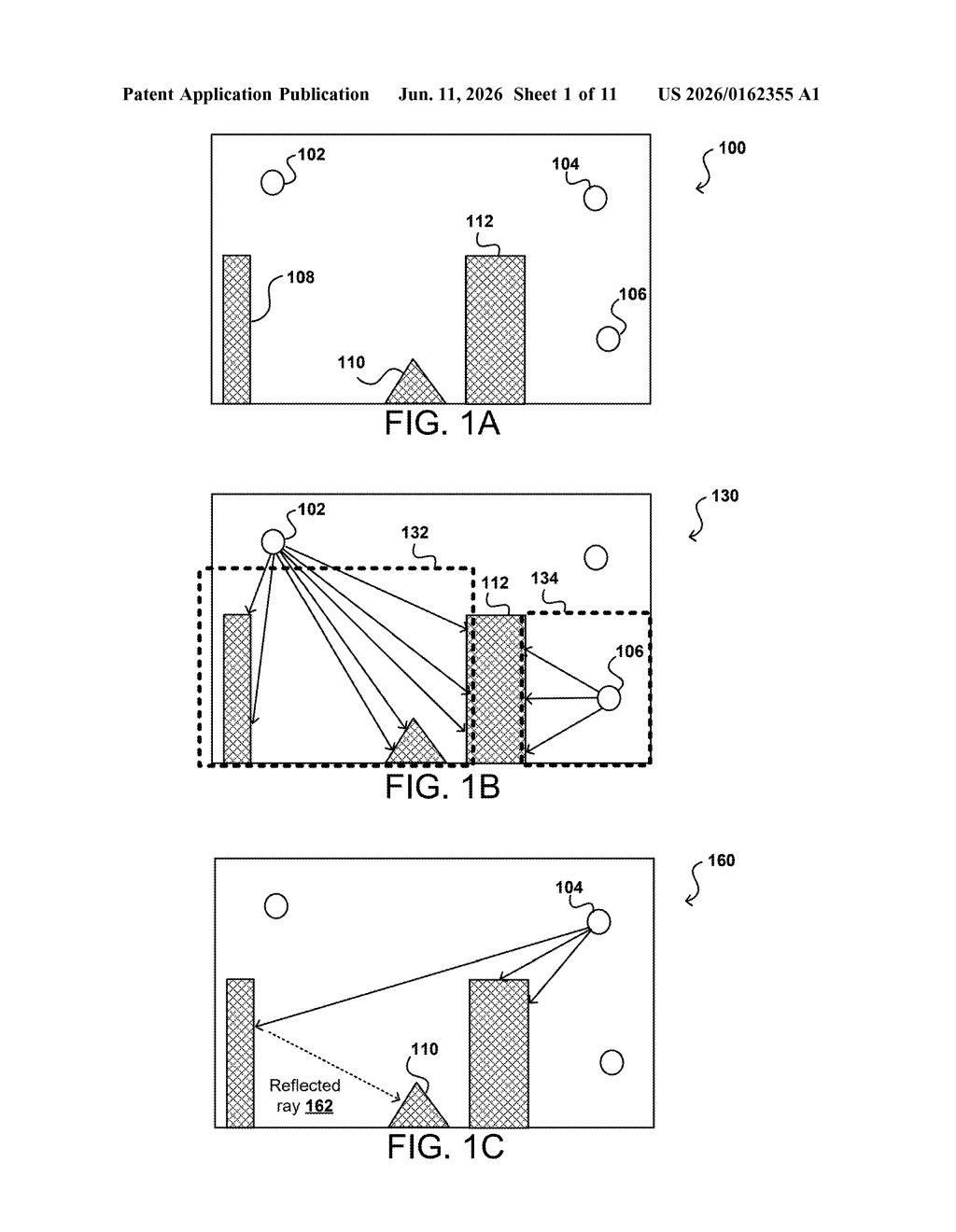
How Nvidia's lighting cache cuts ray-tracing workload
Imagine you're lighting a room with fifty lamps. When you're standing in the corner by the fireplace, the overhead chandelier barely touches you — but the fireplace absolutely dominates. A clever lighting engine would notice that and stop spending effort on the chandelier for your corner. That's essentially what this patent describes.
Nvidia's approach chops a 3D scene into a grid of small regions (think of them like invisible bubbles in space). For each region, the system fires some test rays to figure out which lights actually contribute meaningful brightness there, and builds a ranked list. On the next frame, instead of blindly sampling every light source, the renderer focuses its effort on the lights that matter most for that specific region.
The ranked lists are stored in a spatial hash — a compact lookup table keyed to location — so the GPU can retrieve the right priority list quickly without burning extra memory. The result is images that look nearly identical to brute-force ray tracing, but with significantly less work per frame.
How spatial hashing picks which lights to sample per region
The patent describes a light importance caching system built around a spatial hash data structure (a memory-efficient lookup table that maps 3D positions to stored data very quickly).
Here's the core pipeline:
- The virtual scene is divided into a grid of non-cubic voxels — specifically octahedral (diamond-shaped) cells, which tessellate 3D space more uniformly than plain cubes.
- A first pass casts sample rays from each voxel and measures how much each light source contributes to brightness in that region.
- Those measurements are used to build a cumulative distribution function (CDF) per voxel — essentially a ranked probability table that says 'light A is responsible for 60% of brightness here, light B for 25%, others negligible.'
- On subsequent frames, the renderer uses that CDF to intelligently select which rays to cast and which lights to sample, skipping low-impact sources entirely.
Because the CDFs are stored in a spatial hash rather than a full 3D grid, memory usage stays low and cache access patterns stay GPU-friendly. The system also updates the cache over time as the scene changes, so moving lights or dynamic objects don't break the illusion.
What this means for real-time ray tracing in games and GPU workloads
Ray tracing's dirty secret is that most of the GPU work in a complex scene is wasted — sampling lights that contribute almost nothing to the final pixel color. Any technique that routes that compute budget toward only the lights that actually change the image is worth real frame-rate gains. This patent targets exactly that inefficiency.
For Nvidia, this kind of algorithmic improvement matters as much as raw hardware gains. Features like DLSS and ReSTIR (an earlier light-resampling technique Nvidia developed) show the company treats rendering algorithms as a competitive moat. A cache-efficient, bandwidth-friendly importance sampler could show up in future driver-level ray tracing optimizations or in Nvidia's rendering SDKs used by game developers.
This is solid, unglamorous rendering research — the kind of work that quietly makes ray tracing feasible on mid-range hardware rather than just Nvidia's flagship cards. The octahedral voxel choice and spatial-hash storage are genuinely thoughtful engineering decisions, not just incremental tweaks. If this lands in production, it's the sort of thing that quietly expands the install base for real-time ray tracing without any press release.
There are more where this came from
We read every patent application Big Tech publishes and send you the ones worth knowing. Plain English, free, every week.
Want this weekly breakdown for a company we don't cover? Patentlyze Pro →