
Qualcomm Patents a Video Chip That Cuts Its Own Power During Low-Quality Streams
Qualcomm has filed a patent for a video processing chip that monitors the complexity of a video stream in real time and automatically slows down or speeds up parts of itself to match, saving power when it doesn't need to run at full speed.
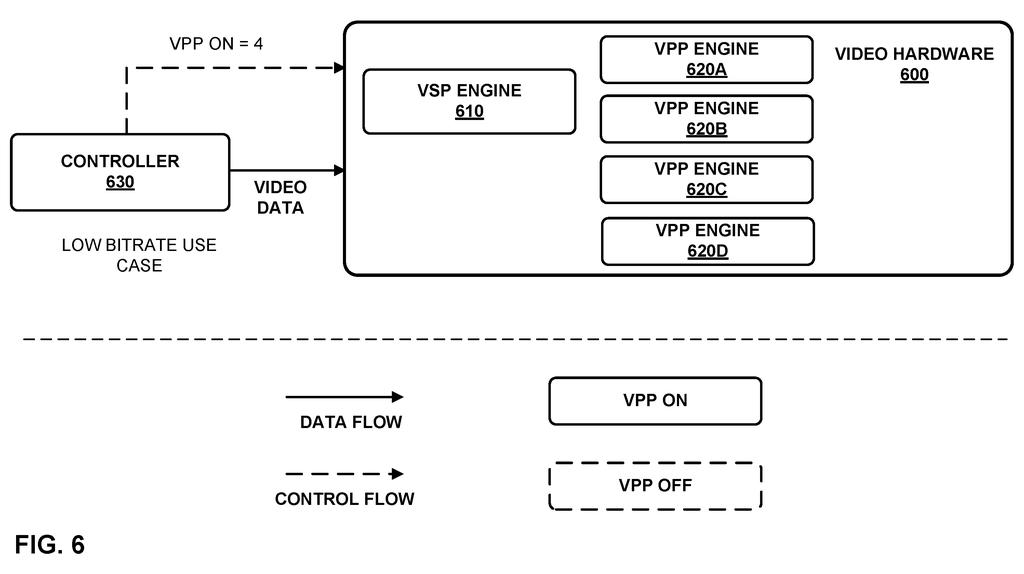
How Qualcomm's video chip reads the stream and adjusts itself
Imagine your car automatically shifting into a lower gear on a flat road to save fuel, then revving back up when you hit a hill. Qualcomm's patent describes a video chip that does exactly that kind of thing, but for playing or recording video on your phone.
Right now, video chips in phones often run at a fixed speed regardless of whether you're streaming a low-quality video call or a high-bitrate 4K movie. Qualcomm's design splits the chip into two parts: one that handles the structural information in a video file, and one that handles the actual pixels. The pixel-crunching part can have its clock speed or power adjusted on the fly based on how demanding the video stream actually is.
If you're watching a simple, low-bitrate clip, the chip eases off. If you switch to something dense and detailed, it ramps back up. The result is a chip that works only as hard as it needs to, which in theory means less heat and longer battery life without sacrificing video quality.
… control one or more of a power or a clock speed of the at least one VPP engine based on the bitrate of the video coding session.
Translation: Adjusts the electricity or speed of the pixel processor depending on the video bitrate.
How the controller splits syntax work from pixel work
The patent describes a video coding chip with two distinct processing engines and a controller that mediates between them.
Video Syntax Processing (VSP) engine: This part handles the structural layer of a video stream, things like headers, flags, and the encoded instructions that describe how frames are organized. This work is relatively lightweight and steady.
Video Pixel Processing (VPP) engine: This is where the heavy lifting happens. The VPP takes the decoded instructions from the VSP and actually reconstructs or encodes pixel data, the raw picture information. Pixel work scales directly with bitrate: a high-bitrate 4K stream demands far more from this engine than a compressed 480p clip.
Controller: A controller sits above both engines and continuously measures the bitrate of the current video session. Based on that measurement, it raises or lowers the clock speed (how many operations per second the chip runs) or adjusts the power state of the VPP engine specifically. The VSP keeps running at whatever pace it needs to, since its workload doesn't change as dramatically.
The key insight is that the pixel-processing workload is tightly correlated with bitrate, so bitrate becomes a practical proxy for deciding how much power the chip should draw at any given moment.
The VSP engine processes video data at a syntax element level, while the VPP engine processes video data at a pixel level.
Translation: One part handles the video structure while another handles the actual pixels.
What this means for phone battery life and video quality
For phone makers and chip designers, power consumption during video playback and recording is a persistent problem. Video apps, camera apps, and streaming services all push the hardware hard, and that drains batteries and generates heat. A chip that can throttle its pixel-processing engine during low-bitrate sessions without touching the rest of the pipeline could reduce power draw in a meaningful, targeted way.
For you as a user, this could mean your phone stays cooler during a long video call, or your battery lasts a bit longer when you're streaming a compressed clip over a weak connection. It also has implications for Qualcomm's chips inside streaming devices, laptops, and automotive screens, not just phones, anywhere video decoding runs continuously for long periods.
This is solid, unglamorous chip engineering. Splitting a video pipeline into syntax work and pixel work, then scaling only the expensive part, is a logical approach to a real problem. It won't make headlines the way a new AI feature does, but dynamic power scaling in dedicated video hardware is exactly the kind of incremental work that adds up to noticeable improvements in real-world battery life.
There are more where this came from
We read every patent application Big Tech publishes and send you the ones worth knowing. Plain English, free, every week.
The drawings
15 drawing sheets from US 2026/0230652 A1 · click any drawing to enlarge


Want this weekly breakdown for a company we don't cover? Patentlyze Pro →
Be the first to weigh in