
Samsung Patents a Way to Help Robots Understand What Every Object in a Room Is For
Before a robot can help you around the house, it needs to understand not just where things are, but what they're for. Samsung's latest patent describes a system that builds exactly that kind of knowledge map, room by room.
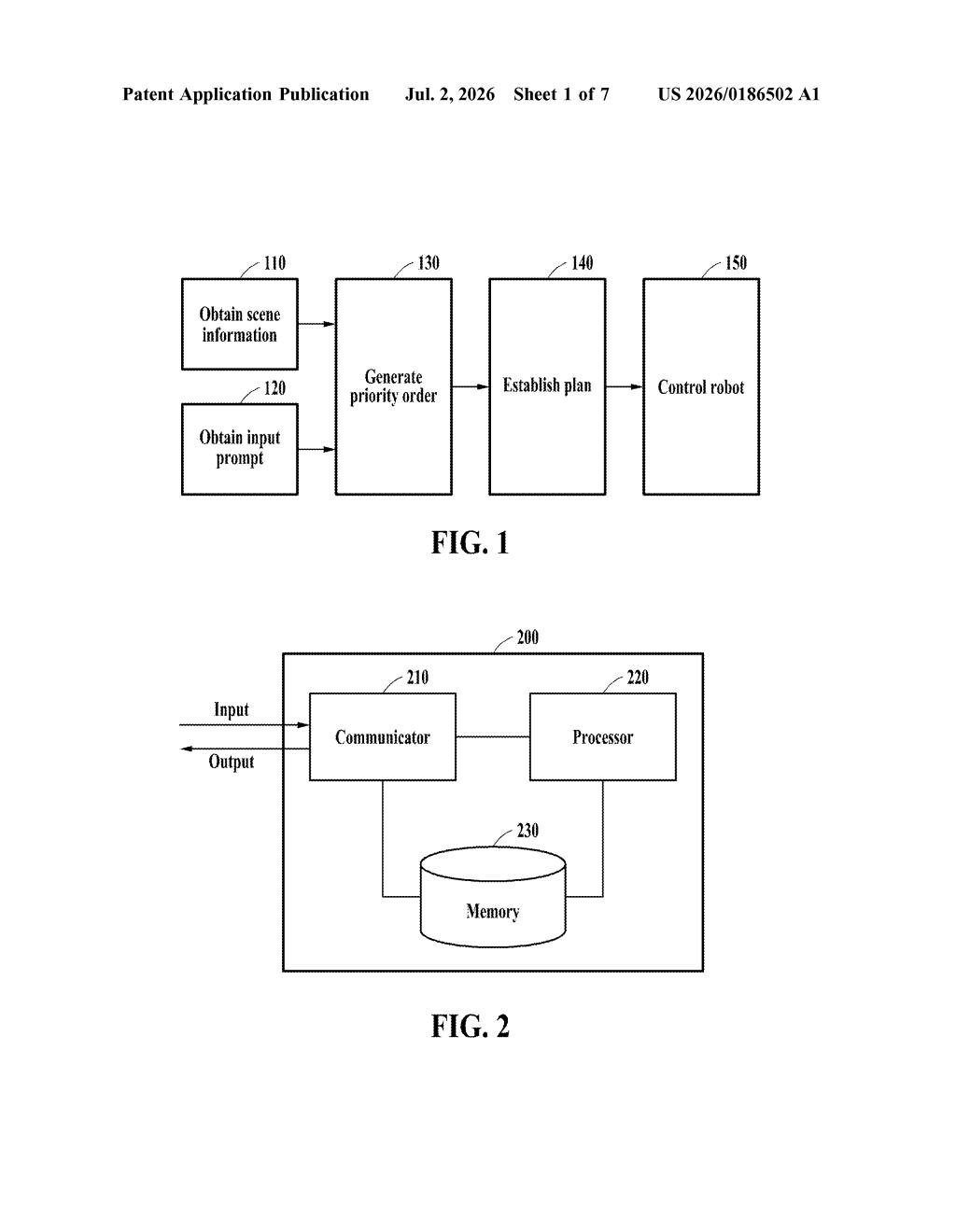
How Samsung's robot learns from its surroundings
Imagine asking a robot assistant to bring you a glass of water. A basic robot might know a cup is sitting on the counter, but not that the cup is something you can grab, fill, and carry. Samsung's patent describes a system that fills in that gap by analyzing every object in a room and noting what each one can actually be used for.
The system divides a space into zones (think: kitchen counter, dining table, living room floor), then builds a profile for every object in each zone. A chair affords sitting; a door affords opening; a mug affords picking up. Those individual profiles get fed into a model that produces a summary of what the whole zone is "good for."
When the robot receives a task, it consults that summary to figure out the best path through the space. Instead of wandering or bumping into things, it plans a route that accounts for what's in the way and what it might need to interact with along the way.
How the affordance model builds and uses the space map
The patent describes a pipeline with four main stages:
- Scene parsing: The system takes in visual or sensor data about a physical space and identifies individual objects.
- Unit space grouping: The space is divided into sub-regions (unit spaces). Objects get assigned to whichever sub-region they belong to.
- Affordance extraction: For each object, the system retrieves "object affordance information" (a term from robotics and cognitive science meaning the possible actions an object supports, such as graspable, walkable, openable, or sittable).
- Space-level affordance modeling: A learned model (the "first model" in the claim) takes all the per-object affordance data for a zone and produces a single space-level affordance summary.
When a robot receives a task instruction, the system generates a movement path based on those space affordance summaries. The robot knows which zones to pass through, which objects it will need to interact with, and how to approach them.
The approach is notable because it separates the understanding stage (what can this room do?) from the acting stage (how do I move to complete this task?), which makes the system easier to update when furniture moves or new objects appear.
What this means for home and warehouse robots
For home robots to be genuinely useful, they need to handle real, cluttered spaces filled with ordinary objects in unpredictable arrangements. A navigation system that only knows object positions will fail the moment the couch moves or a bag is left on the floor. One that understands what objects afford (what you can do with or around them) is far better at planning safe, practical routes.
Samsung has been investing in home robotics alongside its Galaxy ecosystem. A system like this would be a foundational layer for any robot that needs to move through a domestic or commercial environment and interact with everyday objects, whether that's a home assistant, a warehouse picker, or a hospital delivery bot.
This is solid foundational robotics work rather than a flashy consumer feature. Affordance-based reasoning is a well-established idea in academic robotics, but translating it into a deployable, space-aware pipeline that feeds directly into path planning is a real engineering step forward. If Samsung is serious about home robots, this is the kind of infrastructure they need to get right first.
Get our take in your Top Stories
Liked this breakdown? Add Patentlyze as a preferred source on Google, and our plain-English take shows up more often in your Top Stories the next time Samsung patent news breaks.
There are more where this came from
We read every patent application Big Tech publishes and send you the ones worth knowing. Plain English, free, every week.
Want this weekly breakdown for a company we don't cover? Patentlyze Pro →