
Intel's New Patent Teaches Cameras to Read a Scene, Not Just Spot Shapes
Most computer vision systems recognize objects by matching visual patterns, the same way a child learns to spot a dog from pictures. Intel's new patent tries something closer to how adults actually see: understanding the whole scene and what belongs where.
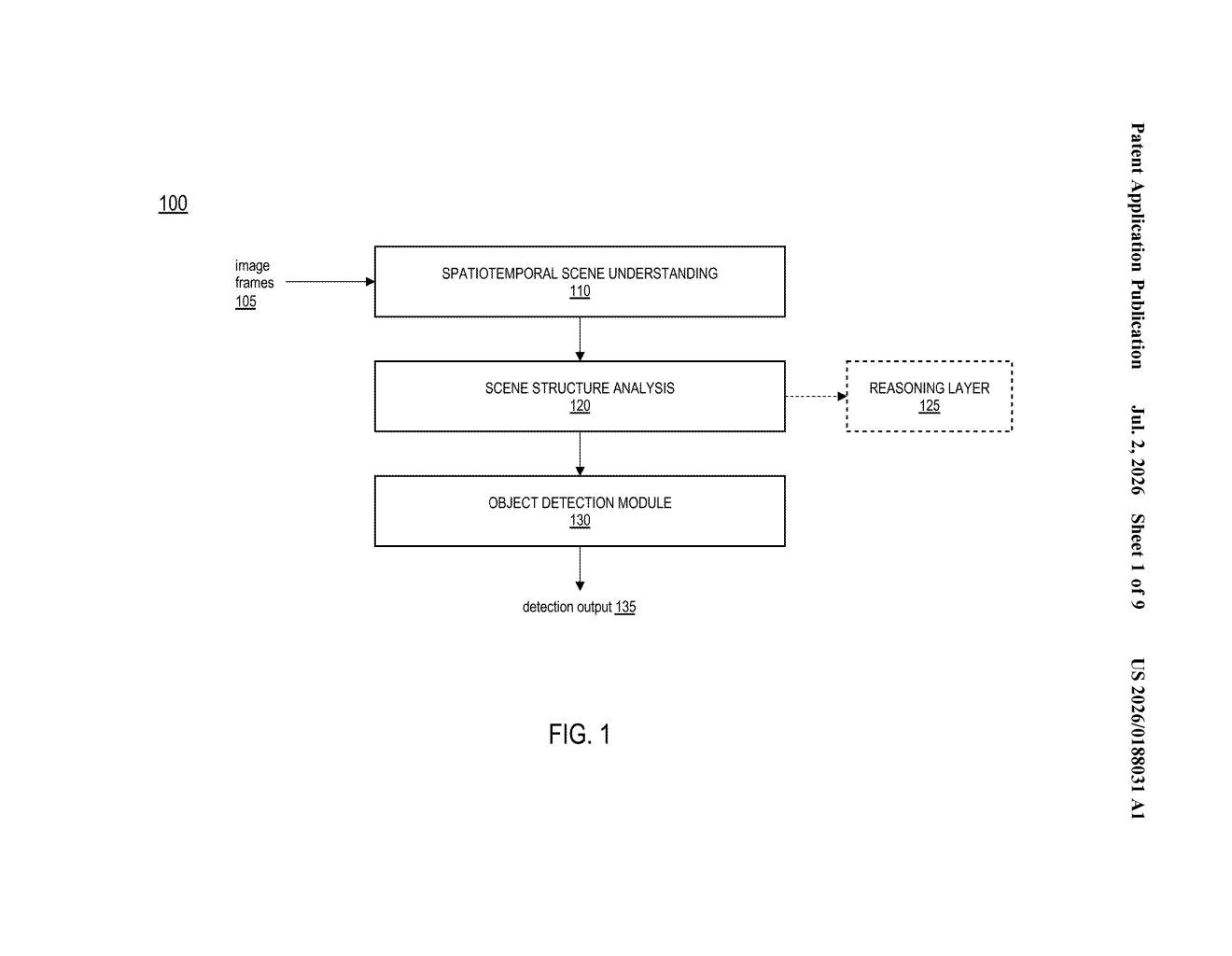
How Intel's scene-reading approach spots objects differently
Imagine you're watching a blurry security camera feed. A standard detection system would struggle to identify a person partially hidden behind a post, because it's looking for the visual shape of a person. Intel's approach is different: it asks, 'Given that this is a sidewalk, and there's a torso-shaped region next to what looks like legs, what is the most likely object here?'
The system reads each camera frame the way a map reader reads a neighborhood, grouping regions by what they mean (road, pedestrian, vehicle) rather than just what they look like. It also remembers what it labeled in recent frames, so objects don't randomly change identity from one moment to the next.
When it's confident that a set of labeled regions logically belongs together as one object, it outputs a detection along with a confidence score based on how well the pieces fit the expected scene logic, not just on pixel brightness.
How the system links pixels, context, and past frames
The system processes video as a sequence of frames rather than isolated snapshots. For each frame, a semantic segmentation model (software that colors every pixel according to what category it belongs to, like 'road,' 'person,' or 'car') generates a detailed scene map.
Critically, that map is informed by feedback from previous frames, which helps labels stay consistent over time. If a region was labeled 'pedestrian' a tenth of a second ago, the system doesn't suddenly decide it's a lamppost without strong evidence.
The patent then describes two forms of analysis:
- Spatial relationship analysis: where are the labeled regions relative to each other? A 'head' region directly above a 'torso' region on a sidewalk strongly suggests a person.
- Semantic coherence scoring: how well do the neighboring regions logically fit together as a known object type?
Objects are confirmed when regions satisfy predefined or learned rules about how parts of an object relate to one another. Confidence scores come from that logical fit rather than from raw pixel similarity. For crowded scenes with multiple overlapping objects, the system applies connected-components analysis (a technique that separates touching regions into distinct groups) to avoid merging separate detections.
What this means for self-driving cars and security cameras
Self-driving vehicles, delivery robots, and surveillance systems all depend on object detection that stays reliable across lighting changes, partial obstructions, and fast motion. Current approaches can fail when an object looks unusual or is partly hidden, because they rely heavily on visual appearance. A system that understands scene logic, rather than just pixel patterns, could handle those edge cases more gracefully.
For Intel, which sells processors and AI accelerators used in automotive and edge-computing hardware, this patent fits a clear strategic direction: building the algorithmic layer that makes their chips more valuable in perception-heavy applications. If this approach works reliably, it could show up in camera modules or onboard chips rather than in a consumer app you'd directly touch.
This is a genuinely interesting take on a hard problem. The insight that confidence should come from scene logic rather than visual similarity is not obvious, and if it holds up in practice it could make detection more robust in exactly the low-visibility, cluttered scenarios where current systems fail most visibly. Whether Intel turns this into a shipping product or licenses it to automakers and robotics firms is a separate question, but the concept is worth watching.
Get our take in your Top Stories
Liked this breakdown? Add Patentlyze as a preferred source on Google, and our plain-English take shows up more often in your Top Stories the next time Intel patent news breaks.
There are more where this came from
We read every patent application Big Tech publishes and send you the ones worth knowing. Plain English, free, every week.
Want this weekly breakdown for a company we don't cover? Patentlyze Pro →