
Samsung Patents a System That Generates Fake Factory Data to Hide Real Production Secrets
Samsung wants to share manufacturing data without actually sharing it. This patent describes a pipeline that studies real factory data, generates a statistically convincing fake version, then strips out anything that could identify the original process.
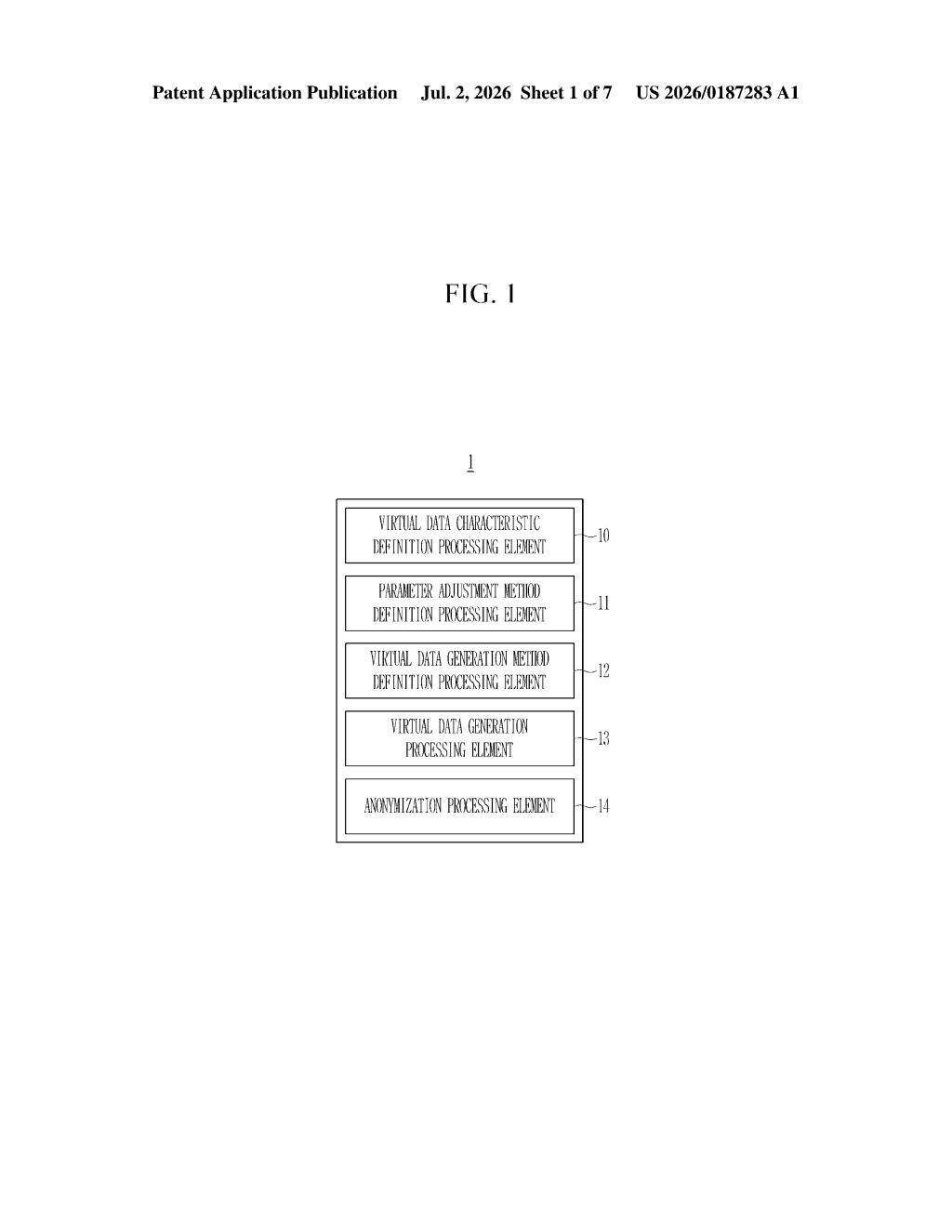
What Samsung's synthetic manufacturing data actually does
Imagine a hospital that wants to share patient records with researchers but can't expose anyone's personal information. The solution is often to generate synthetic records that look statistically real but don't belong to any actual person. Samsung is applying the same idea to its chip factories.
The patent describes software that reads real production data from a manufacturing process, learns its patterns and distributions, and then builds a new dataset that behaves like the original without being the original. The system also evaluates that fake data to make sure it's good enough to be useful before finalizing it.
The last step is anonymization: any remaining fingerprints of the real process are scrubbed. The goal appears to be letting Samsung (or its partners) train AI models, run simulations, or share information with outside vendors without exposing actual production parameters that represent hard-won trade secrets.
How Samsung builds and anonymizes the virtual dataset
The patent describes a multi-stage pipeline running on a processor. Here's how it breaks down:
- Characteristic extraction: The system reads original production data and pulls out two types of information: statistical characteristics (things like mean, variance, and correlation between variables) and distribution characteristics (the shape of how data values are spread, for example whether defect rates follow a normal bell curve or something more skewed).
- Virtual data design: Using those extracted characteristics, the system designs a blueprint for synthetic data, then chooses a generation method suited to the specific distribution it found.
- Evaluation loop: Sample data is generated first, then put through an evaluation process. If the samples don't pass, the system can adjust parameters and try again before committing to a full synthetic dataset.
- Anonymization: Once the virtual data is finalized, an anonymization operation removes any remaining signals that could be reverse-engineered back to the real process.
The independent and dependent variables mentioned in the claim represent cause-and-effect relationships in a manufacturing process, for instance how a particular temperature setting (independent) affects yield rate (dependent). Preserving those relationships in the fake data is what makes it useful for downstream modeling.
What this means for chip fab data sharing
Semiconductor manufacturing is one of the most data-intensive and secretive industries on the planet. Process parameters are core intellectual property, and sharing them with AI vendors, academic partners, or even internal teams in other regions carries real legal and competitive risk. A reliable synthetic data pipeline lets Samsung get the benefits of data collaboration without the exposure.
This also matters for AI training. Modern chip fabs use machine learning to predict defects and optimize yield, but those models need large, varied datasets to work well. If you can generate unlimited realistic fake data from a small real dataset, you can train better models without collecting more sensitive real-world data. That's a meaningful practical advantage as the industry leans harder on AI-assisted process control.
This is a sensible, unsexy infrastructure patent that solves a real problem Samsung faces every day. It won't ship as a consumer feature, but if it works as described, it could improve how Samsung shares process intelligence across its supply chain and with AI tool vendors. The anonymization step is the part worth watching, since that's where most synthetic-data systems either succeed or fall apart.
Get our take in your Top Stories
Liked this breakdown? Add Patentlyze as a preferred source on Google, and our plain-English take shows up more often in your Top Stories the next time Samsung patent news breaks.
There are more where this came from
We read every patent application Big Tech publishes and send you the ones worth knowing. Plain English, free, every week.
Want this weekly breakdown for a company we don't cover? Patentlyze Pro →