
OpenAI
OpenAI · AI / ML · Filed Sep 10, 2025 · USPTO published Nov 19, 2026 · This week's release
OpenAI Patents a Locked-Down Workspace Where AI Writes Code for Human Approval
OpenAI's patent application describes an AI coder that works with no internet and no direct access to your real project, then hands you a list of changes to approve.
- Publication number
- US 2026/0367910 A1(US20260367910A1)
- Applicant
- OpenAI OpCo, LLC
- Filed · Published
- Sep 10, 2025 · Nov 19, 2026
- Inventors
- Bryan Ashley, Channing Conger, Hantao Wang
- Status when we published
- Waiting for an examiner
- Document
- 20 claims
- US classification
- 717/101
- Parent application
- Claims priority from a provisional application 63806537 (filed May 15, 2025)
What OpenAI's sealed-workspace coding setup does
You ask an AI assistant to upgrade the software packages behind your app, then walk away for lunch. When you get back, the worry is obvious: what did it touch while you were gone, and could it have reached out to the internet or your real files?
This OpenAI patent application describes a setup where the AI works inside a sealed copy of your project. The copy gets everything it needs first, then its internet connection is switched off before the AI starts. When the AI says it's done, ordinary software (not AI) compares the before and after and produces a plain list of what changed.
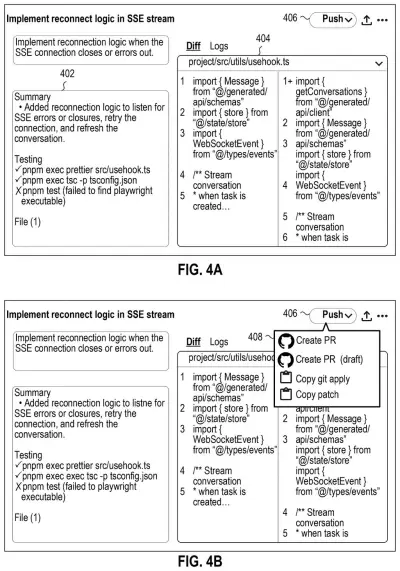
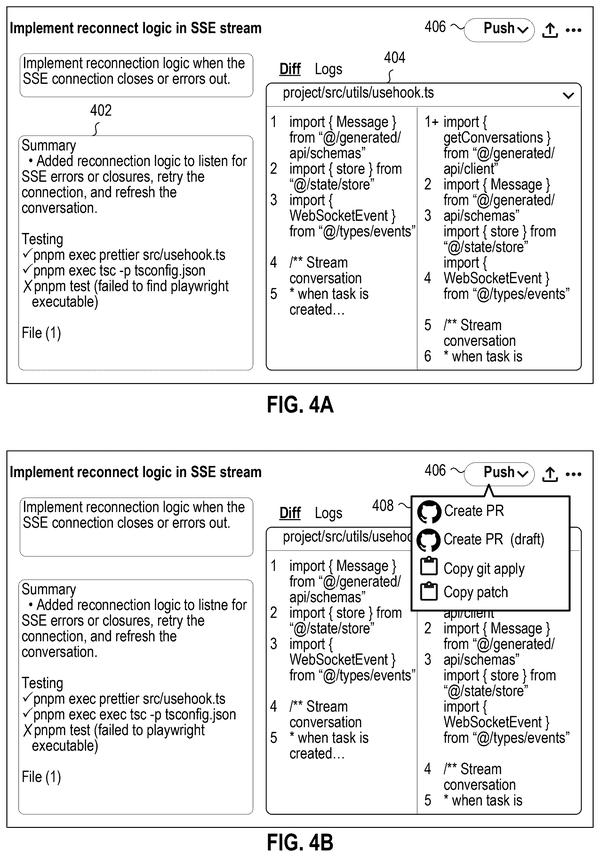
You read that list along with a short summary. Only if you click a button does it become a proposal (what developers call a pull request) that your team can review before anything touches the real project.
obtaining, from a machine learning model, an indication that a software development task provided to the machine learning model is completed, wherein the software development task comprises instructions in natural language requesting to modify code in a repository; …
Translation: The AI finishes a coding job that was requested using plain English instructions.
How the sealed container and patch step work
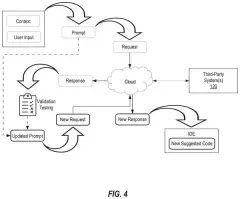
The system starts when someone gives the AI a task in everyday language, such as "upgrade this server's packages." It spins up a container (a sealed, disposable virtual computer) built from the user's chosen setup, installs the project's tools, and clones (copies) the code repository into it. Then it switches off the container's external network connection before the AI is handed the task. The AI keeps an internal channel, so it can still read files, edit code and run tests.
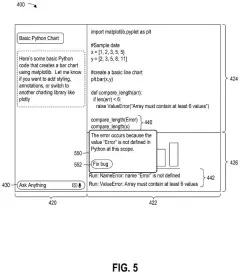
When the AI signals that it has finished, ordinary non-AI software (a "deterministic application," meaning one that gives the same answer every time) compares the container's files to the original and generates a diff, a line-by-line list of what was added, removed or changed. A screen shows that diff plus a summary for human review. The filing also describes the AI trying several variants of the same task so you can compare them.
If you approve, the system builds a change proposal made of:
- A manifest listing the repository's files after the change
- A commit that points to a snapshot (a "tree") and its parent, so the project's history stays intact
- The diff itself
A second container with a fresh clone of the repository can then apply the proposal, run tests, and handle added files, removed files and binary files (images, compiled code). That container holds the login credentials, which the AI never sees.
… generating a diff, using a deterministic application, illustrating changes generated by the machine learning model to the code in a cloned repository, wherein the diff comprises at least one change to a text file associated with the repository; …
Translation: A separate program checks the AI's work by creating a side by side comparison of the updated code.
Why this matters for teams letting AI edit code
Companies hesitate to let AI touch real software because one bad move could leak passwords, corrupt a project or push broken code. This design addresses that by keeping the AI away from the internet, your credentials and the live project, and by keeping a person in the approval seat. If you manage a team's code, that could mean reviewing one clear list of changes instead of trusting an AI with the keys.
It also fits how developers already work. The output arrives as a standard proposal that teammates can comment on, test and roll back. The filing frames this separation as meeting business security requirements, which shows how much of the effort in AI coding tools goes into trust and oversight rather than the writing of code itself.
This is the 11th OpenAI filing we've tracked since September in our AI guardrails race, following their code security checker and self-testing bug hunter.
Source: US 2026/0367910 A1 at the USPTO (PDF). Full patent text and figures are in the official publication.
Get our take in your Top Stories
Liked this breakdown? Add Patentlyze as a preferred source on Google, and our plain-English take shows up more often in your Top Stories the next time OpenAI patent news breaks.
Add Patentlyze on Google
One click.
There are more where this came from
We read every patent application Big Tech publishes and send you the ones worth knowing. Plain English, free, every week.
The drawings · 11 sheets
11 drawing sheets from US 2026/0367910 A1 · click any drawing to enlarge


Show the other 3 sheets


No comments yet