
OpenAI Files Patent for Voice AI That Knows When You've Finished Your Thought
Ever had a voice assistant cut you off the moment you paused to think? OpenAI's patent application describes a way for its AI to tell a thinking pause from a finished sentence, and to start forming its answer before you've stopped talking.
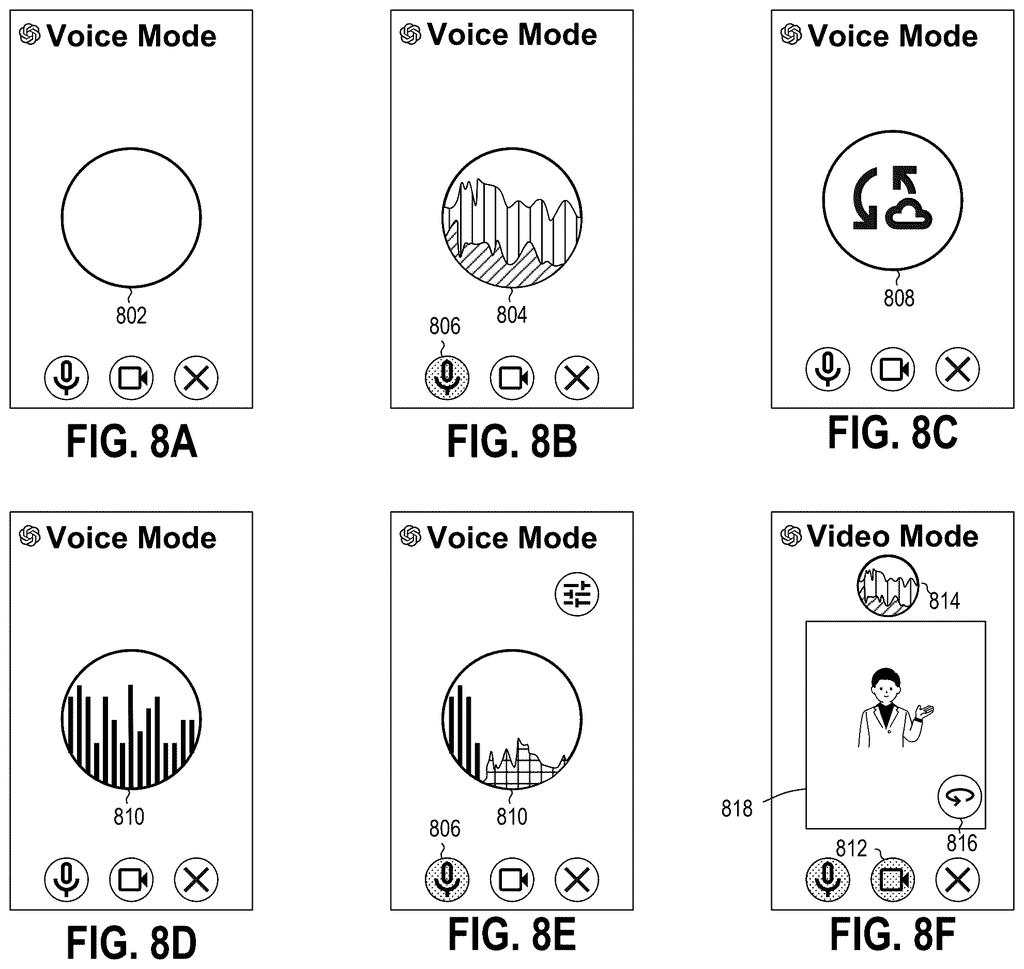
What OpenAI's voice patent does when you pause
You're asking an AI voice assistant for help, and you stop mid-sentence to remember a name. The assistant barges in with an answer to half a question. Or it waits so long after you finish that the chat feels like a bad phone line.
OpenAI's patent application describes a way to fix both. The system listens for a pause, then checks whether what you've said so far is a complete thought. Because it's expensive is an unfinished idea, while too expensive is a finished one. While you talk, it also starts preparing a reply, so it can answer in roughly 300 milliseconds once you're done.
It handles two other everyday situations too. If you talk over the AI, it keeps track of what you actually heard and forgets the rest. And if you share your camera, it sends along only a few useful frames instead of a flood of video.
… providing keyframes from the first video frames to send to a generative response engine for inference operation; transmitting the first audio frames and the keyframes to the generative response engine …
Translation: The system sends selected video snapshots and audio to the AI brain to figure out what you are doing.
How the voice AI spots a finished thought
The claims cover a cloud service that sits between your device and an AI model (the patent calls it a "generative response engine"). Your device sends audio in small slices called frames (the filing gives 100 milliseconds each, ten per second), plus video frames that arrive at a variable rate. The service picks keyframes, the few video frames worth the AI's attention, forwards them with the audio, and streams the generated reply back to your device.
Several narrower claims add detail:
- End-of-turn detection: the service looks for silence plus an independent clause (a chunk of speech that makes sense on its own), then tells the AI to finish its answer.
- Keyframe timing: keyframes can be picked at a fixed rate, sent before you speak or during a pause, or chosen after you stop talking.
- Interruptions: if you speak while the AI is replying, the service works out which part of the reply you never heard and tells the AI to drop those tokens (the word-sized chunks the model reads and writes) from its context window (its working memory of the conversation).
The description explains why video needs this care. It says a video frame costs 65 tokens at 30 frames per second, about 1,950 tokens each second, against roughly 100 for audio. Picking only useful frames, such as one where you point at something, keeps the AI's memory from filling up.
… improve real-time operation to create natural and dynamic interactions to user experiences …
Translation: The technology aims to make talking to the AI feel like chatting with a real human.
What this means for voice chats with AI
If you've used a voice assistant, you know the two failures this targets: it cuts you off while you're thinking, or it leaves an awkward gap before answering. A system that reads whether your sentence is finished, instead of just counting seconds of silence, could make talking to an AI feel closer to talking to a person. The interruption handling matters too. When you cut in with "no, I meant Tuesday," the AI wouldn't act as though you'd heard its whole answer.
The video side matters for anything that watches through your camera, such as holding up a broken appliance and asking what's wrong. Sending selected frames keeps costs down for OpenAI and stops the AI from being buried in footage. Remember that this is a published application, so it shows how OpenAI is thinking, not a promised feature.
OpenAI's third patent application in the Voice & speech AI filings we've tracked since October follows work on a voice that thinks ahead and keeping voice and on-screen text aligned.
The benefit here is something you'd notice in the first minute of a voice chat: the AI stops jumping in when you pause to think. Anyone who has said "so, the thing is..." to a voice assistant and been answered too early knows how irritating that is.
The interruption fix is the part I'd most like to see work. When you cut in to correct the AI, it should remember only what it said out loud to you, so your correction makes sense to it. That keeps a conversation from derailing over an answer you never heard.
The video part is less visible. You'd mostly notice it as an AI that responds quickly when you point your camera at something. Overall these are practical fixes, and how natural they feel depends on how often the end-of-sentence guess is right in messy, real conversation.
Get our take in your Top Stories
Liked this breakdown? Add Patentlyze as a preferred source on Google, and our plain-English take shows up more often in your Top Stories the next time OpenAI patent news breaks.
There are more where this came from
We read every patent application Big Tech publishes and send you the ones worth knowing. Plain English, free, every week.
The drawings
17 drawing sheets from US 2026/0311694 A1 · click any drawing to enlarge


Show the other 9 sheets


Want this weekly breakdown for a company we don't cover? Patentlyze Pro →
Be the first to weigh in