
OpenAI
OpenAI · AI / ML · Filed Jul 1, 2025 · USPTO published Oct 8, 2026 · Oct 8 release
OpenAI Wins a Patent for Voice Chat That Starts Thinking Before You Stop Talking
Everyone has been cut off by a voice assistant or left waiting in awkward silence. OpenAI now holds a patent on a fix for both: judge whether your sentence is actually finished, and prepare an answer before you stop talking.
- Publication number
- US 2026/0311720 A1(US20260311720A1)
- Applicant
- OpenAI OpCo, LLC
- Filed · Published
- Jul 1, 2025 · Oct 8, 2026
- Inventors
- Wayne Chang, Mianna Chen, Bogumil Kazimierz Giertler, Tomer Kaftan, Alex Kirillov, Edede Oiwoh, Olaoluwa Okelola, Raul Puri, Brendan Quinn, Ievgen Varavva, Tao Xu, Rowan Zellers, Yu Zhang
- Status when we published
- Granted
- Document
- 18 claims
- US classification
- 704/233
- Examiner
- WOZNIAK, JAMES S (Art Unit 2655)
- Parent application
- Continuation of 19/098,690 (filed Apr 2, 2025)(19098690)
What OpenAI's turn-detection voice patent does
Ever paused mid-sentence to find the right word, only for a voice assistant to jump in and answer half a question? Or finished talking and then waited, wondering whether it heard you?
OpenAI's newly granted patent goes after both problems. Instead of waiting for a fixed stretch of quiet, the system listens to what you said. If a pause follows a complete thought, like too expensive, it decides your turn is over. If the pause follows a dangling because, it keeps waiting.
It also gets a head start. While you talk, your words are already being fed to the AI so it can begin working. If you keep going, it throws that early work away and starts over with the full picture. The filing aims for a reply in around 300 milliseconds, roughly the gap people leave in everyday conversation.
… transmit the first portion of the digital audio frames that includes the speech to a generative response engine while the digital audio frames are being received …
Translation: The system sends your voice to the AI brain while you are still speaking.
How the system tells a pause from a finished turn
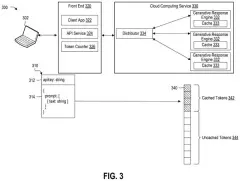
Your device slices what it hears into short chunks called audio frames, for example 100 milliseconds each (a tenth of a second). A small speech detector labels each chunk as speech or not speech. Speech chunks go to a cloud server, which streams them on to the AI model while you are still talking.
When a silent chunk arrives, a conversation classifier (a program or trained model that judges the words so far) checks whether you have said an independent clause, meaning an idea that stands on its own even if it isn't a full sentence. The first claim covers exactly this: one silent frame plus a complete clause triggers a start signal telling the AI to begin its answer.
The filing describes several supporting behaviors:
- Incomplete thought: the server sends a cancel signal, discards any early reply, and waits for more speech.
- Long silence: a maximum wait ends your turn anyway. A 5-second limit is one example; the filing calls 2 seconds too short and 15 too long.
- Interruption: the server tracks which pieces of a reply were actually played to you, then tells the AI to forget the rest.
The filing also describes an optional extra: a trickle of selected camera frames, around one per second, so video does not overload the model.
What this means for talking to ChatGPT-style AI
If you talk to AI by voice, the annoying moments are the cutoffs and the dead air. This filing targets both. Its 300-millisecond reply target matches the gap in ordinary human conversation, and the interruption handling means the AI forgets the part of its answer you never heard instead of acting as if you had.
The filing names ChatGPT only as one example of the AI behind the voice, but the design applies to any voice assistant. Because the judging of finished thoughts happens in the cloud and the speech detector is small enough to run on your device, it could fit phones, laptops or watches.
This one is already granted. The patent office approved it in September, so OpenAI holds it now. The final granted claims may read a little differently from the published version described here.
OpenAI's second voice and speech AI application we've tracked since October follows keeping voice and text in sync.
Source: US 2026/0311720 A1 at the USPTO (PDF). Full patent text and figures are in the official publication.
Get our take in your Top Stories
Liked this breakdown? Add Patentlyze as a preferred source on Google, and our plain-English take shows up more often in your Top Stories the next time OpenAI patent news breaks.
Add Patentlyze on Google
One click.
There are more where this came from
We read the new patents from Big Tech, carmakers and more and send you the ones worth knowing. Plain English, free, every week.
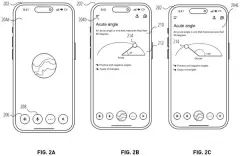
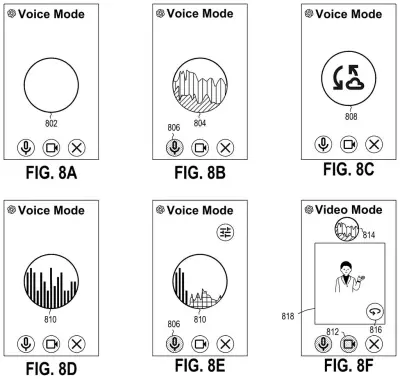
The drawings · 17 sheets
17 drawing sheets from US 2026/0311720 A1 · click any drawing to enlarge


Show the other 9 sheets


More from OpenAI
All 58 OpenAI patents →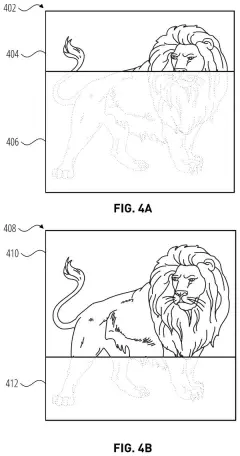
More in AI / ML
All 2,745 AI / ML patents →
Google
Google Patents a Voice AI System That Knows When You've Finished Talking
Samsung
Samsung Patent Shows AI Correcting Poor Voice Input With Personal Voice Data
Apple
Apple Patent Reveals Voice Commands That Respond to What's on Your Screen
Microsoft
No comments yet