
Qualcomm Patents a Dedicated Engine for Fixing Distorted Images in XR Displays
Every VR and AR headset has to constantly fix its own image distortion in real time. Qualcomm wants to hand that job to a dedicated piece of hardware so the main processor doesn't have to sweat it.
What Qualcomm's image-correction shortcut actually does
Imagine putting on a VR headset and noticing the edges of the image look warped or stretched. That's lens distortion, and every headset has to fix it dozens of times per second so the picture looks right to your eyes. Right now, the main chip has to figure out where those corrections need to happen before it can apply them.
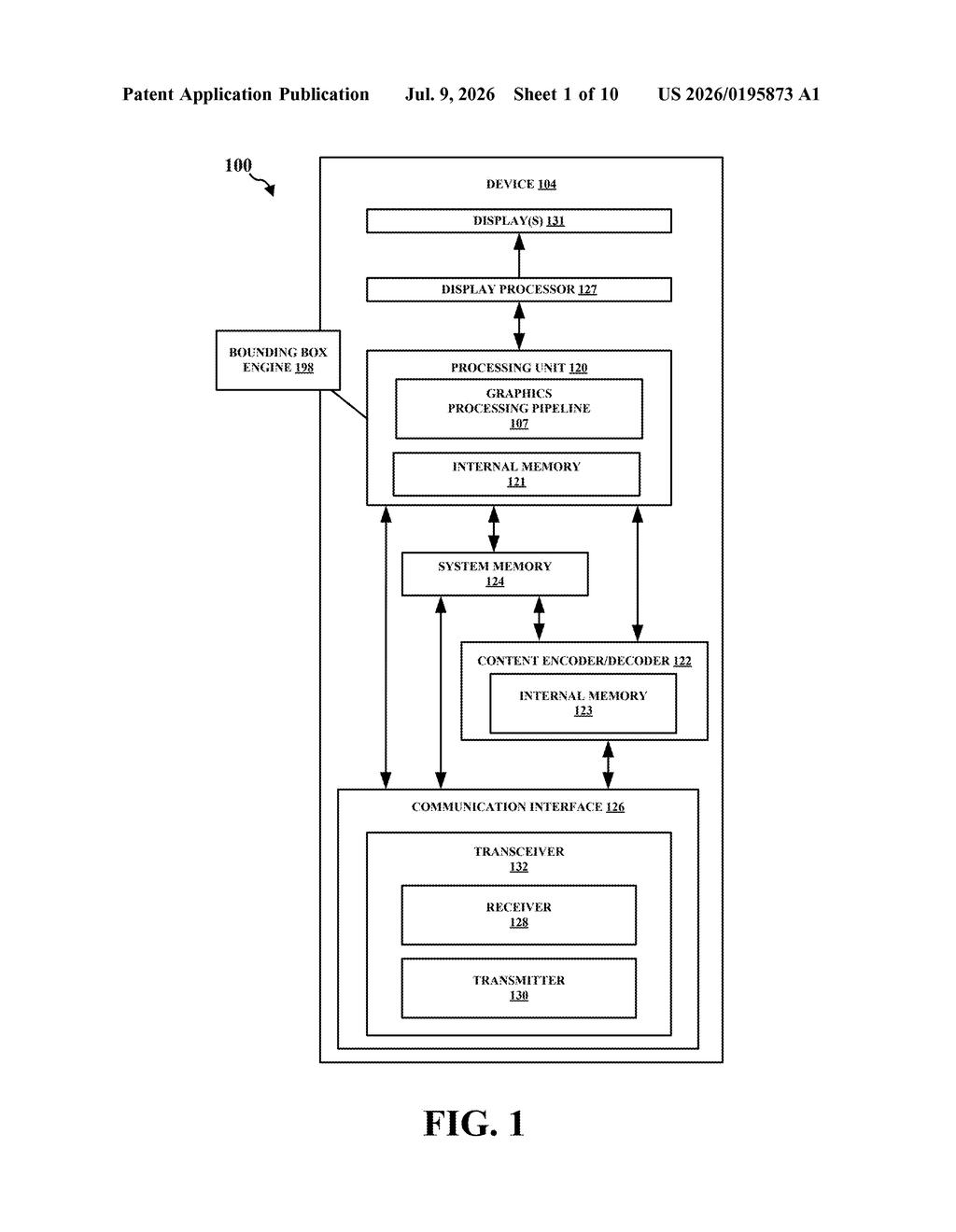
Qualcomm's patent describes a small, specialized engine built specifically to calculate the boundaries of those correction zones, called bounding boxes. Instead of making the main processor or graphics chip work out those boundaries on the fly, this dedicated engine handles the math independently and passes the result along.
Think of it like a dedicated cashier whose only job is to count your items and tell the bagger how many bags to prepare. By splitting the work, everything moves faster. For you as a headset wearer, that could mean sharper, more stable images with less drain on battery life.
How the bounding box engine calculates correction zones
The patent describes a bounding box engine, a purpose-built hardware block whose entire job is to figure out the rectangular region of an image that needs geometric correction (fixing lens-caused warping or distortion).
Here's how the pieces fit together:
- The engine takes in a set of reprojection distortions (a map of how much each part of the image is being warped by the lens) sourced from a CPU or DSP.
- It also takes in bounding box instructions (parameters defining how to frame the correction zone).
- It calculates the exact rectangular boundary that encompasses all the pixels needing correction.
- It outputs that boundary to a GPU or a separate geometric correction engine, which then does the actual pixel-level fixing.
The key idea is specialization. General-purpose processors can do this math, but they're doing many other things simultaneously. A dedicated engine handles the boundary calculation efficiently and in parallel, freeing the GPU to focus on rendering rather than bookkeeping. This kind of workload partitioning is a common strategy in mobile chip design, where power budgets are tight.
What this means for XR headset performance
XR headsets (VR and AR devices) are the most obvious target here. They need to correct lens distortion for every frame, at refresh rates of 90Hz or higher. Any processing saved at that stage directly translates to lower power consumption or more headroom for rendering better graphics. Qualcomm's Snapdragon XR chips already power most standalone headsets on the market, so this kind of hardware-level optimization fits squarely into that roadmap.
For everyday users, the practical upside would be longer battery life or improved visual quality without bumping up to a bigger, heavier battery. It's not the kind of feature anyone will see listed on a spec sheet, but it's the type of low-level work that determines whether a headset feels good to use for an hour versus thirty minutes.
This is unglamorous chip plumbing, but it's exactly the kind of plumbing that makes or breaks wearable XR hardware. Qualcomm's dominance in the headset chip market means even a modest efficiency gain here could show up in real products quickly. It's not worth getting excited about on its own, but it signals that Qualcomm is still grinding away at the low-level bottlenecks holding XR back.
Get our take in your Top Stories
Liked this breakdown? Add Patentlyze as a preferred source on Google, and our plain-English take shows up more often in your Top Stories the next time Qualcomm patent news breaks.
There are more where this came from
We read every patent application Big Tech publishes and send you the ones worth knowing. Plain English, free, every week.
Want this weekly breakdown for a company we don't cover? Patentlyze Pro →