

Qualcomm
Qualcomm · Security · Filed Dec 13, 2024 · USPTO published Jun 18, 2026 · Jun 18 release
Qualcomm Patents a Security Screen That Blocks Manipulated Instructions Sent to AI Systems
When someone tries to trick an AI model by slipping hidden instructions into a query, Qualcomm wants a gatekeeper to catch it before the model ever sees it.
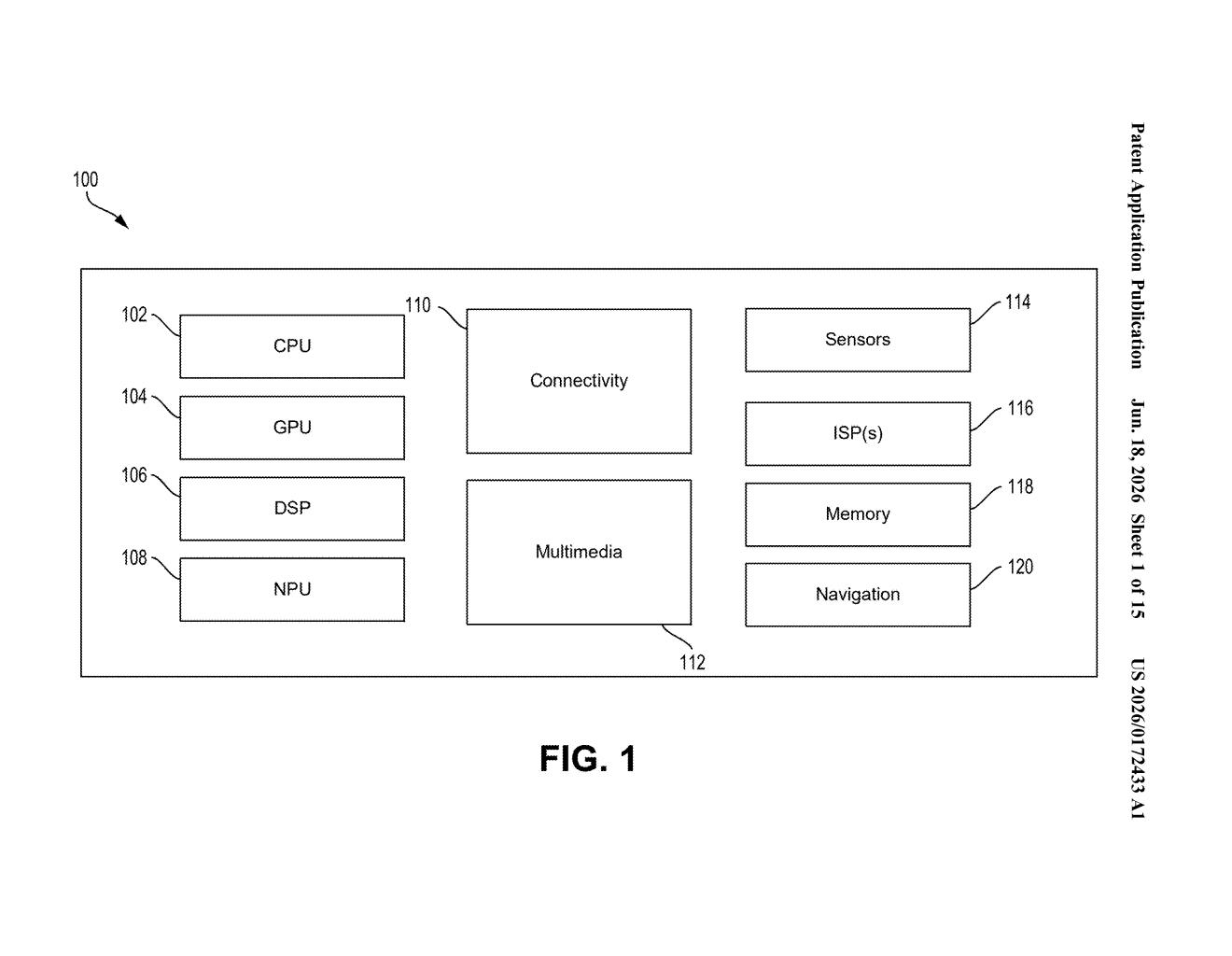
- Publication number
- US 2026/0172433 A1(US20260172433A1)
- Applicant
- QUALCOMM Incorporated
- Filed · Published
- Dec 13, 2024 · Jun 18, 2026
- Inventors
- Anantharaman BALASUBRAMANIAN, Jonathan PETIT, Jean-Philippe MONTEUUIS, Cong CHEN, James Randall EZICK
- Status when we published
- Approved; patent expected soon
- Document
- 20 claims
- US classification
- 726/23
- Examiner
- HERZOG, MADHURI R (Art Unit 2438)
What Qualcomm's prompt-tampering defense actually does
Imagine an AI assistant built into an app on your phone. Now imagine a bad actor crafting a specially worded message designed to make that AI ignore its rules and do something it shouldn't — leak data, impersonate someone, or skip safety checks. That's called a prompt injection attack, and it's one of the more pressing security headaches in AI right now.
Qualcomm's patent describes a system that intercepts every question or command sent to an AI before it reaches the model. It breaks the incoming request apart, checks the pieces for known attack patterns, and only lets the clean version through.
Think of it like a mail scanner that opens every package, checks it for contraband, and reseals the safe ones before delivery. The AI model itself never has to deal with the dangerous stuff — the filter handles it upstream.
How the key-value scanner flags malicious queries
The patent describes an attack detection layer that sits between the user and an AI model's interface (called an API — essentially the doorway through which requests reach the model).
When a query arrives, the system:
- Parses it into key-value pairs — structured chunks of data like "instruction: summarize this document" or "role: system administrator"
- Analyzes each pair against criteria for known attack signatures (things like attempts to override system instructions or inject unauthorized commands)
- Passes the query through to the AI only if no attack pattern is detected
The core idea is to inspect the structure of a request, not just its surface text. Prompt injection attacks often work by abusing the way AI models parse formatted input, so catching problems at the structural level — before the model processes natural language — is a more reliable defense than asking the model itself to notice something is wrong.
The patent doesn't specify a single detection algorithm, leaving room for rule-based checks, machine-learning classifiers, or a combination. The architecture is agnostic to the model underneath.
What this means for AI security on Qualcomm chips
Prompt injection is already being used against real AI products today. As AI assistants get embedded into phones, cars, enterprise tools, and IoT devices — many of them running on Qualcomm silicon — securing the input layer becomes as important as securing the model itself. A compromised prompt can bypass guardrails that took months to train.
For Qualcomm specifically, this fits a clear strategy: the company wants its chips to run AI locally on devices rather than in the cloud. If on-device AI is the pitch, then on-device security has to come with it. A filtering layer that runs directly on hardware before reaching the model would be a natural part of that stack — and a selling point for enterprise customers who can't afford a compromised AI agent.
Source: US 2026/0172433 A1 at the USPTO (PDF). Full patent text and figures are in the official publication.
Get our take in your Top Stories
Liked this breakdown? Add Patentlyze as a preferred source on Google, and our plain-English take shows up more often in your Top Stories the next time Qualcomm patent news breaks.
Add Patentlyze on Google
One click.
There are more where this came from
We read every patent application Big Tech publishes and send you the ones worth knowing. Plain English, free, every week.
More from Qualcomm
All 624 Qualcomm patents →
Qualcomm
Qualcomm Patents a System to Authenticate 5G Network Broadcasts Before Your Device Trusts Them

Qualcomm
Qualcomm Patents a System That Protects Car-to-Car Messages From Future Hackers

Qualcomm
Qualcomm Patents a Two-Layer Biometric System That Splits Your Fingerprint Data Across Isolated Chip Zones
More in Security
All 341 Security patents →
Microsoft
Microsoft's New Patent Fights Hackers Who Hide Attacks Inside AI Chatbot Instructions

Microsoft
Microsoft Patents an AI Prompt Security System That Profiles Both Models and Users
Microsoft
Microsoft Patents a Crowdsourced System That Auto-Blocks Dangerous Files Across Companies

Microsoft